Claes Francke, chief product officer of Geosolutions for Sokigo, explains how a living digital twin has transformed Swedish civic governance.
If you like this episode, please share it with a colleague.

August 27, 2026
keepingdataalivefrompaperrecordstoalivingdigitaltwin
===
Speaker: [00:00:00] Welcome to the Esri and the Science of Our podcast. We call them cities, whether they have 5,000 people or 10 million. They differ in size, but all share similar problems. Claes Frank, Chief Product Officer of Geo Solutions for Sokigo, is bringing digital solutions for those problems to hundreds of Swedish municipalities.
He thinks all cities have life cycles.
Speaker 2: Cities are never finished. Things change all the time. New housing, new roads, n- new rules, renewal of population, stuff like that. And, uh, when I talk about city's life cycle, I mean all those ongoing things. Good digital system, uh, helps municipalities to keep track of all that.
Speaker: Claes Frank talks to Esri's Jarle Hanheim about how a living digital twin has transformed Swedish civic governance.
Speaker 3: Hi, Klas, and welcome to the Esri and the Science of Where Podcast. [00:01:00]
Speaker 2: It's a pleasure to be here.
Speaker 3: Klas, you're the product manager with Secigo, a company with a long history working with the many, many municipalities of Sweden.
Can you describe what that means on a day-to-day basis?
Speaker 2: Yeah. Uh, that's, um... You know, we are a product company based, uh, i- in, uh, in, uh, in Sweden. And I usually say that we, um, we like to build the most lovable products based on ArcGIS. And, uh, and I think that, uh, on a daily basis that means that we, um, make sure that our system, Guida, is, um, that we als- offer across the, uh, 290, uh, municipalities in Sweden and, uh, make sure that that is driving the planning, the utilities and, and so on.
Speaker 3: And an element of that, um, consulting and that work you do is really digital transformation. You're helping these communities on that journey. Um, but that's a big goal, and it's harder for some organizations or some communities than other. Um, you work with small, [00:02:00] large, a variety of sizes, um, and those with small budgets, how do you convince them that location technology, uh, is going to help them without a lot of expense?
Speaker 2: Mm. That's a, that's a real challenge, actually. But, you know, the, um, yeah, the fact that we offer products, that means that we can show, um, every municipality what, what value they can bring from that product, and we can show it immediately, and that brings some sort of a trust within, uh, the organization. Uh, and it's, uh, not about the size, it's about the people that works within the organization.
And it's hard because the smallest municipality is 2,000 people, so they have limited budgets. So but if you show them value, they sort of commit to that. So that is, um, that is one important thing for us, that we have this product model. Uh, another thing is that we, um, we, we try to keep off the tech talk.
We don't talk about technology at all. We try to [00:03:00] focus on outcomes To show the outcomes. And, uh, if we do that, they usually tend to, to trust in us. So that is, um, I think that is, uh, the, the most important part of this.
Speaker 3: If you're in a community of 2,000, what's the first thing you would recommend they do?
Speaker 2: Uh, usually the national authorities in Sweden drive things.
They need to do certain things. Like, um, like, uh, follow the laws, the regulations. And being a small municipality, that is really hard to do by themselves. So we usually go in, in these, um, situations or in these departments where they have, um, uh, regulations to follow, and that sort of bring, bring them into a, a good spot, so to say.
Speaker 3: And with your product technology, you have smaller modules that may, maybe solve one problem. Is that a way that you ease them into kind of having a digital transformation or going through a digital transformation?
Speaker 2: Yeah, it, it is. And it is [00:04:00] also about, you know, driving things with regulations is one part.
Smaller products or modules is one part of that. So we tend to address the, uh, the outcome that they need or the problem that they need to solve first, of course.
Speaker 3: One of the phrases I've heard you say is you're trying to keep the data alive for some of these communities, which is very interesting and thought-provoking, 'cause it makes me wonder, do they have data that is dead?
Can you explain what you mean by that and how that really comes across with these organizations?
Speaker 2: Yeah. When you enter, uh, a municipality, they have loads of papers. They have loads of, you know, copies of data. And, um, when I enter the product, uh, module for doing business or producing, uh, functionality for the municipalities, the product makes them, uh, update the data in real time all the time.
And we, we are talking about a data-driven digital twin, where the people that works with that module, they, uh, they, they even don't know it, that they update the data from [00:05:00] scratch. So dead data for me is, uh, papers. And, you know, uh, we see a huge transformation in Sweden, moving from papers and the analog processes into digitized environments.
Speaker 3: So as we've thought about that, so you said a data-driven digital twin. Yeah. At Esri, what we often add to that is it's a data-driven living digital twin. Yeah. And that's kind of that concept- It is ... you're getting across. It's co- constantly updated, and it's real time.
Speaker 2: It is.
Speaker 3: You mentioned earlier that you don't talk technology.
I also believe you don't talk about geographic information systems with your customers that work for these cities, towns, municipalities. Why not?
Speaker 2: Uh, because, uh, it doesn't matter. If you work within a water and sewage maintenance team, if you, your data operations is, uh, outside, uh, you don't know nothing about GIS, you don't know nothing about tech, you need to [00:06:00] know a- and have the tools that helps you, uh, to solve your problem.
If I'm going to them talk about GIS, they will laugh in my face, right? So we usually try to, to keep our, um, focus on the domain and talk about the situation we are in. Of course, if we meet GIS people, we talk about GIS. But, you know... So that is, uh, that is, uh, really important for us, to talk about the business or the domain that they are in.
Speaker 3: It's about them. It is. It's not about the technology.
Speaker 2: It is. It is.
Speaker 3: One of the aspects or the secrets of your success, um, must be in the hiring of people who understand what the end user is doing. Um, so what do you look for i- in terms of folks that you bring into your organization that really understand the value of applying technology to these problems?
Speaker 2: Uh, we actually had that strategy for, you know, since, uh, early, uh, early 2000. Because if you're gonna address a planning [00:07:00] department or water and sewage department or whatever, you need to talk the talk. So we, uh, we hire people, um, um, within planning, planning architects, water and sewage engineers. We t- uh, hire people that worked outside to make sure that we know what the real situation are.
We can teach them GIS. So of course we have GIS people, but, um, usually when we, uh, when we hire people, we look for that, uh, that, uh, knowledge first. That is a core strategy for us.
Speaker 3: You're helping people see technology as interface between residents and the systems that the community is using that have been in place a long time.
How do you manage that balance?
Speaker 2: Yeah. It's, um, I think of that as a modernizing the front door of the municipality all the time. That's in my head. And it's really about l- I'm, I'm, I'm also a resident in a municipality, right? So for me, it's really about making life [00:08:00] easier for me and all the other residents.
Uh, that means that as a resident, you want quick answers, you want simple interactions when needed, right? And staff within, within the municipalities, they need reliable information. They need fewer manual steps and so on. And as far as I see it, good technology meet both of those needs, right? So that's the way that I'm looking at that because, uh, the residents is not our customers, the municipalities are.
Speaker 3: The value of the technology, the speed, the accuracy serves both the users and the residents. Yeah. Same outcome.
Speaker 2: Exactly.
Speaker 3: But change frightens people, and change frightens municipalities. How do you convince them to put a toe in the water and start this journey?
Speaker 2: I come back to this, uh, you know, we are a product company.
We can always show, uh, in advance what they will get, right? And that sh- [00:09:00] seems to be one of our, um, success stories, that if you have a product, uh, you can show the, the value or the outcome, uh, for the customer the first meeting you have, right? And, um-
Speaker 3: Seeing is believing.
Speaker 2: Yeah, of course. It's all about that.
And we might not solve 100% of their needs. We might solve 80%, and usually that is enough, because if you're running things on ArcGIS Enterprise, they can do stuff by themselves as well to fulfill th- their needs. Once they, um, experience success, they tend to like it, so, uh, that is our melody. Yeah.
Speaker 3: So on the flip side, what are the risks if they don't adopt the technology?
How will that community suffer?
Speaker 2: Yeah, E- Sweden is, um, is driving this, uh, digitization of the society quite hard, so, uh, all the national authorities actually bring in standards and laws to make people or municipalities actually, uh, move along. Um, so if they don't do that, they have, you know, no [00:10:00] operations.
So it's quite easy if you, if you, um, if you explain it like that. But for me, it's, uh, it's more about the service that they actually gives to the residents. They will suffer, so... And it gets fast today, you know? You can't even search for building permits if you don't have these systems.
Speaker 3: What are some of the issues facing Sweden's cities and smaller communities that you think they could address with your technology and your products?
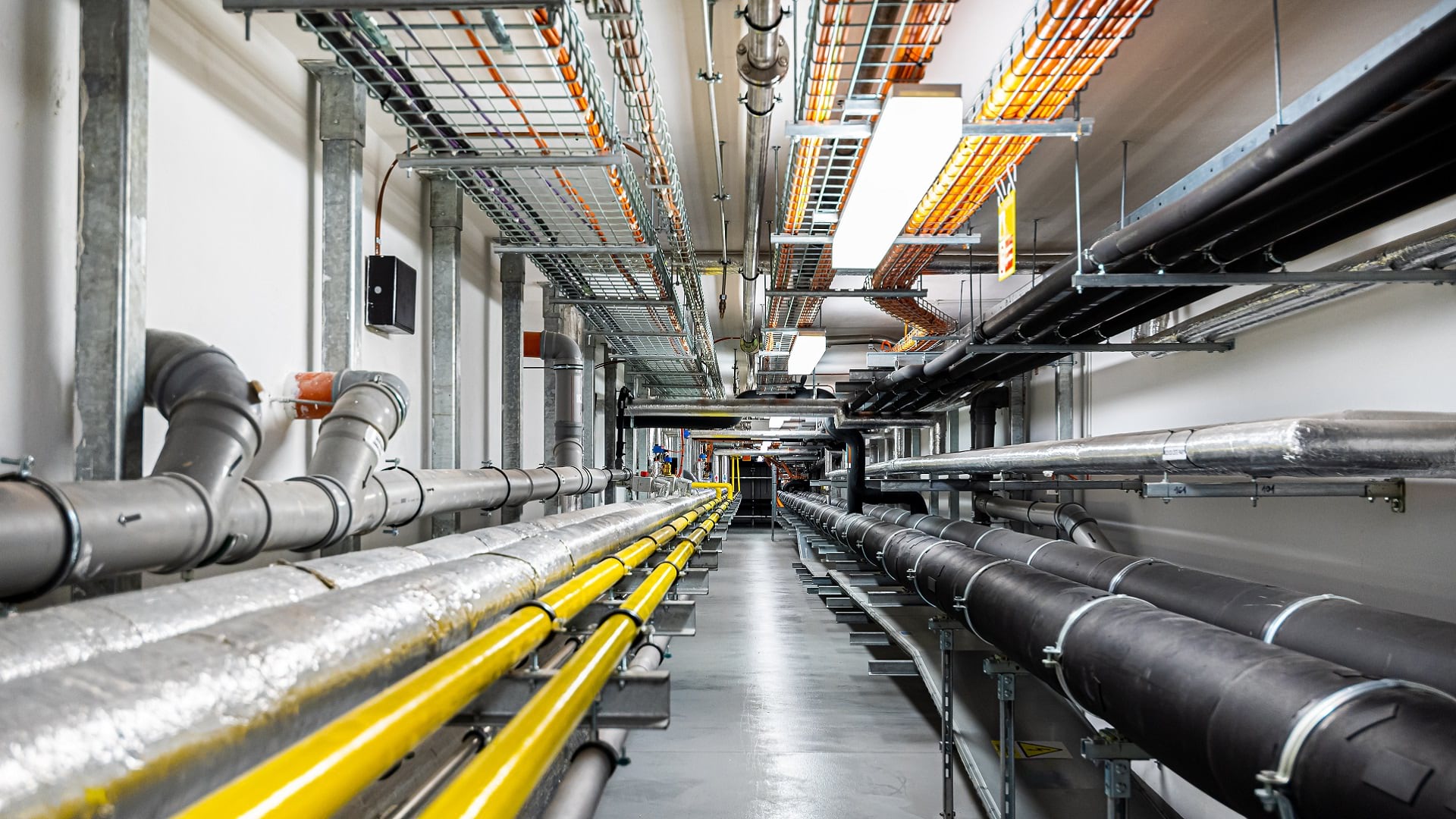
Speaker 2: Even if your city is growing or it's, if it's decreasing, you have the same needs. So having, uh, control of your data and your information, you can handle both those situations. And in Sweden, my personal interest as of now is about the, um, aging water and sewage networks, the infrastruc- structure that nobody sees, right?
So- And if you do things properly, you can actually use the, the network as a digital twin. And all the information [00:11:00] that you s- you collect, uh, on that twin, that, uh, you can analyze and do the renewal of pipe- pipes. And, um, that mean- means that, um, we can actually help the customers to put their money on the right spots.
So those kind of stuff, uh, or challenges we have.
Speaker 3: I've heard you talk of the life cycle of a city, and that, I really like that, you know, th- that visual. Uh, can you explain what you mean by that and what that really entails?
Speaker 2: Yeah. Uh, cities are never finished. Sometimes they are, but usually they, they are not.
And, um, things change all the time. New housing, new roads, n- new rules, renewal of population, stuff like that. And, uh, when I talk about city's life cycle, I mean all those ongoing things. Good digital system, uh, helps municipalities to keep track of all that. And, um, [00:12:00] so, um, so, in order to make smarter decisions for the future.
And, uh, we end up in this data-driven digital twin, uh, that evolves, yeah, at the same pace. So that is my definition of a life cycle of a city.
Speaker 3: Claes, you've worked with geospatial technology a long time. Uh, what excites you about the future of this industry?
Speaker 2: Mm. I think I saw my first Esri products back in 1996, and since then I've been around Esri tech.
And, um, and still, so much is yet undone. For me, it's like that. And, um, and the tech just keeps g- uh, getting more accessible. It keeps growing, and now we introduce AI. So for me, uh, with every improvement we do, uh, more municipalities, big and small, discover what's possible, right? And for me, the real excitement is, is, ha- has never been about the technology.
It's about when you meet the customer or the municipality or [00:13:00] person within that municipality that says, uh, "This, uh, technology actually changes the way I work with my city." So that is still driving me in this, uh, context.
Speaker 3: Well, Claes, thank you so much for joining. Wonderful podcast and really enjoyed it.
Speaker 2: Thank you so much.
Speaker: Thanks for listening to the Esri and the Science of Our podcast. If you like this episode, please share it with a colleague.
Claes Francke, chief product officer of Geosolutions for Sokigo, explains how a living digital twin has transformed Swedish civic governance.
If you like this episode, please share it with a colleague.
Listen to and subscribe on