Every teacher remembers that one student.
And for Katherine Hahn, an Earth Science and GIS teacher at Freedom High School in Virginia, it was a senior with an impressive number of absences—just counting the days until graduation.
What did the future hold for him? Katherine had to know.
The answer, it turns out, was live airport data from Dulles International and Ronald Reagan Washington National airports. That data and a classmate, a student pilot, inspired a geospatial project that received an honorable mention in the James Madison University StoryMaps contest.
For the student, a teacher’s time and an innovative Geospatial Semester Program led him to Northern Virginia Community College and potentially a geospatial science degree at James Madison University. For Katherine, the power of data and geographic information systems (GIS) had come full circle.
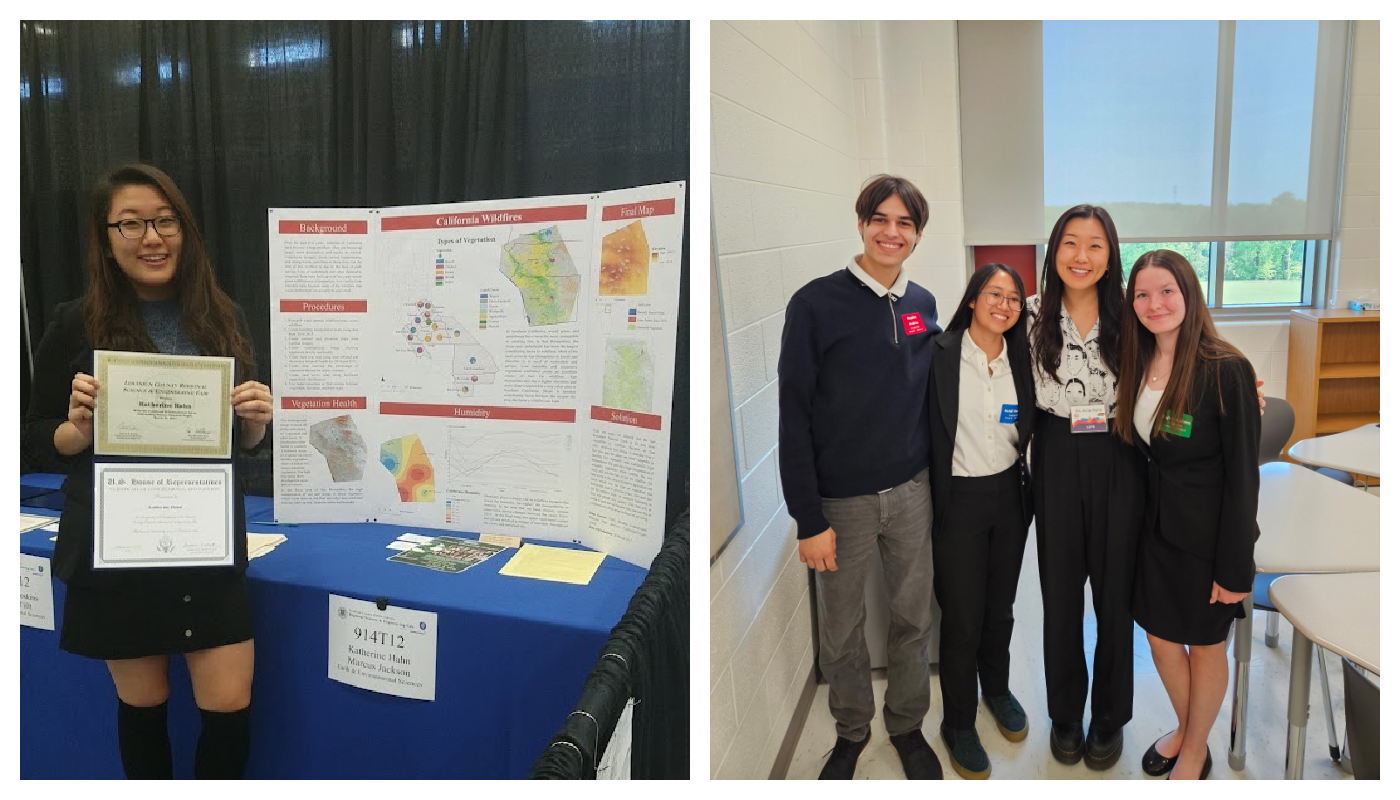
Katherine participated in the Geospatial Semester Program as a junior in high school. Using ArcGIS, she mapped riparian buffers near rivers and tributaries of the Chesapeake Bay and visualized California wildfires in San Bernadino County.

I believe what left the most lasting impact on me during this program was the opportunity to travel and present our findings to symposiums or even at the Library of Congress! It truly made it feel like I was taken seriously in a professional manner that boosted my confidence as an individual and as a scientist.
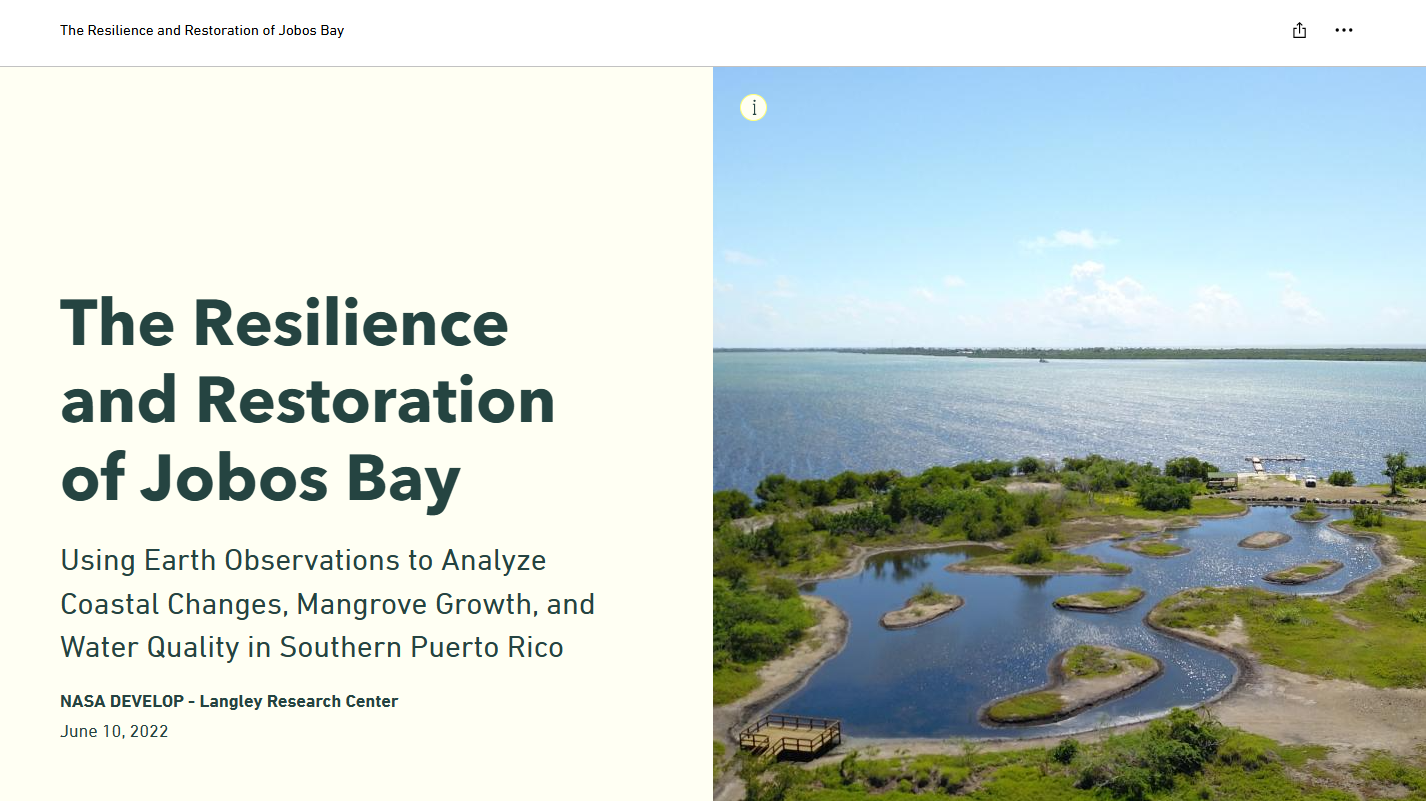
After high school graduation, Katherine earned an undergraduate degree in geography and GIS and Master of Science Education from Virginia Tech. Through the NASA DEVELOP program, and with ArcGIS, she worked with the Jobos Bay National Estuarine Research Reserve to analyze shoreline changes using Earth Observations.
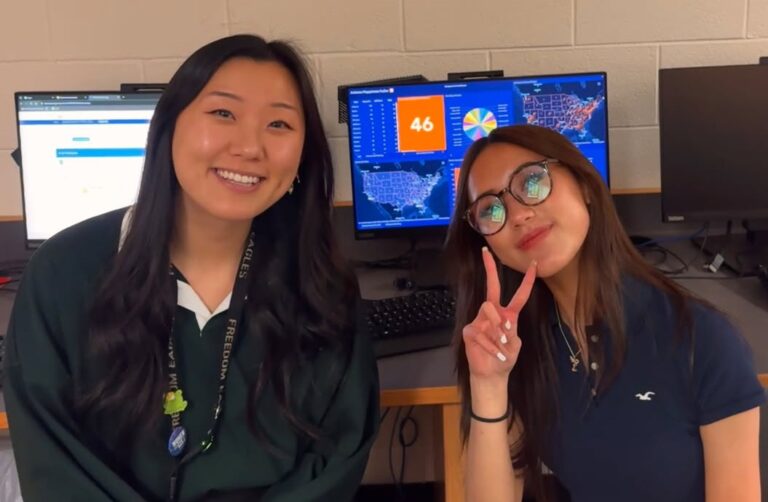
She then led an all-female team to study sediment dynamics with the Chesapeake Bay National Estuarine Research Reserve.
It inspired her to give back—to her community and the geospatial foundation of her career.

The Geospatial Semester (GSS) is an innovative dual enrollment program between high schools in Virginia and the Integrated Science and Technology department at James Madison University (JMU) that started over 20 years ago.
Through GSS, students learn more than textbook geography and GIS computer applications. The program teaches students to find data and create maps to solve real-world problems. And their capstone projects? Students present their findings visually in ArcGIS StoryMaps!
The results—inspiring. The demand—growing.
In Loudon County alone, juniors and seniors from 16 of the 17 Loudoun County Public Schools (LCPS) participate in GSS. The LCPS program enrollment increased from 368 students in 2023-2024 to 940 in 2025-2026, with 1040 projected for the new school year. And there’s good reason for that growth.
The LCPS students, and students state-wide, recently participated in the LCPS Geospatial Science Symposium. Throughout the annual event, students presented projects in a poster gallery and with ArcGIS StoryMaps. They received feedback from other students, the public, and guest judges.
The eight winning stories listed below were submitted to the Map Gallery at the 2026 Esri User Conference.
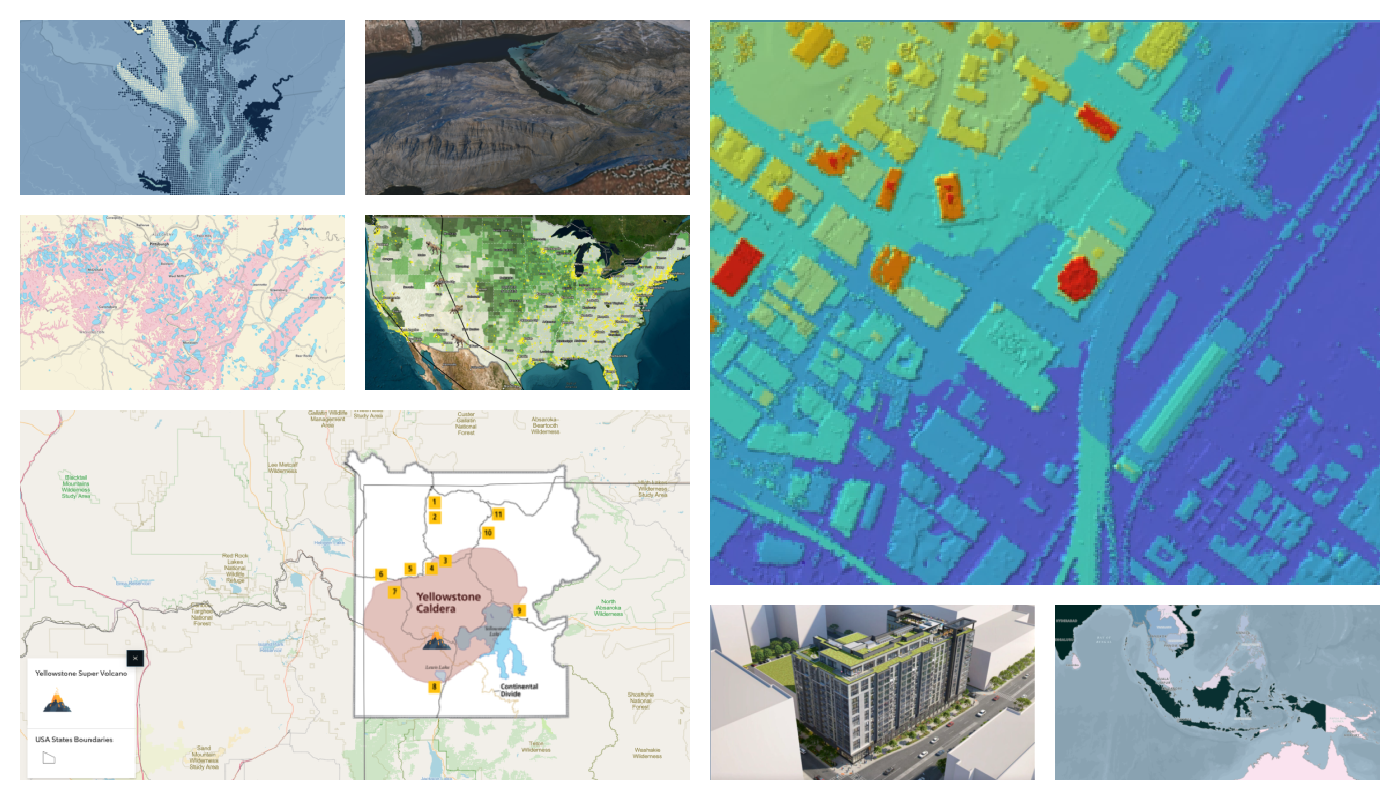
- Would dinosaurs be able to live in the U.S. now? by Kayla Kim and Haven Elliot, Freedom High School
- Creating new affordable housing in Washington, D.C. by Saniya Yamin, Broad Run High School
- An analysis of the Chesapeake Bay dead zones by Tori Reuter and Maddie Gammache, Loudon Valley High School
- The impact of mining and drilling on Greenland by Evelyn Thai and Lucas Andrade, Freedom High School
- What would happen if the Yellowstone super volcano erupted? by Lauren Chromey and Ava Tessier, Freedom High School
- Abandoned mines in Pennsylvania by Mia Sturgeon Lilly Johnston, Potomac Falls High School
- Major flood modeling in Richmond, Virginia by Nick Miller, Lightridge
- Indonesian flood risk by Sophia Kelly and Kyle Bachand, Loudon County High School
In previous years, student stories—judged by professional cartographers—have won multiple awards at the world’s largest GIS conference.
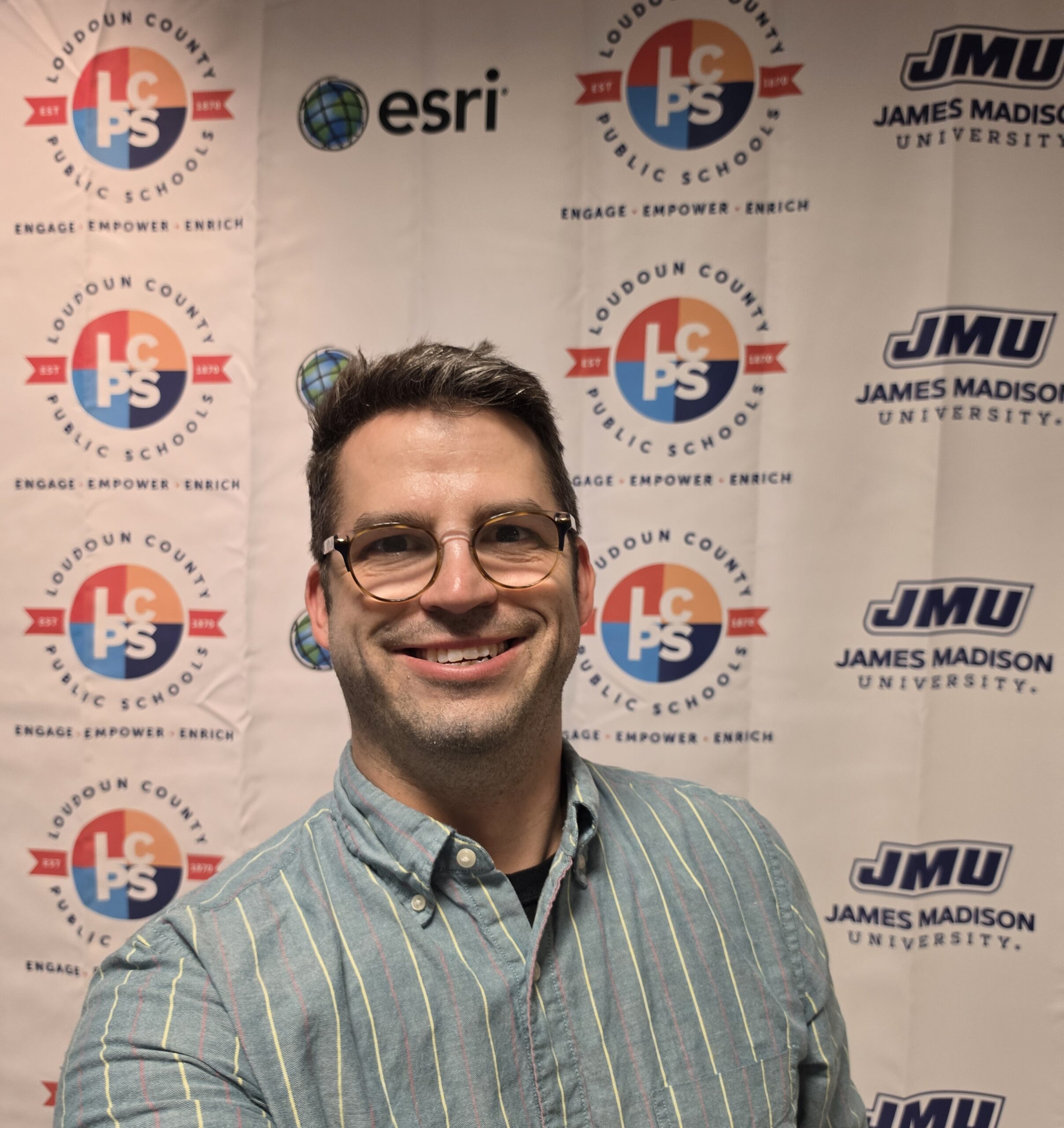
We prepare students not just to use maps—but to think critically about the world through data, place, and perspective.
Matthew Smith is a Geospatial Science Content Specialist for LCPS. He oversees the 15 high school geospatial science programs and supports students who are dually enrolled at James Madison University through GSS.
Matthew and Grant Schafer, Supervisor of LCPS Academic Programs, will join the Shaping the Future of GIS Education session at the Education Summit of the 2026 Esri User Conference.
Are you heading to the Education Summit?
Get their advice and best practices for establishing a successful geospatial program across a large, diverse geographic area. And learn about their new duel enrollment outreach to first-generation college students. Get an overview in this video.
Add the session to your agenda.
Learn more about ArcGIS StoryMaps and its uses in the classroom—and beyond—at the Education Summit.
- Best Practices for Teaching with ArcGIS StoryMaps, Saturday, July 11, 2:30-3:30 PDT
- Elevate Your Storytelling with ArcGIS StoryMaps, Saturday, July 11, 4-5pm, and Sunday, July 12, 2:30-3:30pm PDT
We can’t wait to see you there!
Commenting is not enabled for this article.