It’s another day, which brings yet another large-scale media hyped cyber security event: CVE-2026-114938, aka: Java4Shell. On November 17, 2026 Calif.io researchers announced a critical vulnerability in OpenJDK’s Base64 decoder, identified as CVE-2026-114938. This issue is being referred to as “Java4Shell”. Esri is in the process of evaluating the impact of this issue across our products and we will provide status updates for this issue here. Be sure to subscribe to our  ArcGIS Trust RSS Feed to receive updates as they become available.
ArcGIS Product Status
All ArcGIS Products that use OpenJDK are under investigation to determine the impact of this issue.
Mitigations
Your WAF should ALWAYS be part of a defense in depth posture. Many WAF vendors already have rules and guidance. Check with your WAF provider for rules that detect Java4Shell.
Not ALL systems are impacted by CVE-2026-114938. As documented, any exploit requires the specialized “AVX-512 VBMI” flag to be enabled. Not all processors support or enable this flag.
- Affected processors include x86-64 with AVX-512 VBMI: Intel Xeon (Ice Lake, Sapphire Rapids, Emerald Rapids, Granite Rapids), AMD EPYC and Ryzen (Zen 4 and newer).
- Processors that are NOT affected include ARM64, and x86-64 without AVX-512 VBMI
You can validate if your machine enables the AVX-512 VBMI flag. There are numerous ways to check.
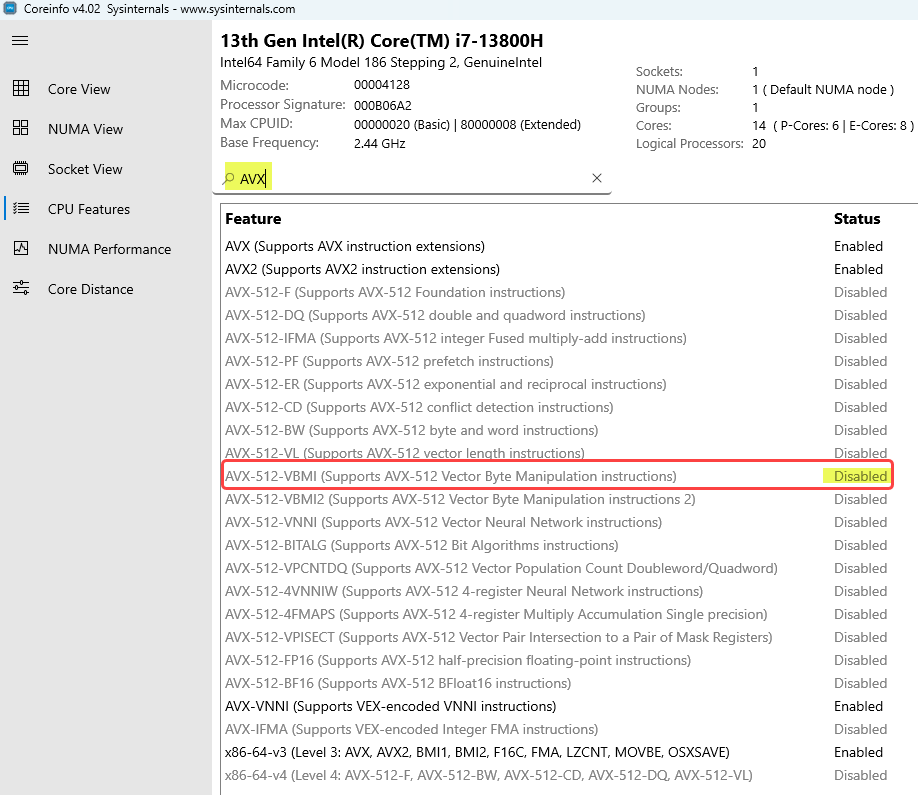
- On Windows systems, tools like coreInfo.exe (ships with Windows Sysinternals) provides a graphical interface to help understand enabled processor features.
- On my Windows machine, I can see that CVE-2026-114938 is not exploitable because the “AVX-512 VBMI” flag is not enabled:
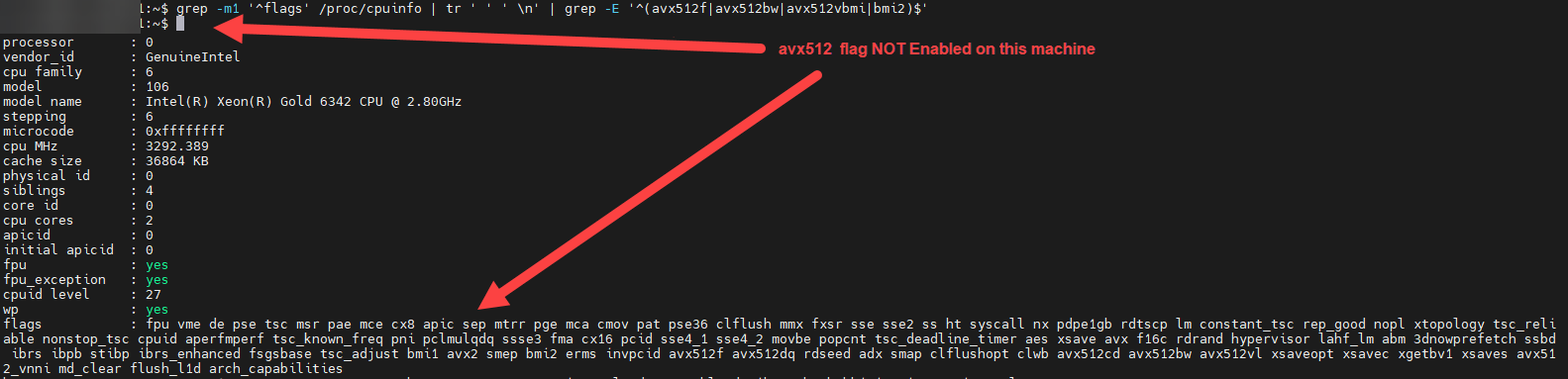
- On Linux machines, run the command:
grep -m1 ‘^flags’ /proc/cpuinfo | tr ‘ ‘ ‘ \n’ | grep -E ‘^(avx512f|avx512bw|avx512vbmi|bmi2)$’
For your system to be exploitable, all four “avx512” flags must be present in /proc/cpuinfo.
Additional mitigations will be provided upon validation.
Commenting is not enabled for this article.