A simplified explanation of domains, what they do, and their importance.

The ArcGIS Utility Network (UN) has been around for a while now and we have seen many customers making great strides in their migration and implementation efforts. As more and more industry professionals work with and become proficient in the UN, we have received mountains of input, suggestions, recommendations, requests, ideas, and modifications from you, our user community. In one particular industry, we have received significant feedback and requests for functionality specific to that industry. Telecommunications, we have heard you and we have an answer to your request: a domain for the utility network specific to telecom will soon be available! While we are excited to announce and reveal the capabilities, what does this really mean and what are domains really all about?
Domains are the data structure and properties that tell the utility network the kind of system it is going to manage. Essentially, groups of features in the domain determine the type of system you are mapping and what kind of activities you can do within it. Domains provide the framework of the network to be built. They are part of a bigger decision model that helps determine what capabilities will be leveraged within the network and the types of tools that will help a user perform their necessary business processes. With our new efforts designed for telecom, the utility network will soon have an additional domain type, along with the existing structure and traditional domains, supporting the needs of various industries. Let’s take a deeper look at each of these domains, what they are, and who they serve.
First, we will explore the structure domain. This domain is foundational and occurs in every utility network configuration. It is where all of the structural elements of the network are stored and forms the base of any utility network setup. Features in the structure domain provide the backbone upon which other operational components are built. Common examples of structure domain components include items such as poles, ducts or vaults. Because of the flexibility of network rules (containment and structural attachment) traces can be configured to include and return information from the structure network. Once a structure domain is established, additional domains that articulate how a given commodity moves through the network can be added for a complete and functional utility network design.
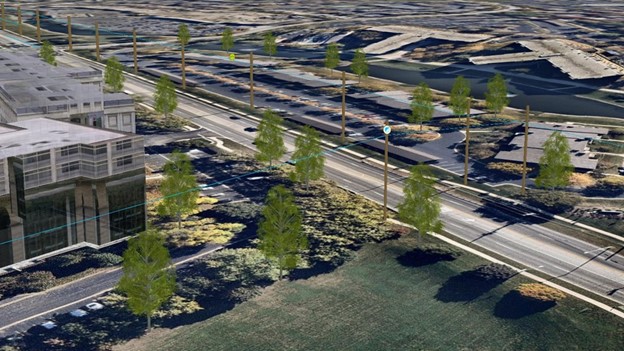
Second, we will consider the traditional domain. This domain can be enabled in addition to the structure domain to facilitate the type of commodity flowing through the network that we need to be able to map. While the utility network can be composed of various domains, this traditional domain consists of network options based upon two different tier definitions. These tier types enable the features and capability a user will have available. These two tier types are defined as partitioned and hierarchical tiers.
Let us first delve into the partitioned tier. If wires and cables are the focus of the network, as with electricity or communications, activating a partitioned tier allows the necessary features and functionalities to be available for those industries. This tier provides rules and structure where features are independent and can only belong to a single circuit. This allows the model to represent the electrical or communication flow across the system in a logical manner.
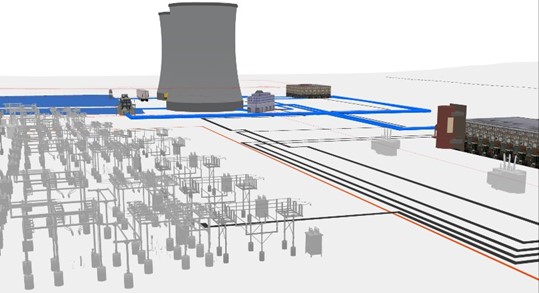
Now we can dive into the hierarchical tier. If pipes are needed, configuring a hierarchical tier within the traditional domain enables the types of behaviors needed for those industries. Because items can flow based upon gravity or pressure requirements, pipeline businesses need a very different set of tools and capabilities as compared to those in the electric and communications fields. With the hierarchical domain, a user would have access to perform actions that are necessary and commonplace for water, sewer, gas, and other pipeline industries.
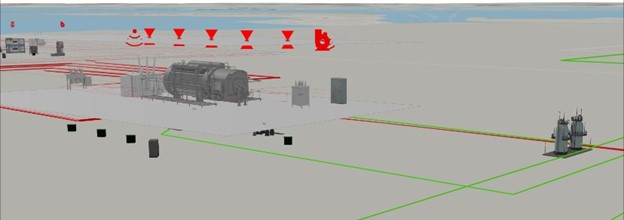
Finally, let’s look at the latest addition to the domain family, the telecom domain. With the new capabilities in the telecom domain, you will be able to activate a utility network system that has tools designed and curated to meet the needs of your industry. Enhancements like the ability to easily map nonspatial features using new grouping techniques, tracing that works the way you do your work, and advanced circuit management practices that replicate the real-world scenarios telecom companies deal with on a daily basis can all be found utilizing this domain.
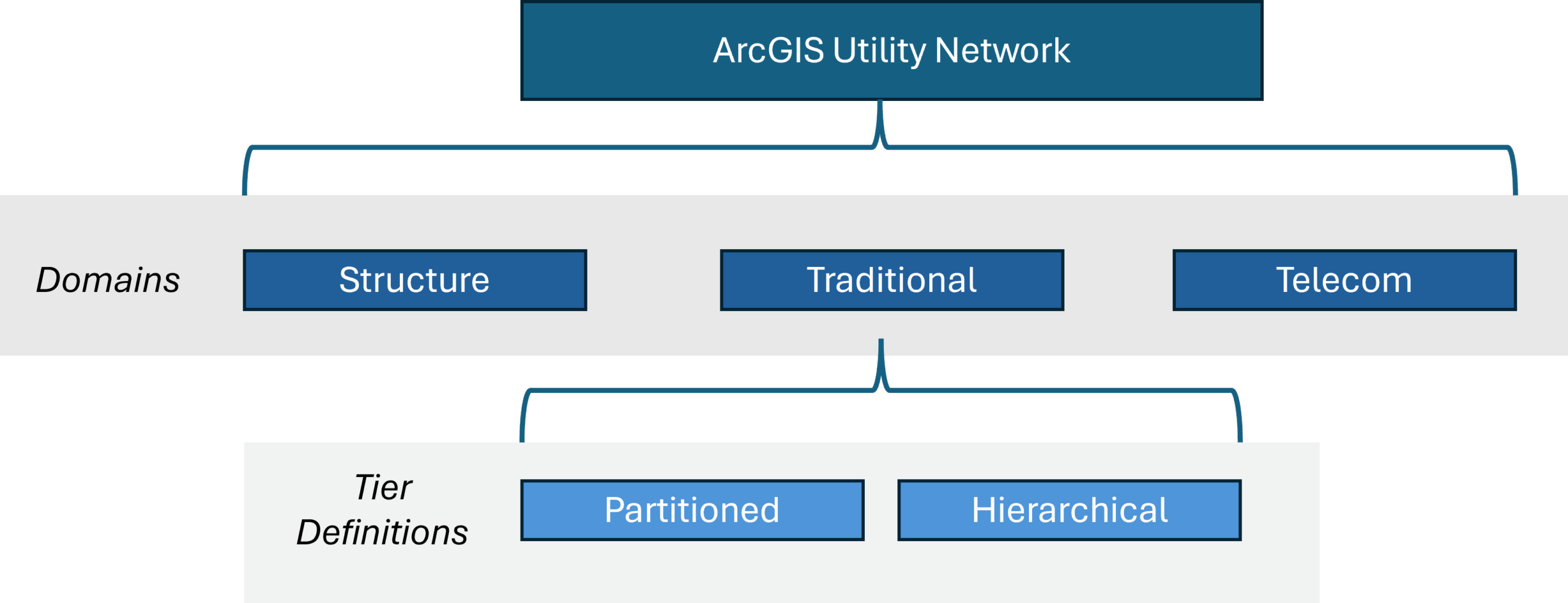
In summary, domains and tier definitions tell the utility network how the data is organized and how rules will govern the result of the tools and the functionality available. We needed to offer a new domain network to meet the needs of customer demand and to offer advanced capabilities for the larger telecom users around the world. The Communications Utility Network Foundation is still available in the traditional domain and will remain for those who choose to utilize it. However, the new telecom domain is simply an additional option to consider when implementing the utility network depending on business drivers and functional needs.
For additional information regarding utility network domains, please see the Esri Help documentation.



Commenting is not enabled for this article.