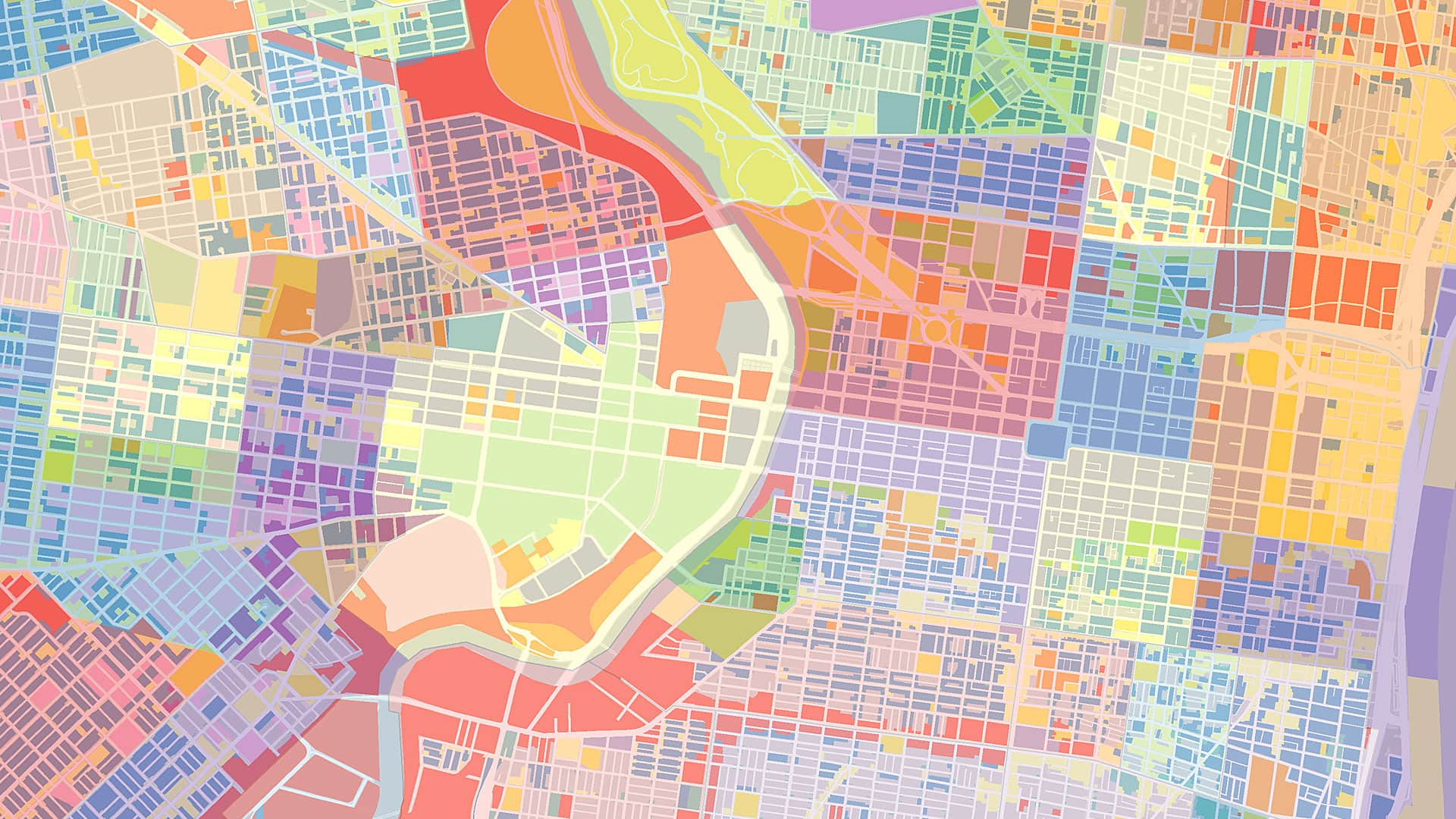
Maps do more than show where things are; they denote the landscapes, weather, environments, and histories that shape society. They make scattered pieces of life click together.
Local maps, for instance, help people navigate neighborhoods without getting lost. Public transport maps keep travelers on track, helping them get to the right place at the right time. Globes showing parallels, meridians, the Tropic of Capricorn, and the Tropic of Cancer give students a better understanding of the seasons. In well-designed maps, visual variables such as orientation, shape, size, and color work together to relay specific messages. But what if the traditional, image-driven format of a map simply isn’t accessible, excluding you from using it? Both of us are intrigued by this question.
Wabiński remembers being five years old, clutching his first hiking map in the Polish mountains.
I was thrilled by the idea that I could find my own way, even if it meant getting lost now and then. That early love for maps stayed with me, and years later, I stumbled into a second fascination: 3D printing. The two passions collided when I was at university. I thought, “Why not use 3D printing to create raised maps for people who can’t rely on sight?” I have spent the last eight years researching design approaches and production methods for creating legible and informative tactile maps—physical maps with embossed elements that allow people with visual impairments to feel the lines, polygons, and other shapes that symbolize different spaces. My research is based on inclusive participation, where end users are involved in the creative process, from providing feedback to verifying solutions.
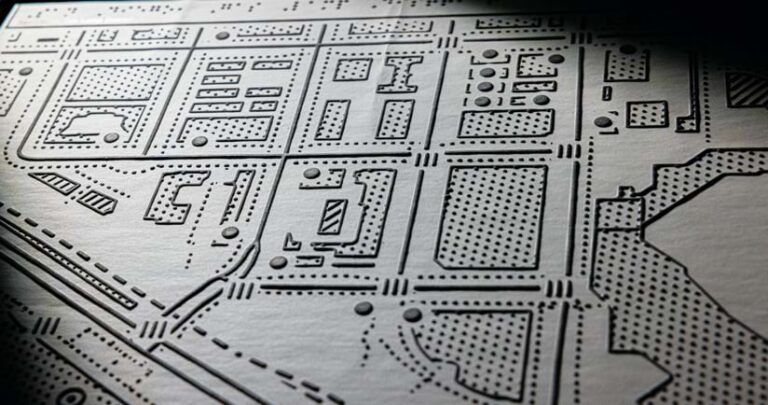
Van Altena’s journey from digital map production to tactile cartography began in Zurich, Switzerland, in 2017. Cartographer Anna Vetter—then an intern at Esri Switzerland—showed him an example of her work during the internship: a black-and-white paper map with raised lines that revealed the shape of Switzerland.
At that moment, something clicked: If Anna could create an entire tactile atlas of her country, why couldn’t I do the same for my country, the Netherlands? That question led to a map-development project where people with visual impairments were brought on as experts rather than merely consultants. They shaped everything, from the purpose of the maps to the symbols, textures, and layouts. The maps were iteratively refined to improve symbol clarity and reduce the cognitive load required of users. My greatest takeaway from this project was to design with people, not for them.
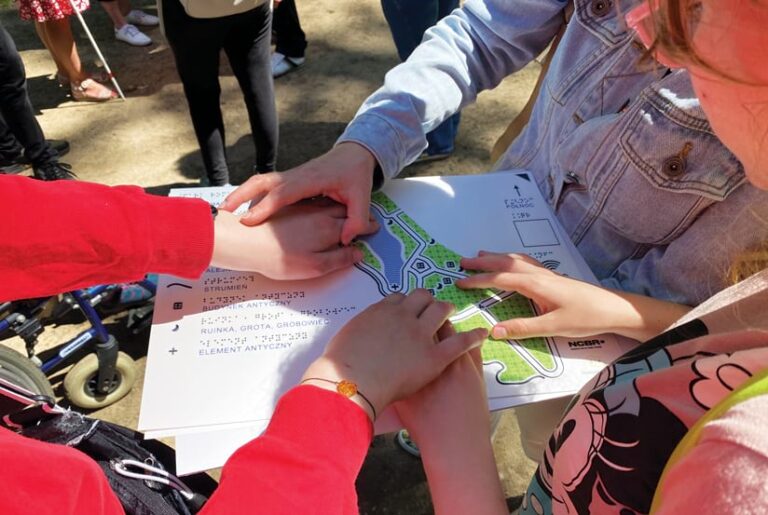
Our paths crossed in 2023 when we were both searching for other tactile mapping initiatives. That first online meeting sparked a collaboration, and since 2024, we have cochaired the International Cartographic Association’s (ICA) Working Group on Inclusive Cartography. In the mid-1980s, the ICA began pushing cartography beyond purely visual formats. Its former Commission on Maps and Graphics for Blind and Partially Sighted People laid the groundwork for decades of tactile mapping research, while the Working Group on Inclusive Cartography now seeks to close the gaps between theory and practice. Chairing this group for the last two years has allowed us to work with other cartographers around the world to advocate standards, develop course materials, and host workshops about accessible mapmaking.
We also cowrote a book, published by Esri Press in 2025, called Tactile Mapping: Cartography for People with Vision Impairments. With case studies and user stories from around the world, it examines the technical side of creating tactile maps—including how symbols, textures, and generalization work together to recreate spaces in ways that people with little to no sight can recognize—alongside real-world accounts of how people with various visual impairments use maps. The chapters cover a wide array of topics, from tips for designing inclusive map symbols to optimizing route planning for blind pedestrians. But one principle unites the entire volume: A tactile map only works when the people who use it say it does.
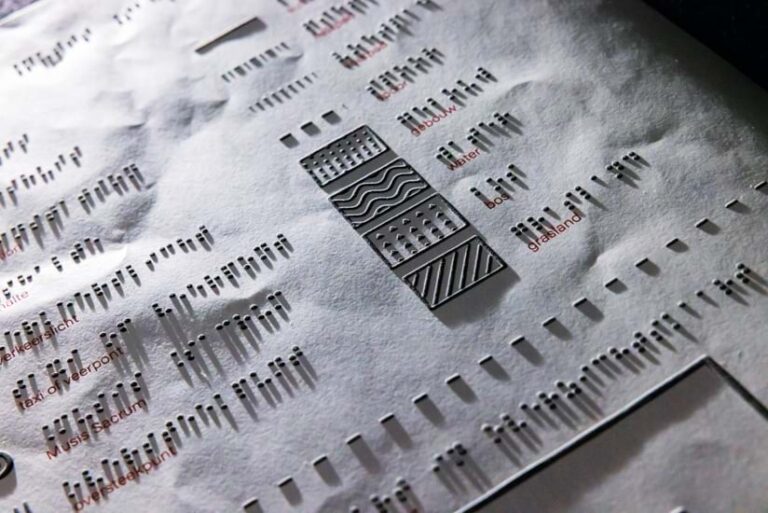
The amount of information that can be digested through touch is significantly smaller than what can be perceived by sight. Since people read tactile maps using their fingers and hands—and at times, also with limited eyesight—what these maps convey must be distilled to its essence. This makes tactile mapmaking one of the most demanding forms of cartography.
Most guidelines that exist for making tactile maps are tailored to specific contexts, which inherently limit the maps’ uses. What’s more, creating tactile maps is typically a slow, subjective, and expensive process. In effect, tactile maps aren’t widely available—despite rising demand for them, especially in areas with large aging populations.
Another project—the Tactile Graphic Repository, known as T-rep—is an emerging source of knowledge on principles for tactile map design, complete with a library of tactile symbols made with input from experts all over the world. Led by Wabiński, T-rep combines theory with practice in a way that’s helpful for designing and producing tactile maps. Anyone interested in making tactile maps can go to the repository to see what kinds of symbols work, as well as share their knowledge of this field.
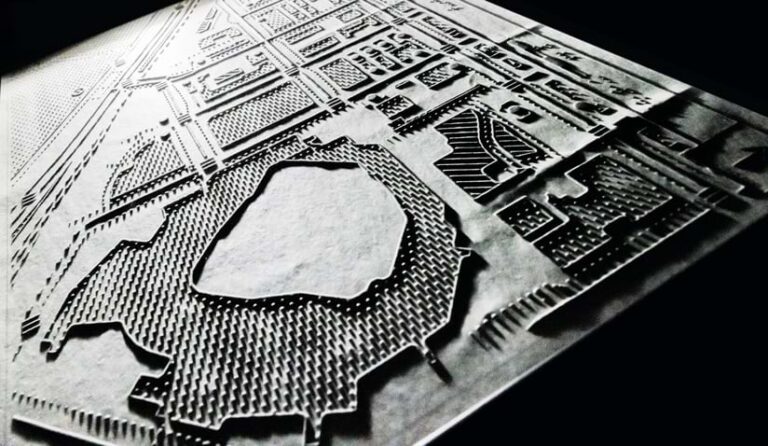
The best way to get a feel for tactile mapping is to give it a go. That’s why Van Altena helped develop a tutorial for ArcGIS Pro that teaches people how to create a tactile map. Over about an hour, participants design a tactile map of Washington, DC, for a friend who is blind. This friend enjoys visiting the city’s Edward R. Murrow Park and wants a clearer sense of the neighborhood’s layout. While it’s a simple exercise, it captures the essence of tactile mapping: translating spaces that most of us see into something that someone else can understand via touch so they can build their own mental map of the world.
We believe that maps should not reinforce barriers but should instead dismantle them. The more mapmakers and cartographers who embrace this ethos, the greater impact we can all have. So please join one of our initiatives, get in touch to collaborate, or start a tactile mapping project of your own. Even if it’s just one map for now, that map could make all the difference to the person whose hands it falls into.