In 2024, the US Environmental Protection Agency finalized its Lead and Copper Rule Improvements (LCRI), which require drinking water systems across the country to remove every lead service line (LSL) and all lead-tainted galvanized pipes within 10 years. As part of this mandate, every Public Water System (PWS) is required to complete an inventory documenting water service line materials, and community leaders have been working toward compliance nationwide. Critical deadlines have been identified, and state and federal agencies expect PWSs to continuously update and submit these inventories.
For many Indiana PWSs, these requirements can be hefty initiatives with significant knowledge barriers and re-source challenges. Faced with incomplete water records, a heavier workload, and a lack of digital tools to improve speed and data accuracy for inventory submittal, communities are often unsure where to begin.
Funding from the Indiana Department of Environmental Management and the Indiana Finance Authority provided PWSs with needed support. In addition, third-party consultants and technology firms helped manage workflows, relieving the strain of daily operations.
Abonmarche—a company that pro-vides surveying, engineering, and site development services, among others—has been assisting communities across the state of Indiana in achieving compliance. With a multidisciplinary approach that includes the use of ArcGIS Online, ArcGIS Field Maps, and other GIS tools, Abonmarche has been able to jump-start communities’ ability to meet service line inventory and replacement requirements and to secure and administer funds for the future of their lead service line replacement.
Project Delivery Sites and PWS Partnerships
Abonmarche’s work with each PWS included a platform known as a Project Delivery Site (PDS), based on ArcGIS Online. Each PDS was designed to host the community’s GIS data and enable residents to share project progress. Staff at each PWS benefited by being able to concentrate on content without the need to understand how to administer an ArcGIS Online site. After project completion, each community was left with a functional GIS platform, and Abonmarche has continued to provide on-the-job training, standard operating procedures, and support.
Each PDS also includes a site created using ArcGIS Hub that organizes people, data, and tools through information-driven initiatives such as surveys and FAQs.
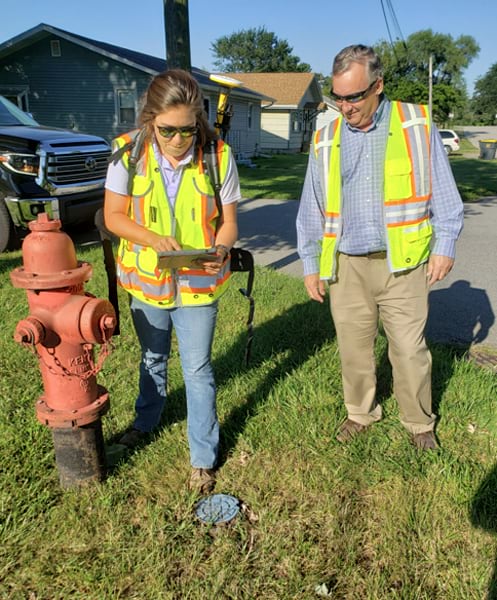
Several partner communities also needed help to synthesize data sources when developing a service line inventory. This included digitizing historical records (as-builts, documents of record, tap cards) as well as converting existing GIS data into a more compatible and comparable data schema. Using GPS receivers to collect the accurate location of water infrastructure components (water meters, access pits, and curb stops) was crucial in this effort.
Knox, Indiana
With around 3,600 residents, the City of Knox, Indiana, needed to address citizen concerns regarding the impact of the city’s service line inventory program. Mayor Dennis Estok and his staff wanted a solution that consolidated information and utilized specific program FAQs.
Communication in smaller communities is magnified, so the approach needed to ensure residents were informed early and thoroughly. Since the city already used ArcGIS Online in its operations, the Abonmarche team was able to use ArcGIS Hub to configure a site quickly. The Lead-Safe Knox site was populated with information about the city’s Lead-Safe program, making the site the central repository of education and information.
“We found the hub site to be exactly what we needed in communicating the program’s goals to our residents,” said Estok. “The concentration of information in this repository was efficient, and our staff pointed residents in the right direction.”
Now residents can easily find lead service line information and quickly understand the program’s goals through self-education. This solution provides residents with detailed information, which reduces phone calls and emails to city staff.
Auburn, Indiana
Auburn, Indiana, is a thriving community with a strong commitment to infrastructure and public health. Like many others, Auburn is actively working on its lead service line inventory and replacement program.
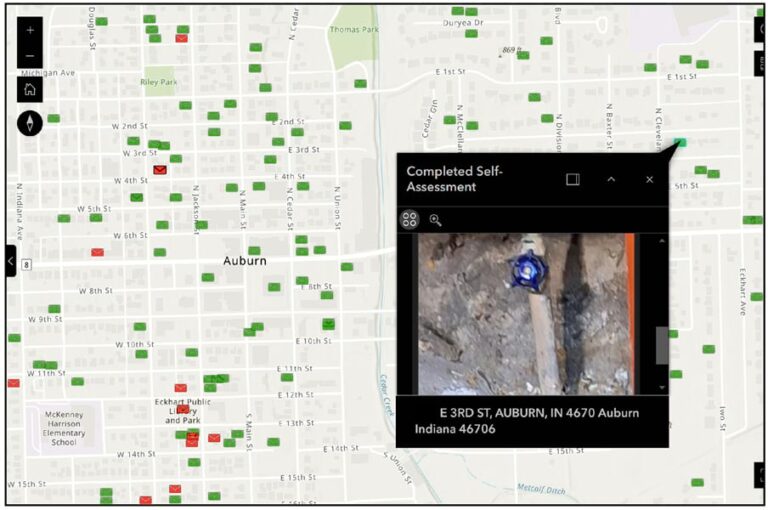
City staff took advantage of Esri’s Lead Service Line Inventory solution, embedding the ArcGIS Survey123 module within their Lead-Safe Auburn hub site. This module enabled hundreds of residents to complete an LSL survey, including uploading photos of their service lines. Residents could also schedule appointments for a staff field visit. Auburn used resident submissions to perform quality control, review, and convey progress to the public. The process developed into an inexpensive way to build resident support and compliance.
In addition to a service line inventory, the LCRI require access to bilingual information and visual and auditory options for persons with disabilities. These capabilities are built into hub sites, requiring no additional configuration to meet the requirements.
“We found the hub site and self-assessment survey highly effective in getting us started on our journey,” said Randy Harvey, water superintendent for the City of Auburn. “The access to live data and the ease of administering these tests through GIS relieved a lot of pressure on our staff. The concentration of information on our hub site made it easy to communicate the goals of our program to residents.”
City staff were easily able to configure Esri’s out-of-the-box solutions to meet the city’s needs. Self-assessments were more affordable than potholing, data collected by citizens drove decision-making, and residents with lead service lines were quickly notified.
Hamilton, Indiana
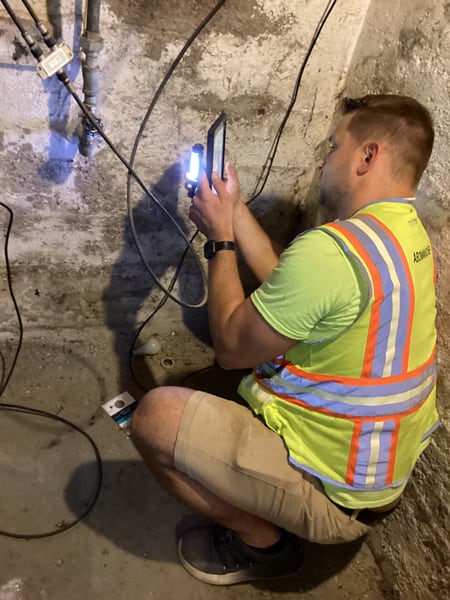
The Town of Hamilton needed boots-on-the-ground support to identify service line material. Luckily, grant funding allowed community outreach representatives to assist in door-to-door home visits. A web app built using ArcGIS Field Maps Designer simplified, standardized, and expedited the home visit process. After a few days of collecting data using iPads, a comparison was made of the success rate versus time of day during each visit. This led to scheduling field crews earlier or later in the day in certain areas. Necessary return visits were quickly identified and scheduled. The simple Field Maps Designer interface allowed for quick data entries, resulting in each visit lasting about 10 minutes.
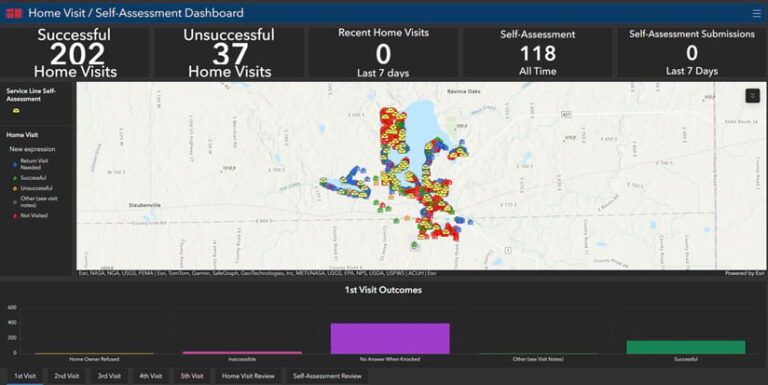
The home visit crews used a few August weekends to capture data from 202 successful home visits.
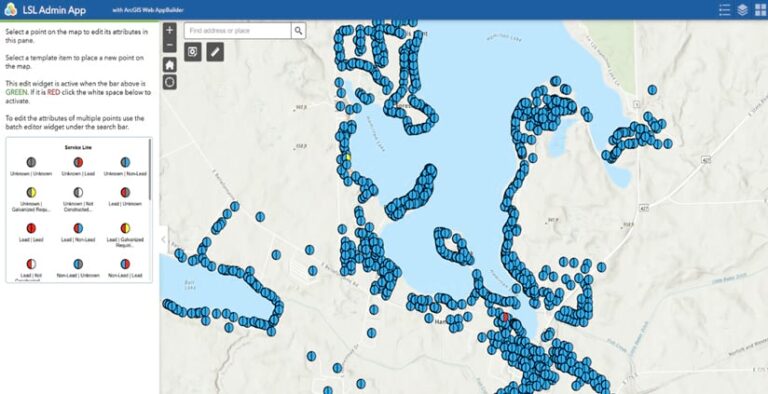
“We are known as a vacation community, and I knew capturing the data needed for the inventory would be a challenge given this fact,” said Brent Shull, Hamilton town manager. “With so many configurable GIS tools to record the information, we found the right solutions that fit perfectly to our community’s needs.”
Hebron, Indiana
Like cities and towns all across Indiana, the growing community of Hebron is committed to maintaining a safe and reliable drinking water system for its residents. To comply with LCRI regulations, Hebron utilized hydroexcavation (pot-holing) to locate and document service line materials. This ensured compliance while protecting infrastructure and reducing costs associated with traditional excavation methods.
The town used system data to train a machine-learning model that helped prioritize hydroexcavation sites. If a sizable percentage of the service line material is known through records, home visits, or customer survey submissions, selecting a potholing site nearby is less valuable since a high confidence value may be achieved based on existing known values. On the other hand, if service line material is relatively unknown, potholing may be a desirable choice, barring more cost-effective methods. Even limited data about known materials among unknowns can statistically raise the confidence level of a model.
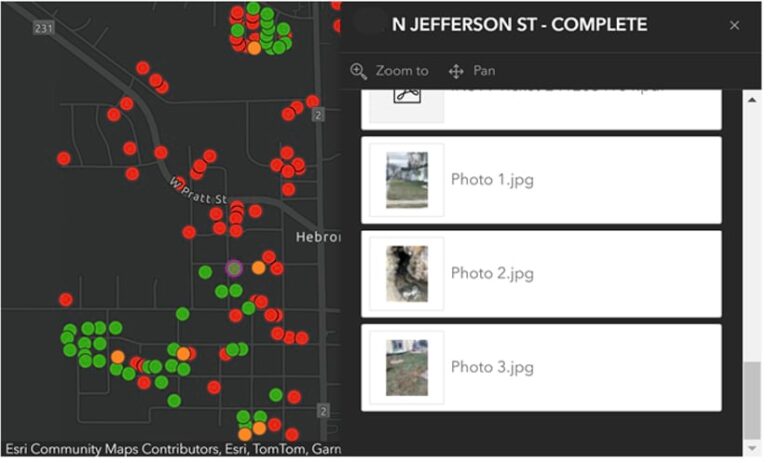
Using LSL funds, Hebron potholed over 50 locations during a two-week period. Crews used ArcGIS Online maps to track underground utilities, and ArcGIS Field Maps to verify addresses, notify customers, capture service line material types, and confirm dig completion and restoration. ArcGIS Dashboards enabled town leaders to monitor progress in real time. The start-to-finish process maintained accountability for both the town and contractors.
How Your Community Can Prepare
ArcGIS Online has been the key to updating and maintaining PWS GIS data, and Esri’s Lead Service Line Inventory solution was configured to support additional functionality and reporting capabilities. This includes web maps and dashboards to streamline inspections, construction management, resident engagement, and administration. Customers have also taken advantage of PDSs that enable Esri partners like Abonmarche to set up and help administer platforms based on ArcGIS Online. Additionally, Abonmarche works with PWSs that do not have GIS, using available grant funding from the IFA to get GIS-based solutions in place to support service line inventory and replacement requirements.
If your community still needs to inventory and replace lead service lines to comply with the LCRI, keep the following steps in mind:
- Identify your existing LSL data. If you do not have an existing service line inventory, begin by gathering historical system records and information to develop an initial inventory. If you do have one, cross-check your current inventory against the new requirements and update as needed. Take advantage of ongoing opportunities to collect data in the field, such as when replacing meters or performing main repairs and replacements.
- Identify supporting data for your LSL inventory. Supporting data such as water main age, building age, and meter information can be used to build your LSL inventory. If you have this data available, ensure that it is up-to-date and as accurate as possible.
- Initiate discussions to accomplish full LSL replacements. For many systems, achieving full LSL replacement can be a challenge. Explore and identify replacement programs and funding options, including assistance programs for customers who cannot pay to replace their portion of the service line. Discuss factors to prioritize replacements, such as targeting areas with vulnerable populations or disadvantaged customers.
- Prepare for rapid notification. Understand the various engagement time frames and delivery methods. Begin developing the required notification materials and coordinate with the appropriate departments and adjacent organizations.
About the authors

Jeff Weaver

George Nikokiris