

Founded more than a century ago to promote agricultural innovation among rural American youths, 4-H is the United States’ largest youth development organization. Today, through partnerships with more than 100 public universities, 4-H empowers more than six million young people with skills related to fields ranging from agricultural and animal sciences to rocketry, robotics, environmental protection, and GIS. These kids and teens use their skills to work on projects that aim to help address global challenges such as food security, sustainable energy, childhood obesity, and food safety.
Rooted in hands-on learning, leadership, and service, 4-H has long embraced emerging technologies to help young people connect their passions to real-world problems. Because of 4-H’s focus on experiential learning, youth empowerment, and civic engagement, GIS technology has been important to the organization for more than two decades.
A collaboration between 4-H and Esri officially began in 2006 with the formation of the National 4-H GIS/GPS Team (now the National 4-H Geospatial Team), a youth-led national initiative that has introduced geospatial science to thousands of students across the United States. From its origins to its newest chapter with the Youth Map Lab, the National 4-H Geospatial Team has been a leader in promoting GIS for America’s youths.
Partnering with Esri
Spearheaded by Tom Tate, a former national program leader of the US Department of Agriculture’s Cooperative State Research, Education, and Extension Service, the team partnered with now-retired Esri education leaders Esther Worker and Charlie Fitzpatrick to build a national network of 4-H youths leveraging GIS.
The National 4-H Geospatial Team connects youths with the technologies shaping the 21st century—such as GIS, GPS, and remote sensing—to address pressing issues. The Esri-supported team was among the first to bring spatial thinking into the mainstream of 4-H programs. Recruited through local 4-H clubs, 4-H members learn core mapping skills; work on research service projects; and present at local, state, and national conferences.
The pioneering team of Tate, Worker, and Fitzpatrick laid the foundation for an ongoing partnership that has included access to Esri software, national curriculum development, and annual participation in the annual Esri User Conference and the Esri Education Summit. Today, the partnership continues under the guidance of Esri education manager Tom Baker, PhD, and the Esri education team. These efforts also have led to the creation of dozens of 4-H GIS clubs, pilot programs for rural broadband mapping, and civic youth leadership projects. The use of ArcGIS Online, ArcGIS StoryMaps, and other cloud-based ArcGIS products has made these innovations scalable, accessible, and impactful.
Youth Map Lab: Expanding the Vision
The Youth Map Lab, launched in 2025, is a new program under the umbrella of the National 4-H Geospatial Team. Through the Youth Map Lab, students develop plug-and-play GIS and artificial intelligence (AI) workshops for students in grades 5–9. The workshops are designed for easy integration into a classroom, with an emphasis on underserved communities and Title I schools—educational institutions that receive federal funding to support students who are from low-income households. The 4-H team created the workshops so that teachers without any exposure to GIS can conduct the workshop or activity right away. The program teaches students to think like scientists, use real geospatial tools, and tell powerful civic stories using maps and data.
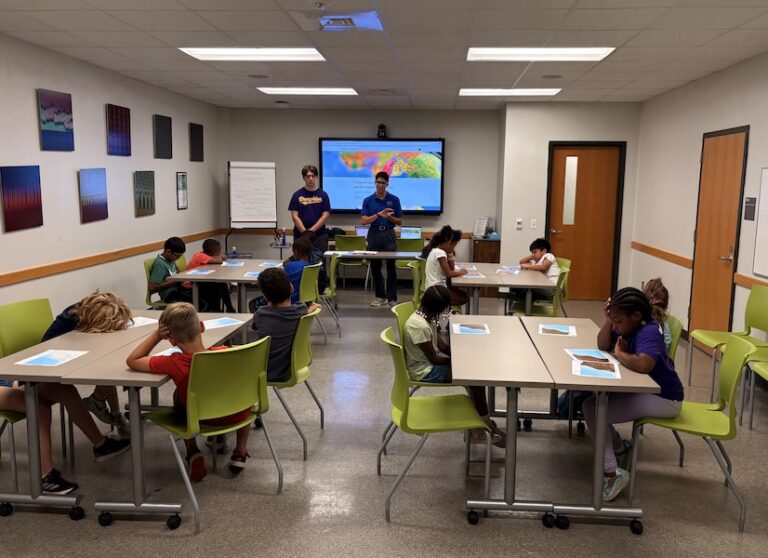
Through partnerships with institutions such as North Carolina Agricultural and Technical State University and companies like Alphabet, the Youth Map Lab has reached more than 4,000 elementary, middle, and high school students in its first three months. The program, which follows the 4-H motto of learning by doing, uses Esri tools to spark curiosity about agriculture, climate, and history. Its accessible curriculum makes it possible for educators and community leaders to introduce GIS in a hands-on, student-centered way.
The 2025 Esri Education Summit and Esri User Conference
The National 4-H Geospatial Team has participated in the annual Esri User Conference for nearly two decades, and 2025 was no exception, with a delegation of 10 youths and three adults. The group presented at the Esri Education Summit and participated in the Map Gallery and Expo, showcasing youth-led projects and demonstrating how GIS empowers young people to solve real-world problems. Many 4-H youths left the conference with dozens of new professional contacts and opportunities for collaboration, grants, and mentorship.
The team’s centerpiece presentation at the Education Summit was titled “Learning by Mapping: A New Kind of Curriculum.” This presentation documented how youths employed GIS technology to analyze America’s food supply chains, combining spatial analysis with local interviews and community storytelling. Esri tools such as ArcGIS Business Analyst, ArcGIS Survey123, and ArcGIS Online helped 4-H members create maps that blended data with lived experience to uncover gaps in food access.

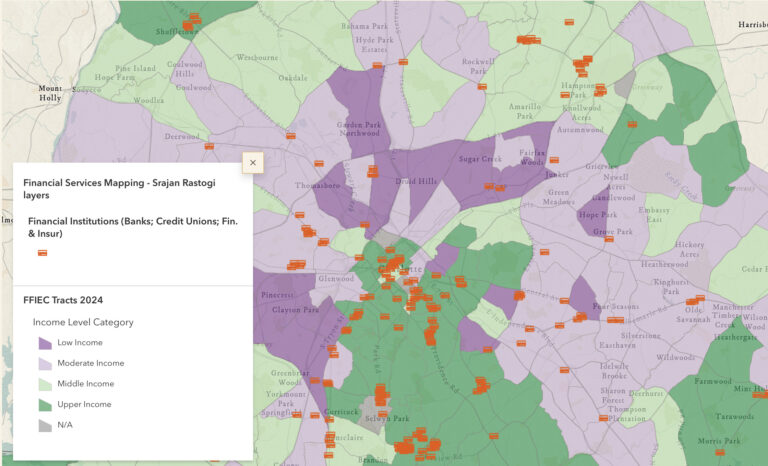
The students showcased other GIS projects at the Map Gallery during the Esri User Conference. One developed a machine learning model to detect deepfake satellite imagery. Others mapped disparities in financial services and institutions access, and the impact of COVID-19 on businesses across a community.
The Future of 4-H Geospatial Education
With support from Esri, the National 4-H Geospatial Team continues to evolve, connecting young people’s passions with GIS tools before they enter college or the workforce. It helps young people see their world differently, ask smarter questions, and design a better future.
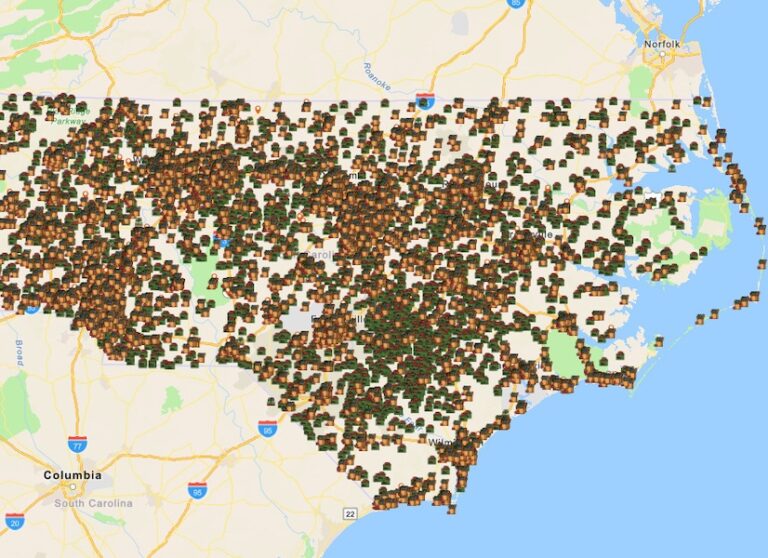
Looking to the future, the team hopes to scale GIS programs to more states, build more youth-led curricula, and launch a national peer education corps. As the world becomes more connected, geospatially literate youths will be critical—and the National 4-H Geospatial Team is preparing them to lead.