
The CHELSA bioclimate projections in the Living Atlas have been incredibly popular with the GIS community, and now we have enhanced the collection to include Growing Degree Days above 10 °C, Net Primary Productivity, Snow Cover Days, and Snow Water Equivalent. The new layers provide crucial insights into the future impact of climate change on ecosystems and human wellbeing. The new layers include projections for the early, mid, and late 21st century under several greenhouse gas scenarios (SSPs). As we continue to expand and refine our data collection, we invite everyone to leverage this resource for their work in climate science and environmental management.
What’s New in the CHELSA Collection?
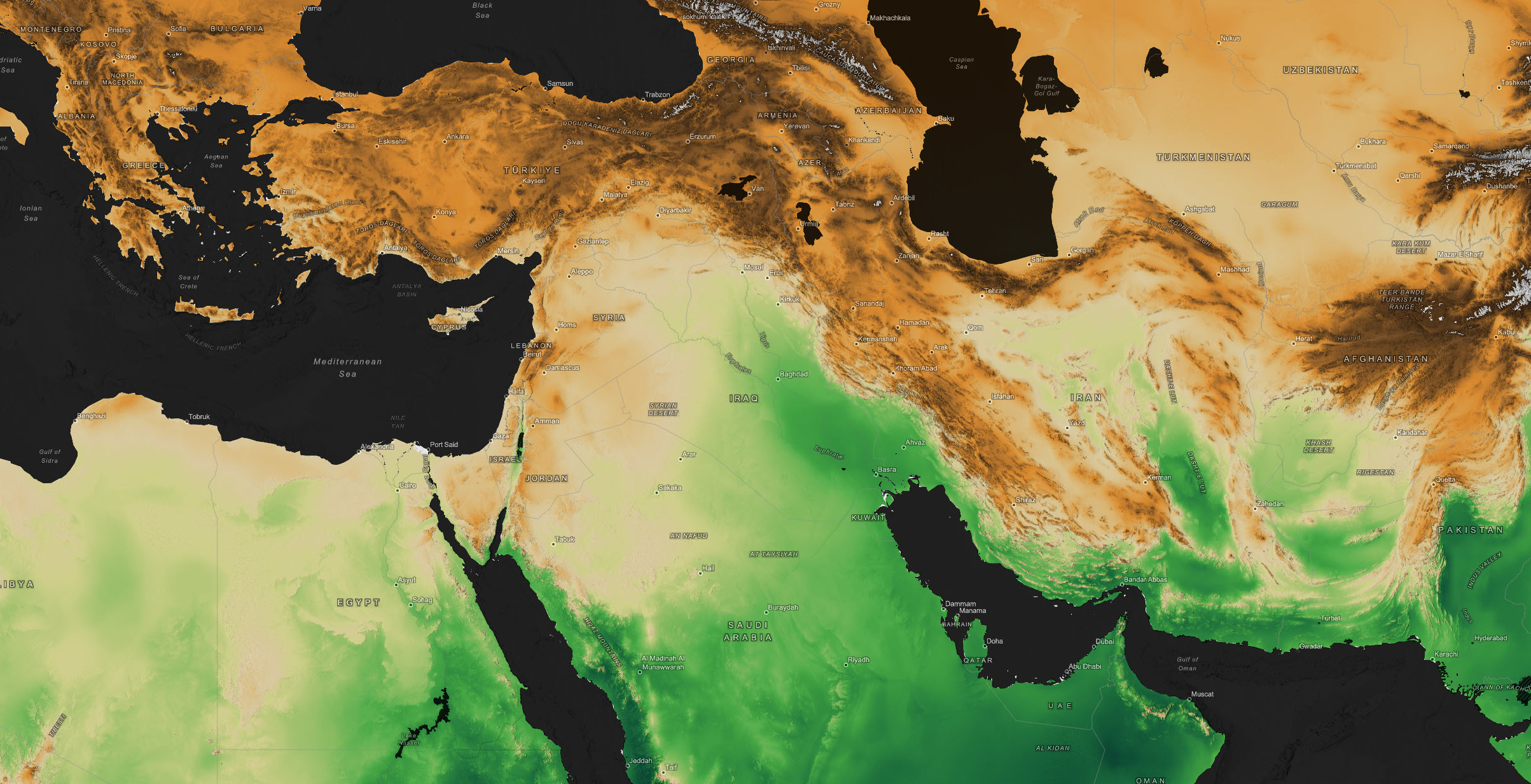
Growing Degree Days above 10 °C (GDD) is a measure of heat accumulation and can be used to predict plant and animal development rates. The GDD represents the total number of degrees Celsius by which each day’s mean temperature is warmer than 10 °C, added up over a year. In other words, if it is 20 °C today, 10 °C will be added to the total. If it is 5 °C tomorrow, 0 °C will be added to the total. A higher GDD generally indicates the potential for increased agricultural yields. But keep in mind that GDD is not the only factor that determines this. Precipitation, sunshine hours, soil quality, and plant diseases are just some of the variables that need to be taken into account. In the image below, the GDD over the Middle East is shown. While the Fertile Crescent in the northern part of the Arabian Peninsula is not as fertile as it once was due to climate change and human activities, remnants of the agricultural viability (in darker green) are still visible in eastern Iraq between Baghdad and Basra.
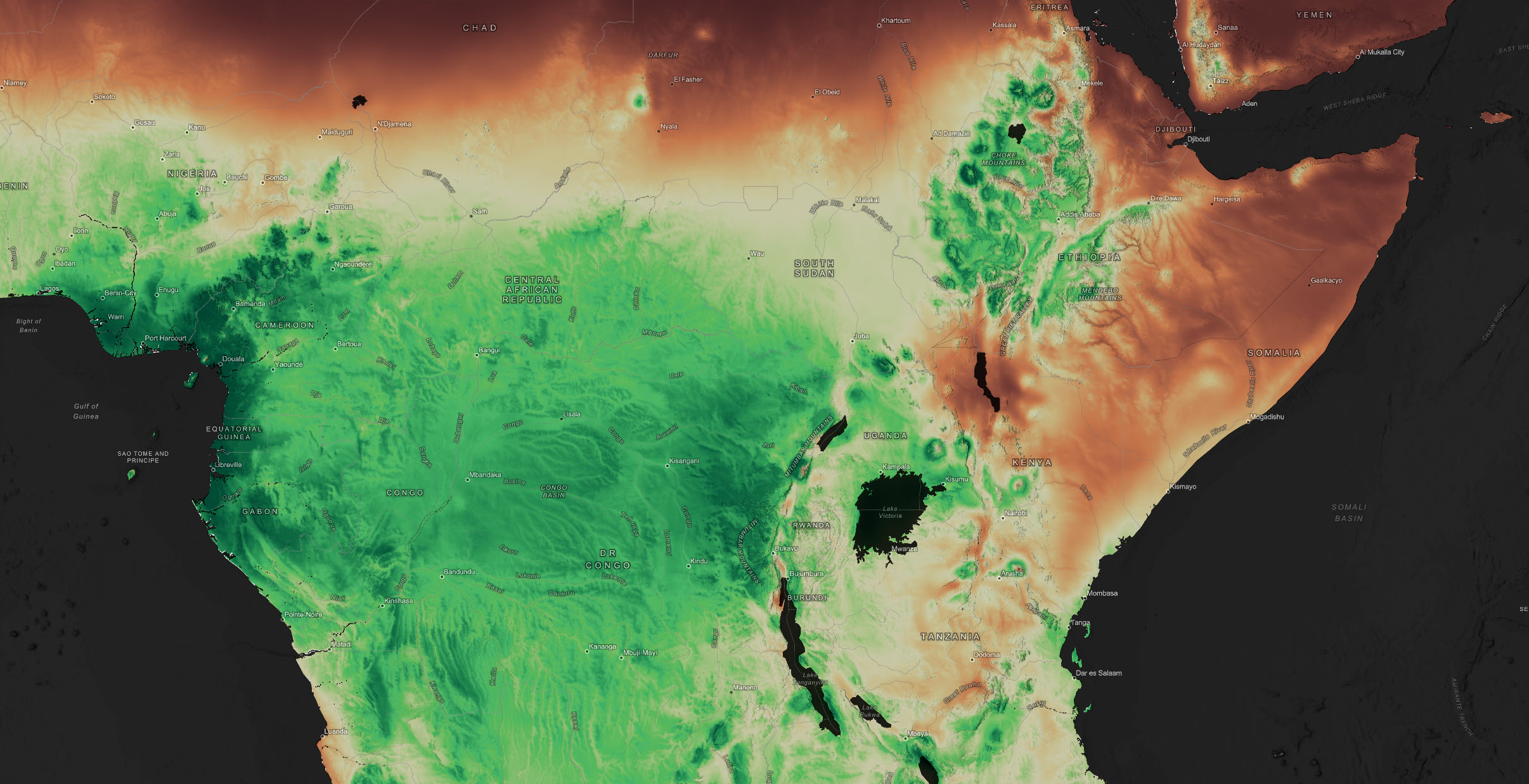
Net Primary Productivity (NPP) is the rate at which plants and other autotrophs (like algae and cyanobacteria) store carbon as biomass as they photosynthesize. The NPP is measured in grams of carbon per square meter per year (g C/m²/yr). This metric is crucial for assessing the health of ecosystems and their ability to support biodiversity and agriculture. The image below shows NPP levels across central Africa, revealing areas of high productivity in green, like the Congo Basin and the Choke Mountains in Ethiopia. These areas are vital for sustaining both wildlife and human populations. Understanding the future of NPP can inform conservation efforts and agricultural practices in these biodiverse landscapes.
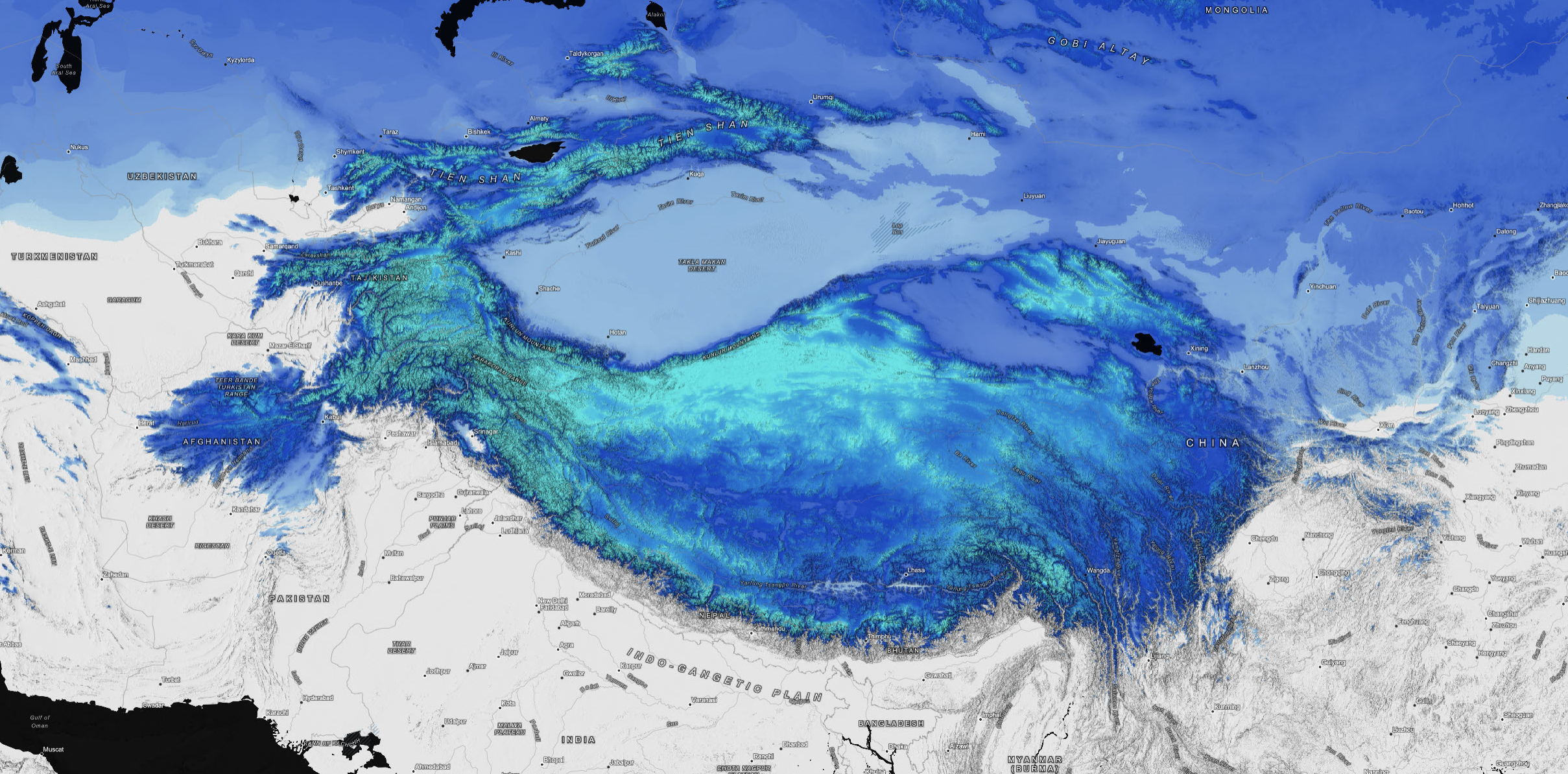
Snow Cover Days represents the number of days per year that snow can be found on the ground. This metric is essential for analyzing hydrological processes and understanding how snow influences ecosystem dynamics in high-altitude and cold regions. The image below shows the snow cover pattern in the Himalayas and the Tibetan Plateau, highlighting areas with significant snow accumulation. These insights provide support for communities in preparing for future changes in snow accumulation patterns for agriculture and snow-related tourism.
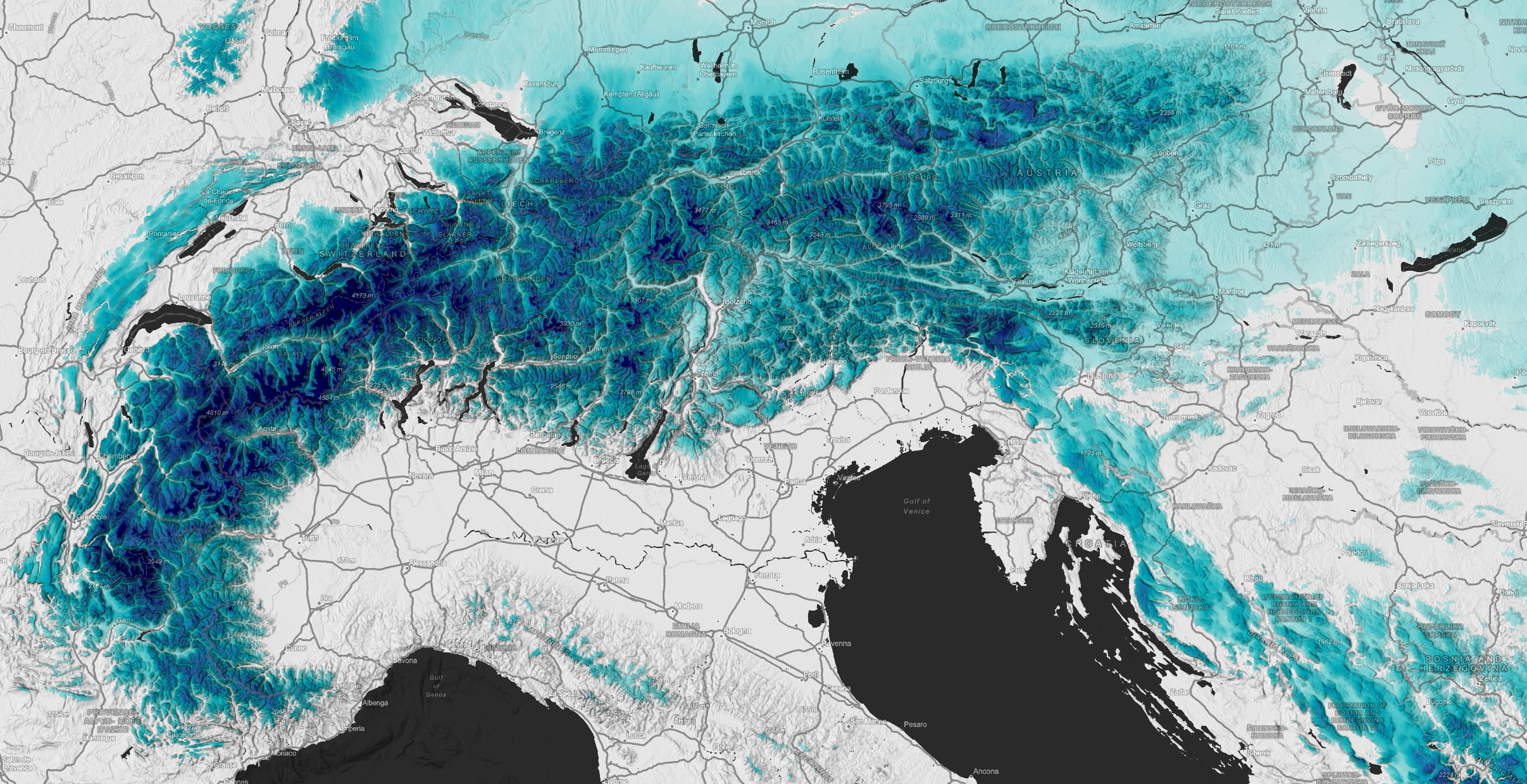
Snow Water Equivalent (SWE) measures the amount of water contained in the snowpack, if all the snow is melted. SWE is expressed in kilograms per square meter per year (kg/m²/yr) and is crucial for understanding water availability in regions that experience seasonal snow. In the European Alps, the snowpack serves as a natural reservoir, releasing fresh meltwater that sustains millions of people downstream. The image provides essential insights for effective water resource management and predicting water supply for agriculture, hydropower, and urban use.
Analysis-Ready Layers for Planning
Load the new CHELSA bioclimate projections in ArcGIS Pro for all your projects on climate, ecology, and more. For example, quickly analyze future trends in Net Primary Productivity in India with only a few mouse clicks.
First, we need a feature for India’s borders. Import the World Countries Generalized Feature Layer and apply a Definition Query with “Where Country Name is equal to India.”
Then, select your Net Primary Productivity layer in Contents and head over to the Multidimensional tab. Under Analysis, select Temporal Profile and under Time Series select “One location with multiple variables.” Define an area of interest by selecting India with Feature Selector and add your desired SSPs under Select Variables. Note: it may take several minutes for Pro to process your chart request. You have now calculated how the Net Primary Productivity in India may change throughout the rest of the century.

Limitations and Known Issues
To create these layers, we combined five climate models into a multi-model ensemble. This method may introduce artifacts in the resulting maps. For instance, in Snow Cover Days, faint lines may be visible in Eastern Europe and elsewhere indicating the edges of the snow-covered areas in each model. These artifacts could affect your analysis, so be mindful of these limitations when interpreting your results.
More Information
Join the Esri Community of experts and get inspired by others or get answers to your questions.


Article Discussion: