ArcGIS Living Atlas of the World provides foundational elevation layers and tools to support analysis and visualization across the ArcGIS system. These layers are updated quarterly with high resolution elevation data from federal agencies, open sources, and Community Maps Program. Esri offers these datasets as ready-to-use services that benefit the GIS community and extend the use of data in new and innovative ways.
In this release, World Elevation Layers have been updated with numerous lidar-derived high-resolution Digital Terrain Models (DTMs).
Terrain and TopoBathy layers are updated with:
- Scottish Government’s lidar derived 1-meter DTMs from Phase 1 and 2 covering partial areas of Scotland.
- Scottish Government’s lidar derived 50-centimeter DTMs from Phases 3-6 covering partial areas of Scotland.
- IGN Costa Rica’s 10-meter DTM covering entire country of Costa Rica.
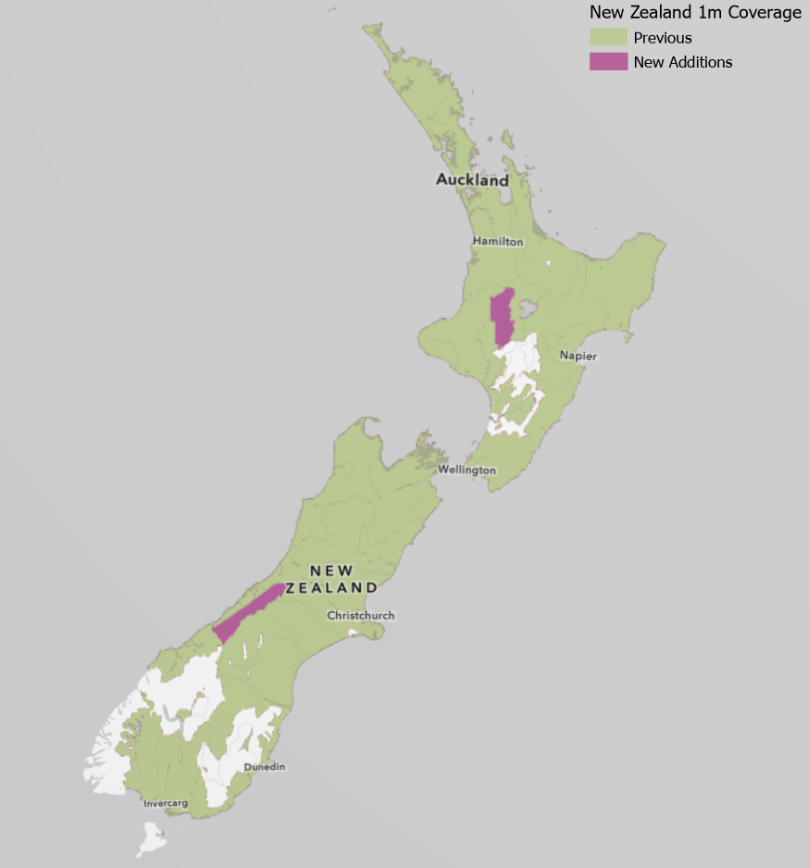
- Land Information New Zealand’s (LINZ) lidar derived 1-meter DTMs covering partial areas of New Zealand. In this release, ~6300 sq kms (~2432 sq miles) of new data has been added bringing total coverage to ~231,000 sq kms (~89190 sq miles) as shown in map below.
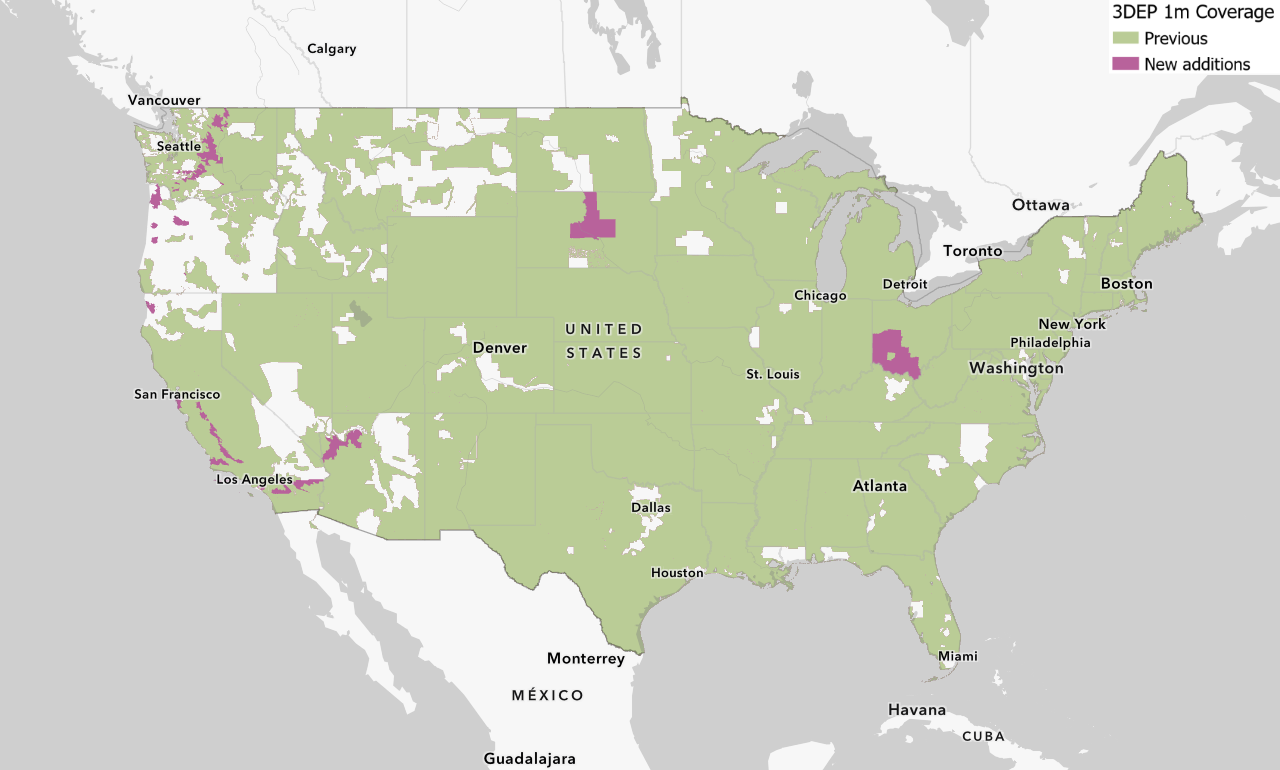
- Expanded coverage of USGS 3DEP 1-meter lidar derived DTMs covering areas of the conterminous United States. In this release, ~100,000 sq kms (~38610 sq miles) of new coverage has been added as shown in map below.
- Latest USGS’s 1/3 arc second (~10 meters) seamless DEM dataset for the United States with full coverage of the 48 conterminous states, Hawaii, Alaska, and U.S. territories.
- Latest USGS’s 1 arc second (~30 meters) seamless DEM dataset for the conterminous United States, Alaska, Hawaii, Canada, and Mexico.
TopoBathy layer is updated with:
- General Bathymetric Chart of the Oceans (GEBCO_2025) 15 arc second (~500 meters) dataset covering entire globe. [GEBCO Compilation Group (2025) GEBCO 2025 Grid (doi:10.5285/37c52e96-24ea-67ce-e063-7086abc05f29)]
Ready-To-Use Elevation Tools:
Ready-To-Use Elevation Tools (Profile, Viewshed and Summarize Elevation) have also been updated with Costa Rica 10m, latest USGS 3DEP 1/3 arc second, and 1 arc second datasets. Profile tool has been updated with GEBCO 2025 grid for 500m (15 arc second) DEM Resolution option.
Let’s explore a few examples that highlight the improvements.
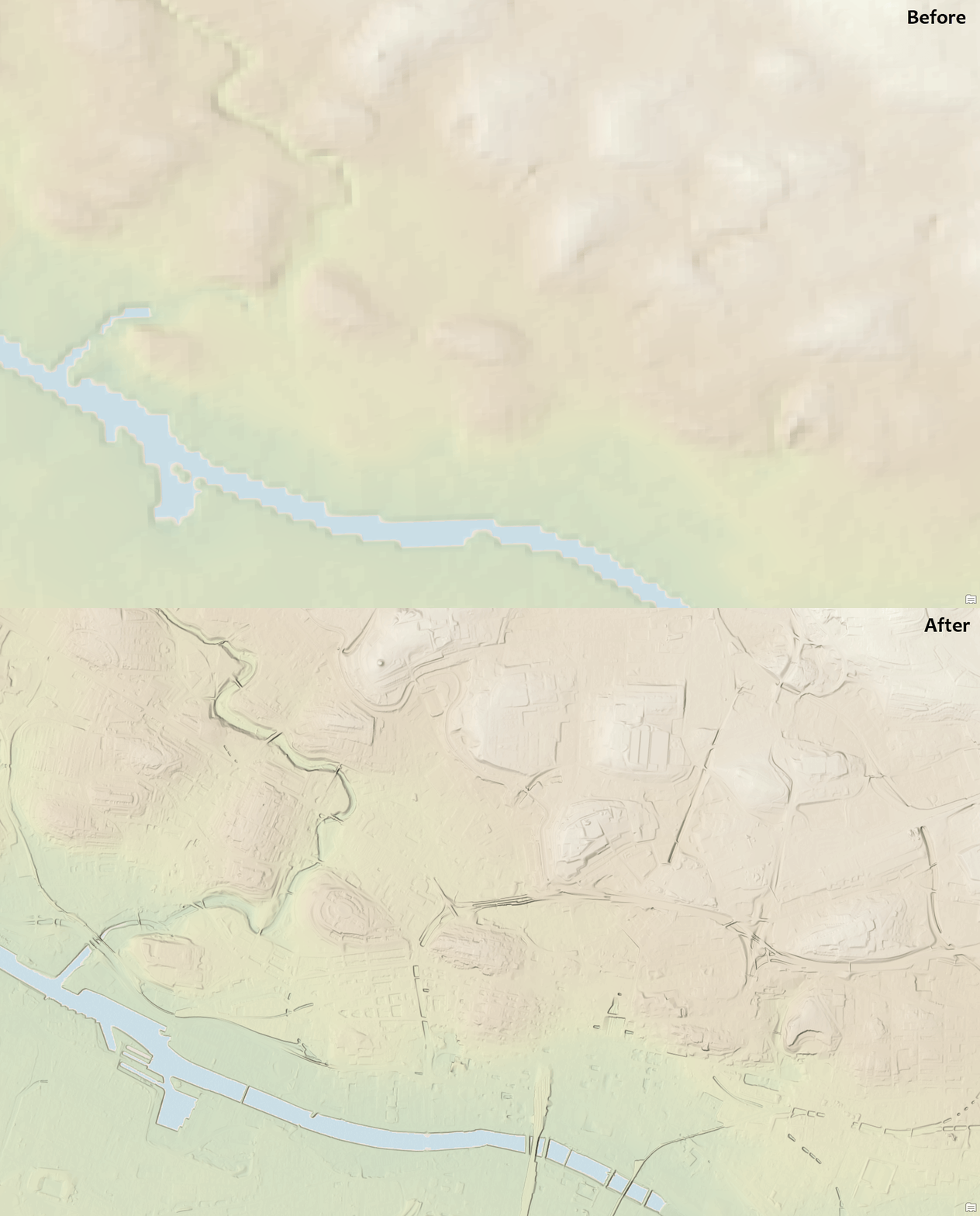
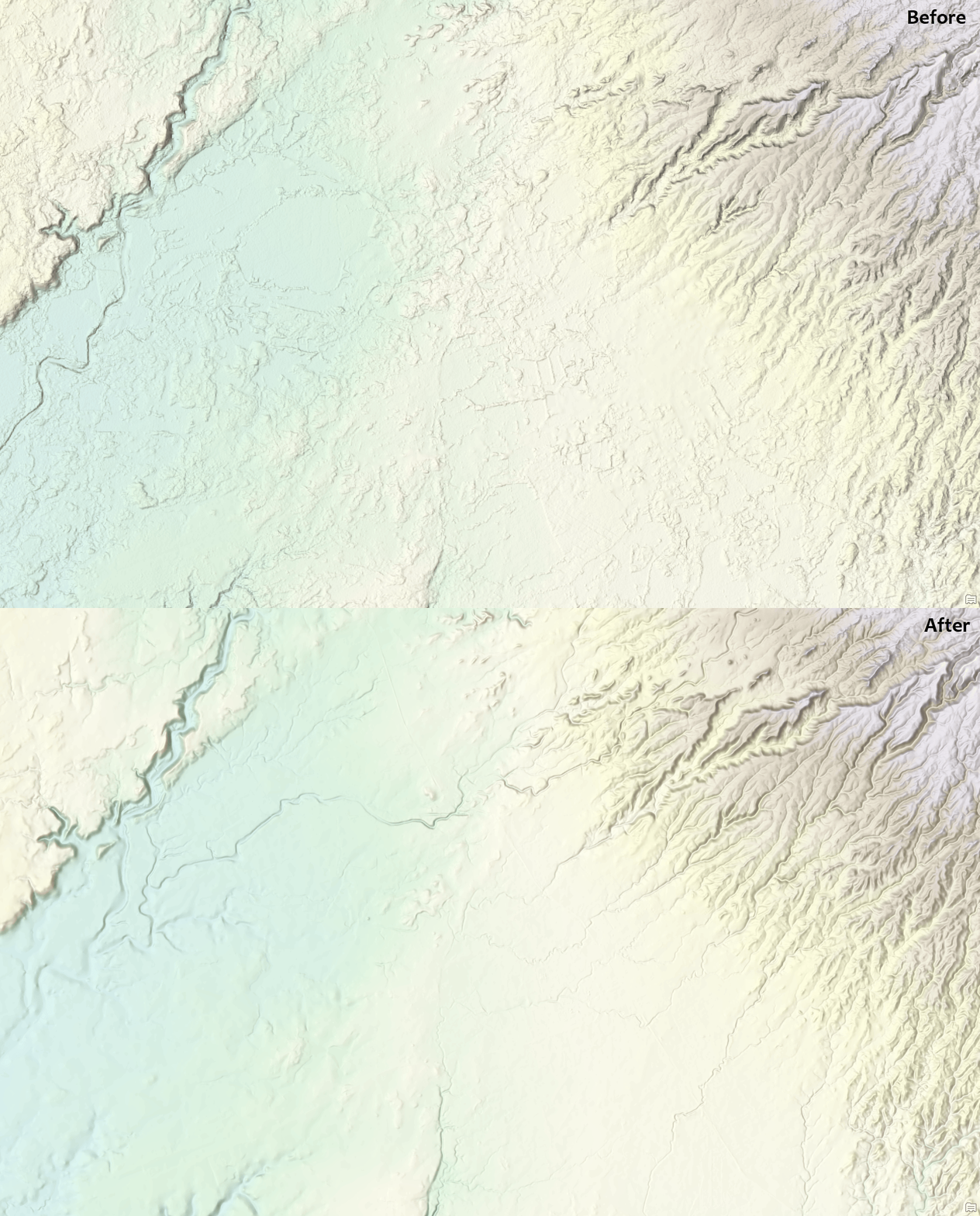
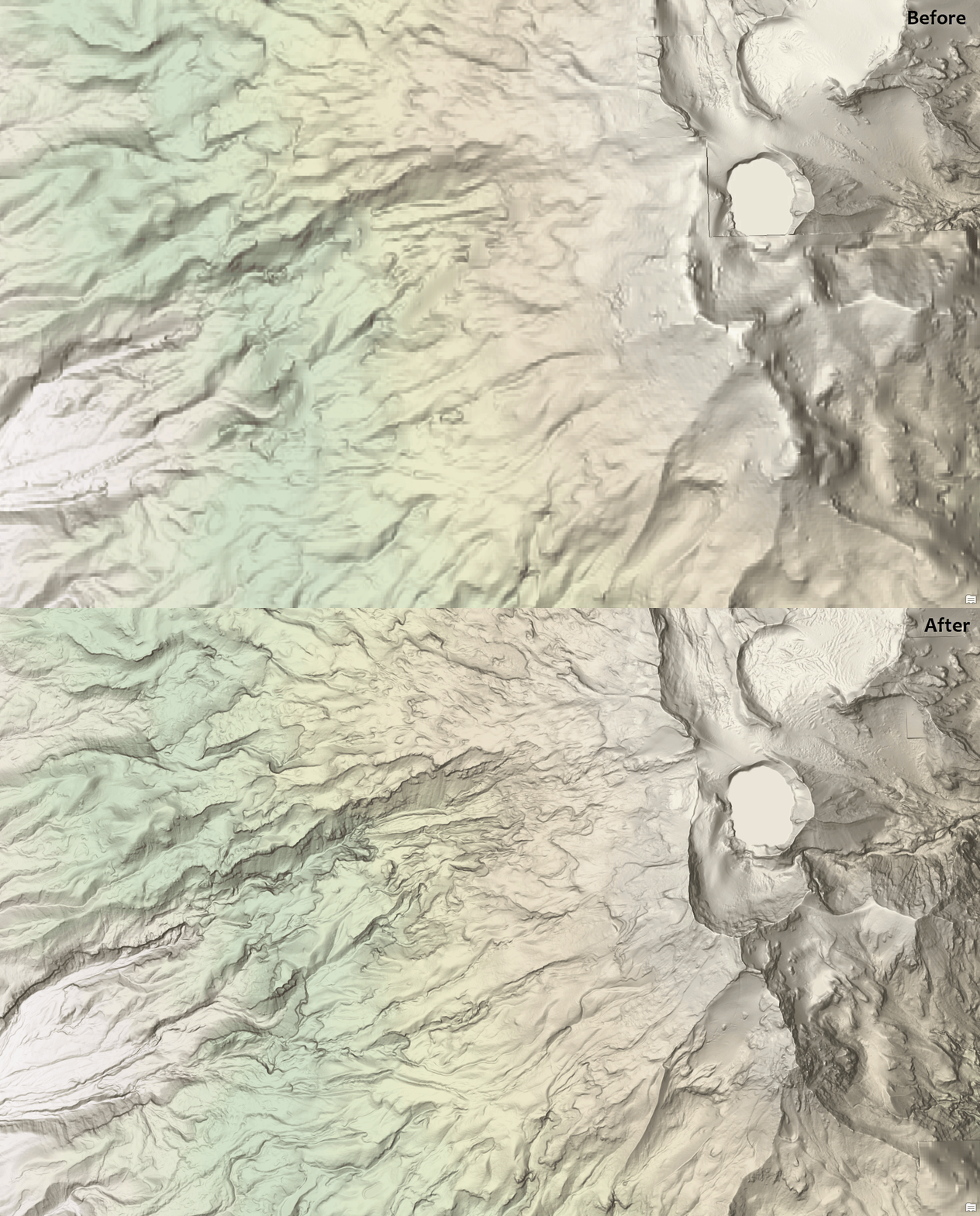
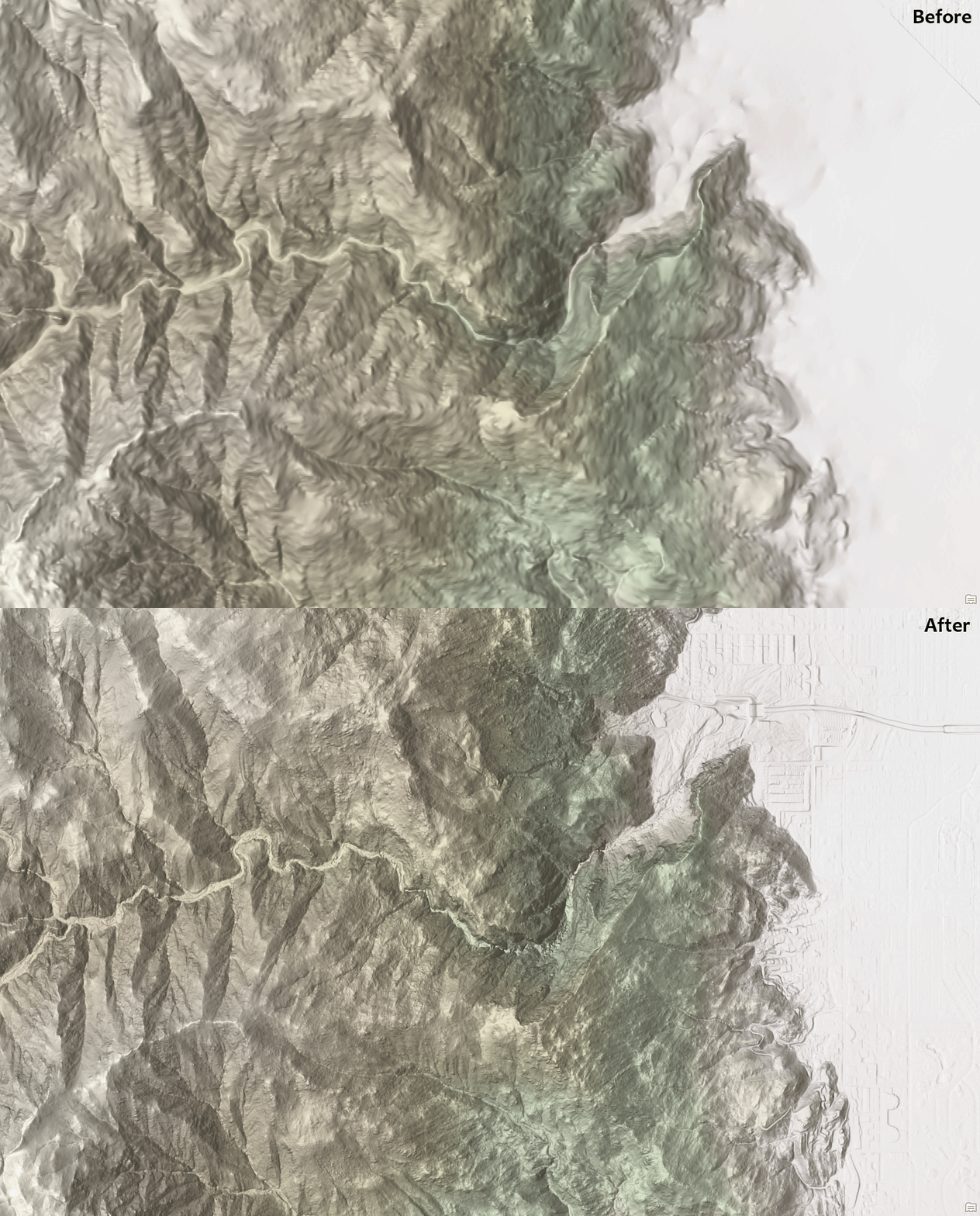
These data updates will tentatively be rolled out to the world elevation tiled services, including Elevation 3D (Terrain3D and TopoBathy3D) and Hillshade (World Hillshade and World Hillshade (Dark)), by the end of the next quarter.
To see the coverage extents of each source comprising World Elevation services, check out the World Elevation Coverage Map.
You can help in improving these services by contributing high-resolution elevation data to Living Atlas of the World. To participate and learn more, check out the Esri Community Maps for Elevation program.

Article Discussion: