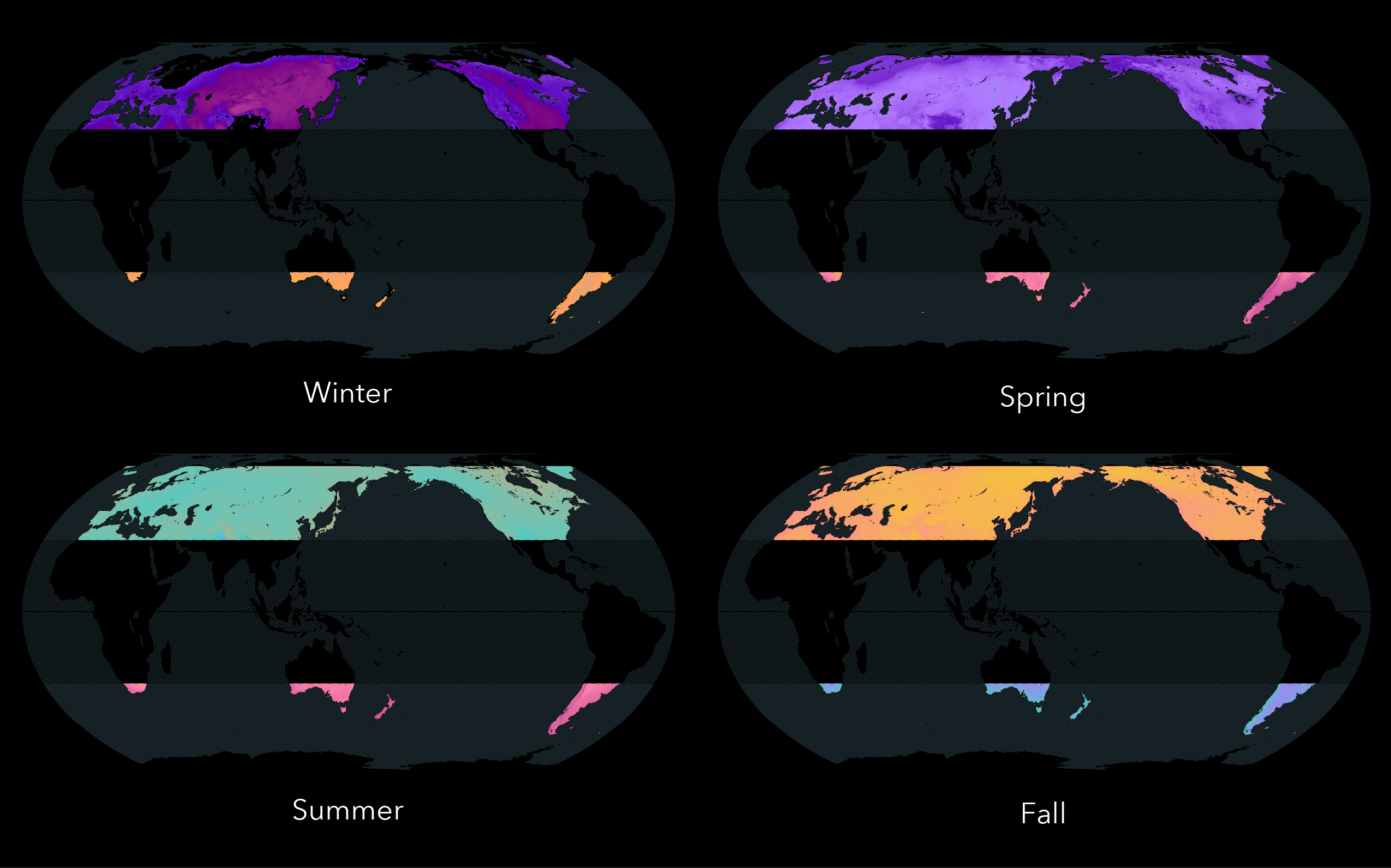
A new climate projection layer is now available in ArcGIS Living Atlas of the World: Global Seasonal Change Projections. This dataset offers a new look at how the timing of spring, summer, fall, and winter is expected to change across the globe through the end of the 21st century.
This layer is more than just a visualization of changing seasons — it’s a tool for understanding how climate change may reshape ecosystems, agriculture, tourism, and even the rhythms of daily life. You can explore when each season is projected to start in any given year between 2016 and 2099, under three Shared Socioeconomic Pathway (SSP) climate scenarios.
The data is derived from CMIP6 climate model output, downscaled and bias-corrected by the Climate Impact Lab at the University of Chicago. The seasonal onsets are calculated using a robust statistical approach to avoid false signals from short-term temperature spikes, ensuring reliable projections for your analysis. Please refer to the layer description for more in-depth information on the data and methods.
Generally, the projections reveal a clear global trend:
- Summer is becoming longer, starting earlier and ending later.
- Winter is becoming shorter, starting later and ending earlier.
- Spring and fall maintain similar lengths but shift toward the start and end of the year.
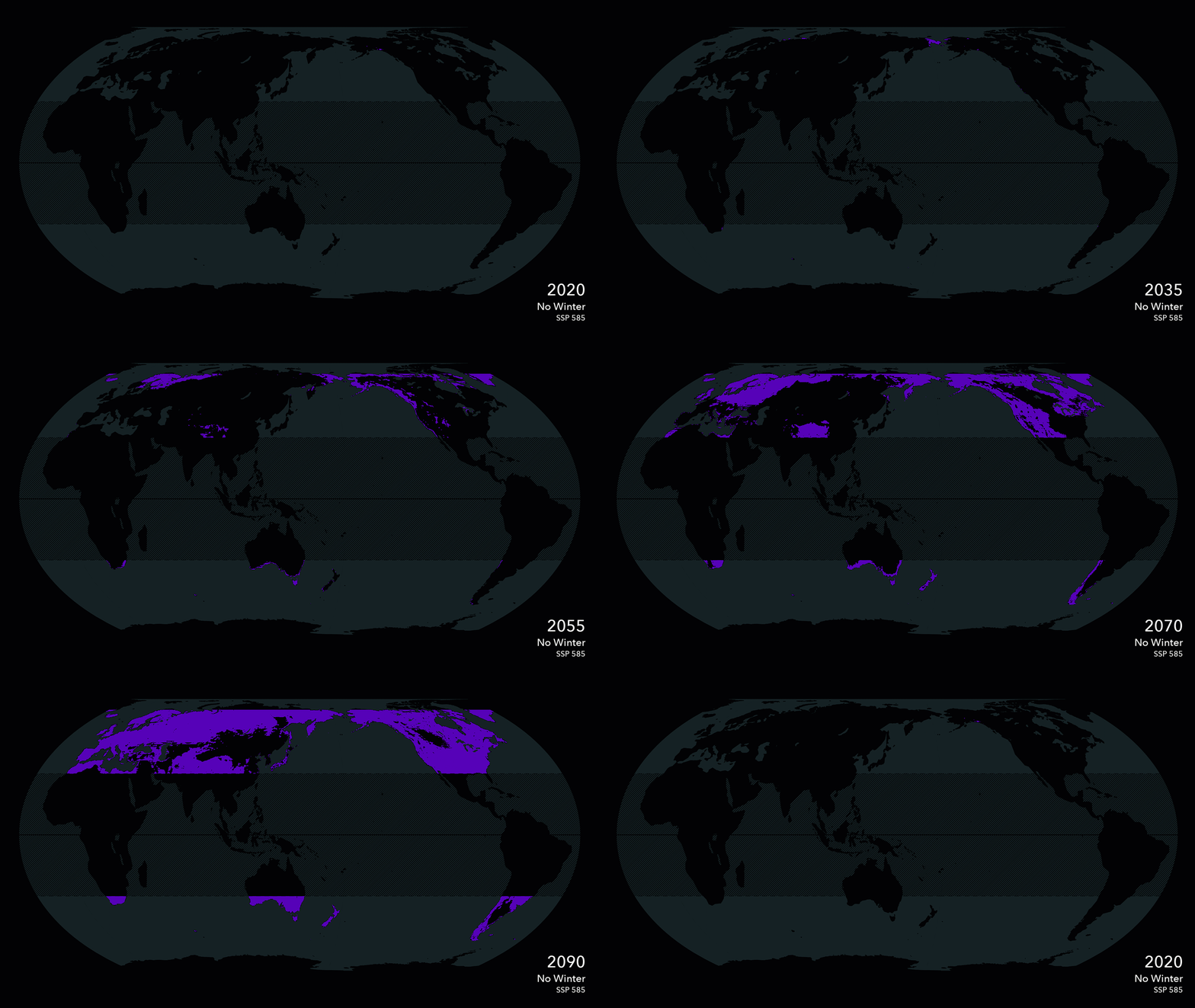
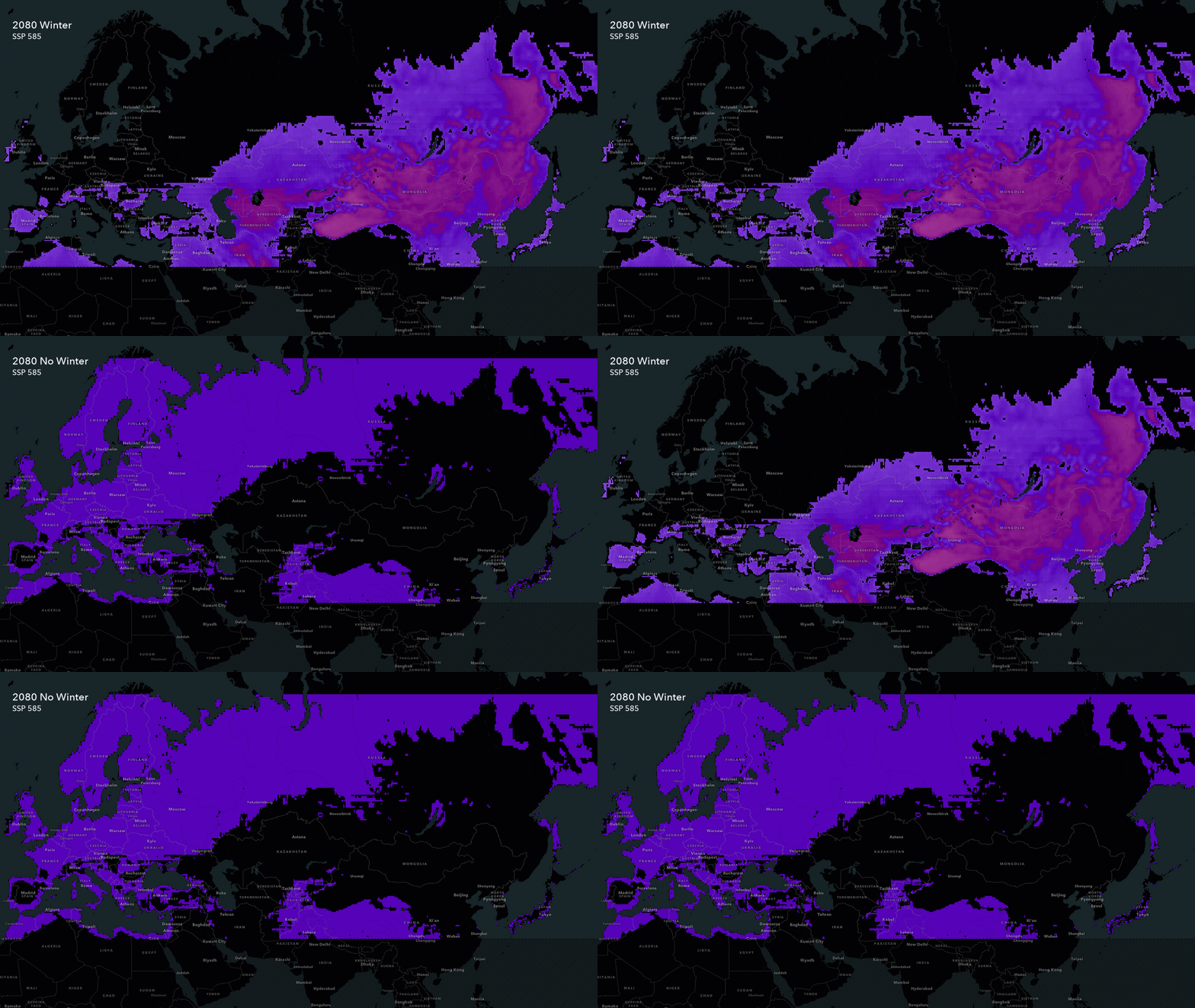
- One of the most striking features of this dataset is the layer’s unique “No Winter” variable, which shows where temperatures don’t drop low enough to meet the winter threshold in a given year. In these cases, winter may disappear entirely and fall transitions directly to spring. This unprecedented seasonal behavior is projected to become more common toward the end of the century under all climate scenarios, with profound implications for ecosystems, agriculture, and cultural traditions. The timelapse GIF below shows the growing area (in purple) where winter may fully disappear.
To choose and display your season, year, and climate scenario of choice, access the Multidimensional tab in ArcGIS Pro or Map Viewer. Your data will now automatically display in the map.
Note: we exclude the tropics from the results because this region mostly follows a wet/dry seasonality, not a temperature-based one like in the mid-latitudes. We also exclude the polar regions from the results.
Why This Matters
Shifts in seasonal timing can affect:
- Human Health – changing disease vectors, heat stress periods, and allergy seasons.
- Agriculture – altering planting and harvest schedules, crop viability, and pest cycles.
- Biodiversity – disrupting migration patterns, breeding seasons, and food availability for wildlife.
- Tourism – impacting nature-based travel, winter sports seasons, and beach tourism.
- Transportation – may face challenges due to increased heat stress, affecting logistics, safety, and construction longevity.
By understanding these changes, communities, researchers, and policymakers can better prepare for the impacts of climate change and develop adaptation strategies.
Seasonal Snapshots from the Future
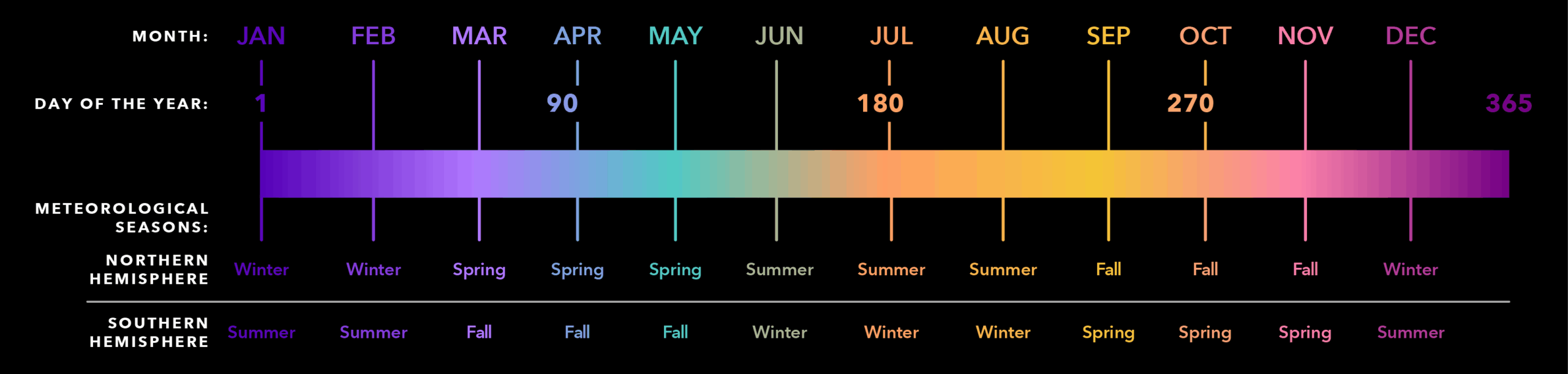
The following images are examples of how seasonal onsets could change in different parts of the world under moderate and high emissions scenarios. Remember that seasons happen in opposing times between the northern and southern hemispheres. For instance, currently, summer in Europe happens in June – September. But, in Australia summer happens in December – March. Please refer to the legend below to interpret what color corresponds to which season, hemisphere, and day of the year.
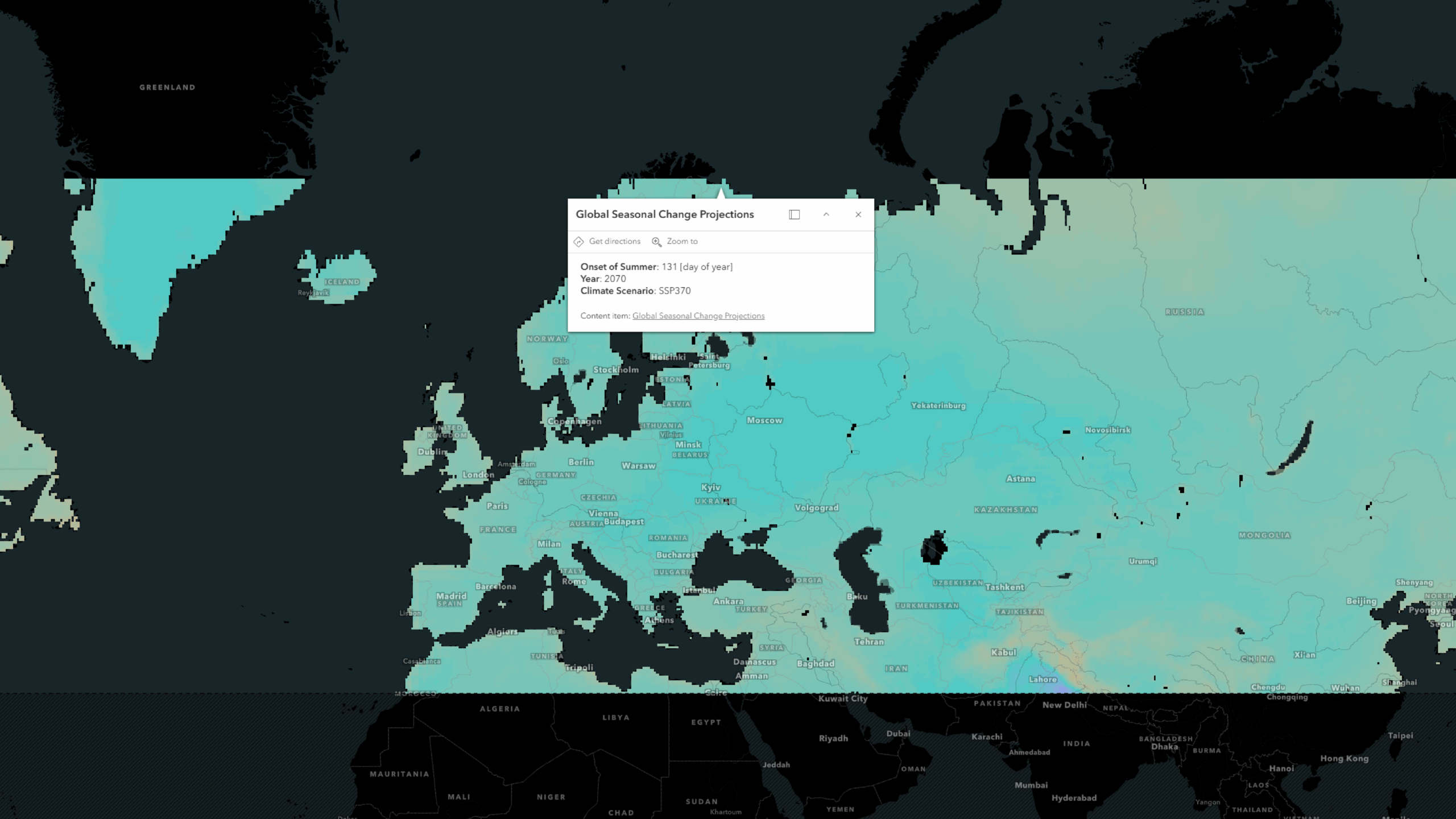
Summer: Europe – 2070 – SSP3-7.0
By 2070, even under a moderate emissions scenario, summer in Europe may already begin in the first half of May. Later in the century or under a higher emissions scenario, summer could even start as early as April.
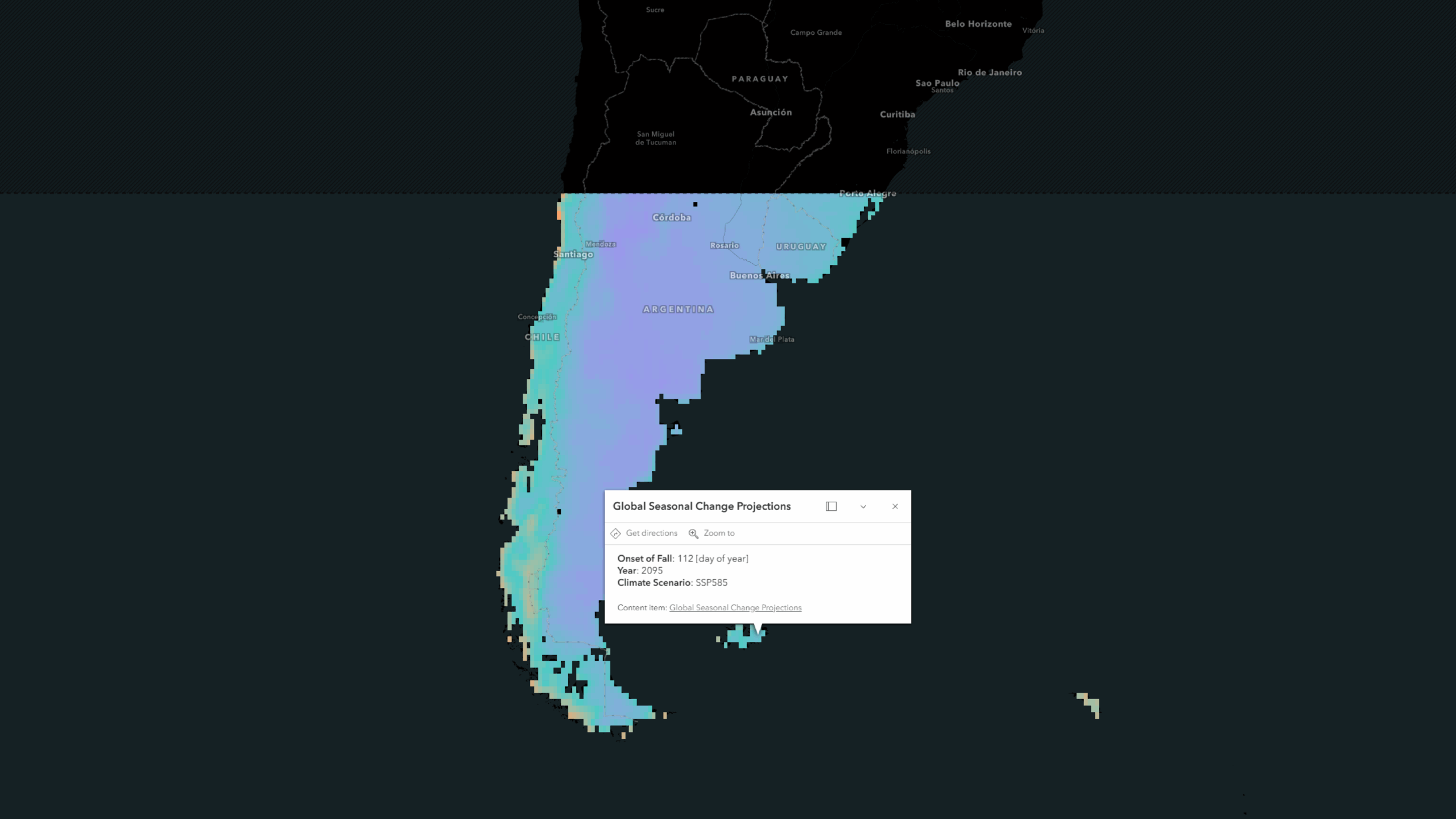
Fall: Patagonia – 2095 – SSP5-8.5
In Patagonia, fall onset differs dramatically between the windward and leeward sides of the Andes. By the late 21st century, under SSP5-8.5, fall could start in late March for most of Argentina. Meanwhile, along Chile’s coast west of the Andes, fall may not begin until May or even June.
Winter: Eurasia – 2080 – SSP5-8.5
By the 2080s, under a high emissions scenario, winter onset in parts of China and Mongolia could shift to very late December. In the 2-image GIF below, this is displayed as violet in the “Winter” image. In the surrounding areas, including parts of Russia, Kazakhstan, and the Middle East, winter may not begin until mid-January (displayed in purple in the “Winter” image). Beyond that, in Siberia, Tibet, and most of Europe, temperatures may not drop low enough to reach winter (displayed in black in the “Winter” image and in purple in the “No Winter” image). In these cases, winter is skipped over and fall transitions directly into spring.
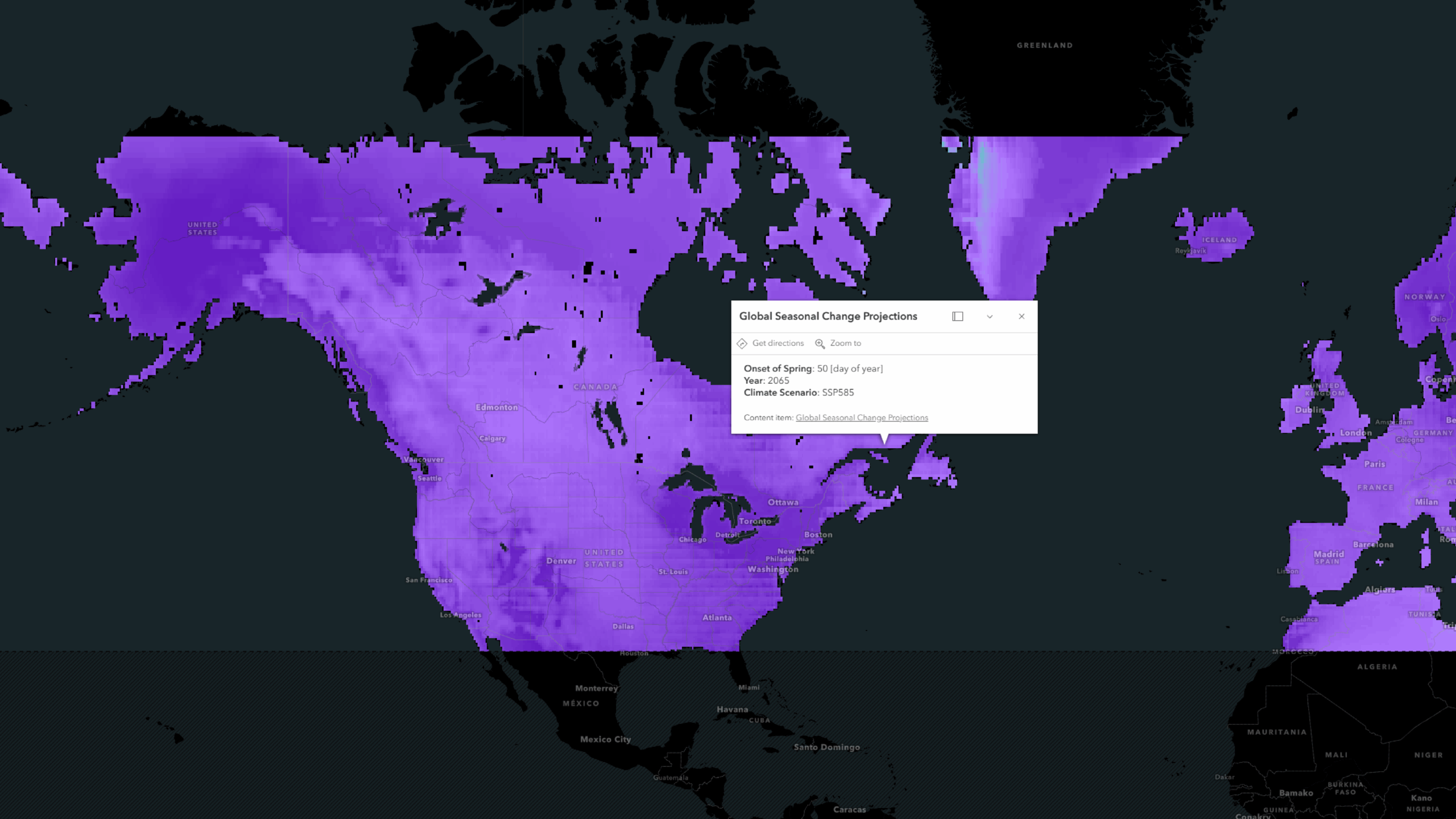
Spring: North America – 2065 – SSP5-8.5
Spring onset varies widely across North America. In 2065, under SSP5-8.5, spring could arrive as early as late January in Alaska, around the Great Lakes, and parts of the Rockies in Colorado and Utah. In central Canada, the US West Coast and the Midwest, spring may not start until late February.
More Information
Please leave a comment on the Living Atlas item if you have a question about this layer, and we will get back to you as soon as possible.


Article Discussion: