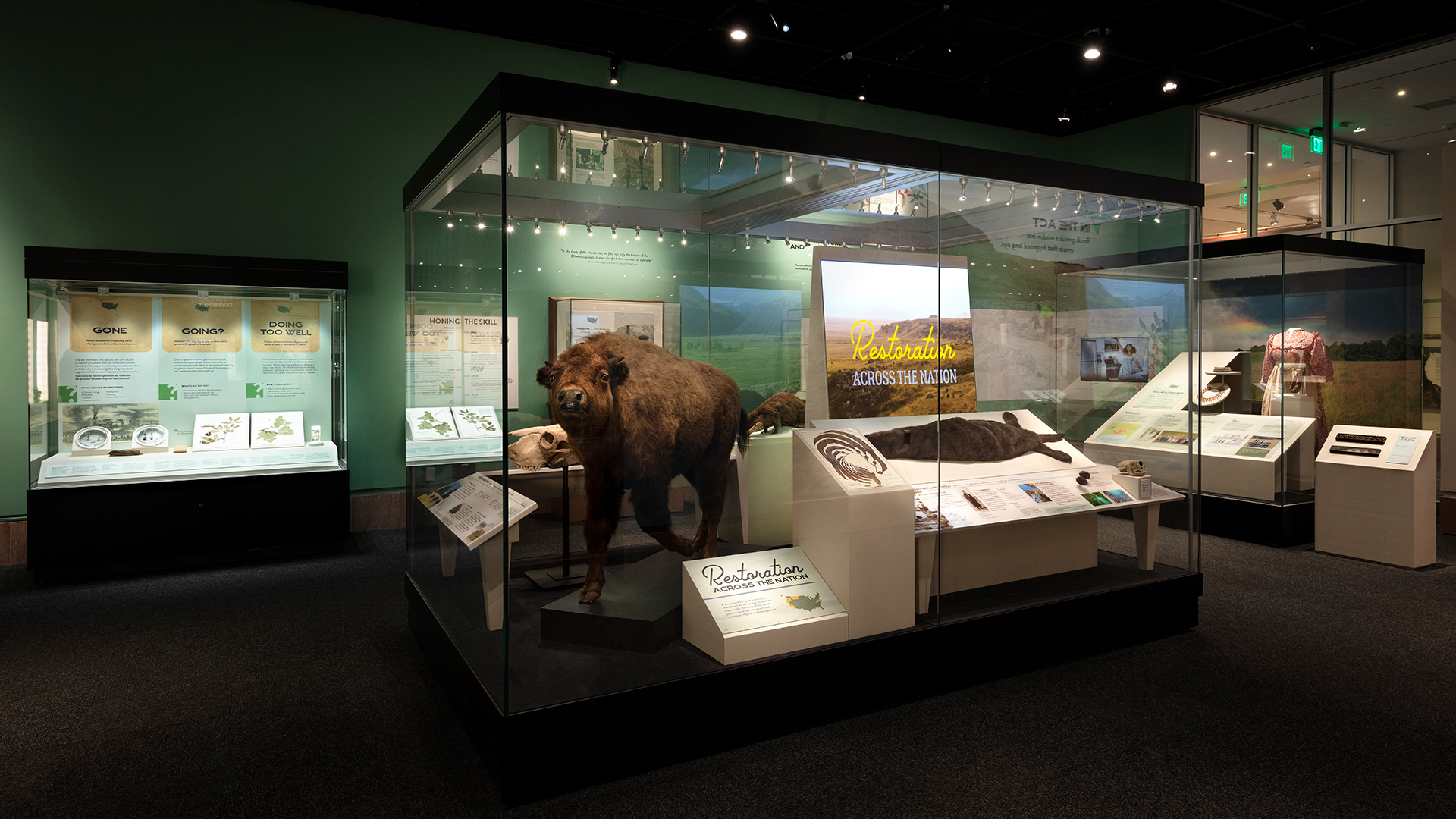
The From These Lands exhibit at the National Museum of Natural History in Washington, D.C., celebrates the natural resources and cultural heritage of the United States.
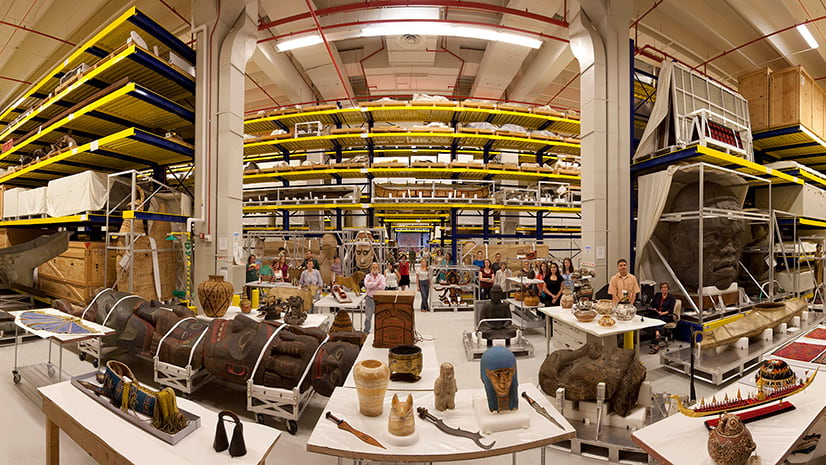
It features over 600 items from all 50 states, the District of Columbia, and five U.S. territories. This collection represents just a few of the museum’s 148 million objects. It is one of several exhibits in the Smithsonian’s “Our Shared Future: 250” initiative, celebrating the United States’ 250th birthday.
Esri and the Smithsonian Institution collaborated to create a digital companion that makes this exhibit accessible to people around the world. Smithsonian exhibit curators crafted the text and assets, including specimen photography, natural and cultural stories, and high-quality videos. My team had the honor of designing and assembling the digital story.
"This exhibit gives people a chance to experience the full breadth of American’s natural and cultural heritage in one place and consider how interconnected they are. This StoryMap enables us to foster that sense of connection to our land and to one another well beyond the museum’s walls."
- Kirk Johnson, Sant Director, Smithsonian National Museum of Natural History
Translating an in-person experience to a digital experience
The greatest challenge in developing a story like this is adapting content designed for a physical exhibit to an online format. What specimens should be included? How could the museum exhibit’s vivid design be translated into a digital experience?
Luckily, we weren’t starting from scratch; the curators used the exhibit’s main messages to form the three sections of the story: how the museum’s collections are connected, wondrous, and expanding. They carefully selected specimens from the exhibit to engage a digital audience and reinforce these key messages.
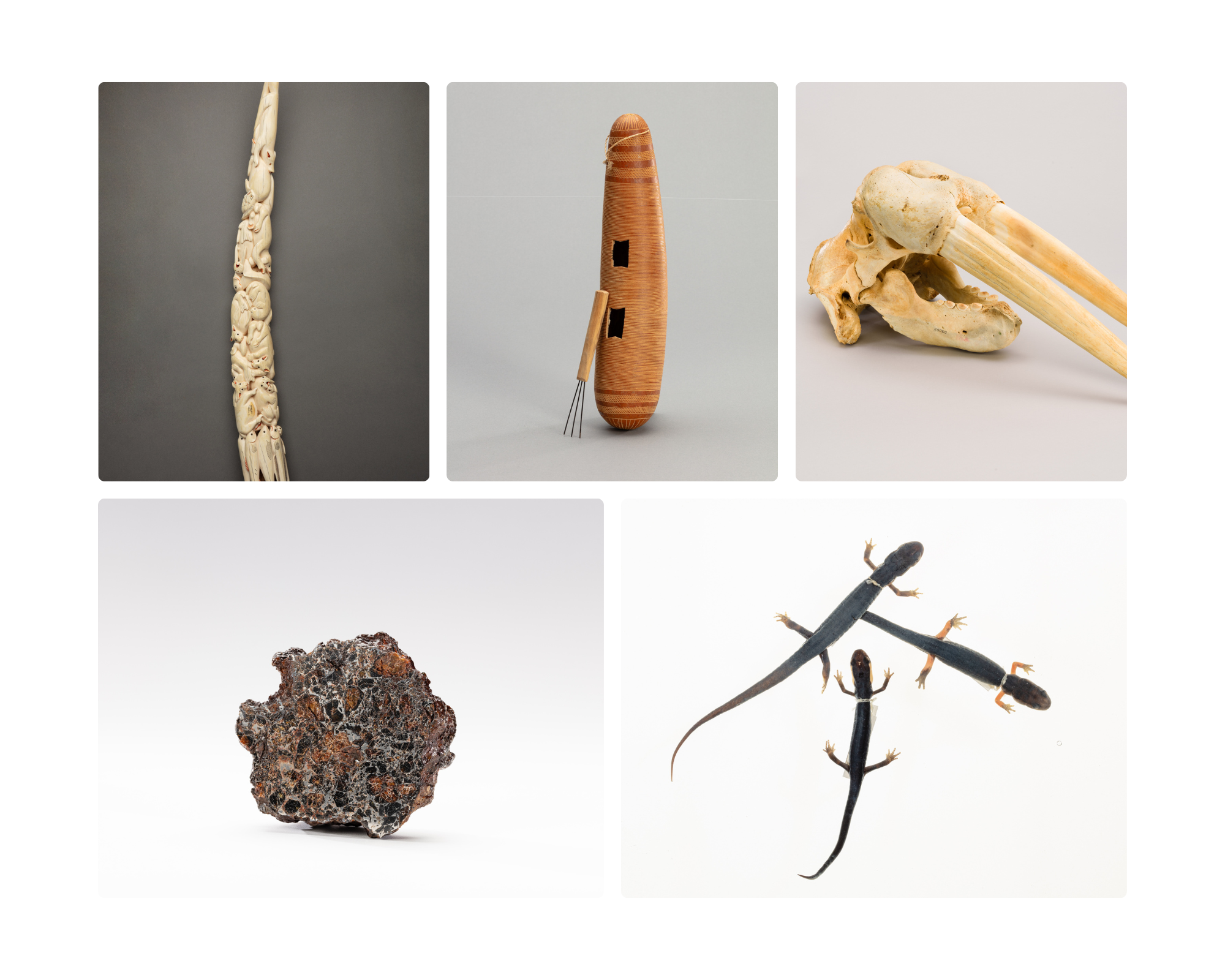
Here are some of the specimens highlighted in the story:
- Carved walrus ivory from Alaska Native communities along the Bering Strait
- A hollowed gourd musical instrument called a “guiro” from Puerto Rico
- Endemic salamanders from the Appalachian Mountains
- A meteorite found in Kansas
Readers will notice maps distributed throughout the story; some use Map Viewer to depict thematic data, some use Scene Viewer to immerse readers in the landscape, and some are simple locator express maps showing where specimens come from. Maps reveal connections between people and places. By showing where objects are located, they help readers connect more deeply to both the place and the stories behind those objects.
Explore specimens across the United States and Territories
The story culminates in an interactive map that lets readers discover the origins of nearly 180 specimens at the National Museum of Natural History, representing all U.S. states, the District of Columbia, and the territories people call home. Additionally, the items are grouped by museum department, and readers are encouraged to explore the map to see which specimens may have been collected near them. For instance, there’s a lobster from Maine, a wood thrush from Washington, D.C., a gold nugget from North Carolina, a giant kelp from California, a meteorite from Kansas, and much more.

A resource for everyone
Not everyone can visit Washington, D.C. to see the exhibit in person. The digital story transforms a physical Smithsonian exhibition into a rich, interactive experience that helps more people engage with the objects, narratives, and connections at the heart of the collection.
We hope you enjoy this free educational resource and use it to explore the exhibit in a way that is accessible to everyone.
Visit the story to discover more



Article Discussion: