Building Better Software Together
A few years ago, we had difficulties that many growing tech companies encounter: brilliant software engineers and product people scattered across different teams and locations were often solving the same challenges in isolation. Teams were recreating similar solutions, missing opportunities to learn from each other, and new hires struggled to find mentors beyond their immediate team.
Working at Esri is like working in a startup community. We freely share ideas and brainstorm new ways of working together. Esri has many communities, from our public Esri User Community to internal groups for engagement, support, and operations. However, there was still a need for engineers, designers, and product staff to grow our craft and learn from one another.
So a few of us started chatting about what we could do to help our colleagues grow in their careers and connect to learn from one another. Inspired by Etienne & Beverly Wenger-Trayner’s work we started with a simple idea in 2022 to have regular, virtual meetings of colleagues discussing how we do our work. This small start grew into sustained sharing across teams, then across divisions, then took root campus-wide. Eventually it caught on across Esri offices globally.
How we started
The concept was straightforward: create space for “knowledge sharing and problem solving through active collaboration.” But “primary day jobs” and calendar-scheduling logistics provided an up-front challenge for staff to volunteer as ‘community champions’ to coordinate various communities of interest.
To be pragmatic, we started with three communities that represented large areas of practice and expertise:
- Frontend engineering + Product Design
- Backend engineering + Infrastructure
- QA engineering, Automation, and Release
Each community started with a wiki page, a Teams channel, and a regular monthly meeting. Each community’s champions scheduled a topic on new technology or best practices with a presentation from another colleague, which led into group discussion and small breakout rooms.
Growth was organic, a modest start with a dozen people each month and growing steadily through the monthly meetings and periodic chats. Participants would tell their team members and start posting in their channels to either watch the recordings or join the next meeting.
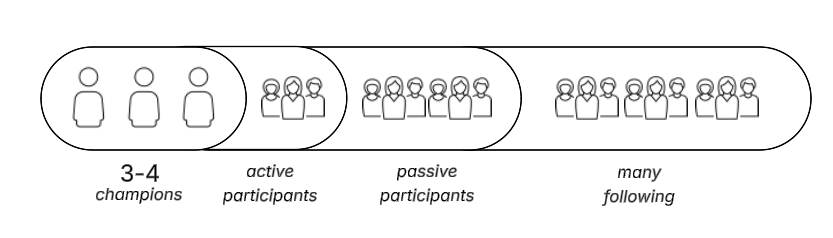
Figure 1: Start small, and realize that some people are more active but that everyone is welcome to join and learn
How the communities are evolving
As interest grew over the years, some people were inspired to start new communities on topics that motivated them and where we believed that we could collaborate. There is not a formal process, though we have provided guidelines and a ‘recipe’ for drafting a charter, recruiting other champions, and logistics for getting started.
- Write up the charter including a title, summary description, audience, and goals
- Recruit 3-4 champions
- Schedule the first ~3 meeting topics, and possibly presentations or discussion prompts
- Create a Teams channel in the Community of Practice team [link to details]
- Create a Sharepoint page with the info from above [link to details]
- Go!
As I mentioned, being a community champion is “volunteer” – meaning we do the work as part of our work hours, but we all have primary roles in our teams. So, we want to continue to be pragmatic on the time and energy required to start and grow communities.
We have had some fits and starts with this ad-hoc process. Some communities don’t always have a topic prepared and may host an open discussion, or cancel the meeting for the month. Others are high-energy, bringing in outside speakers, jump-starting breakout ‘cafes’ on focused topics, and instigating new cross-product projects.
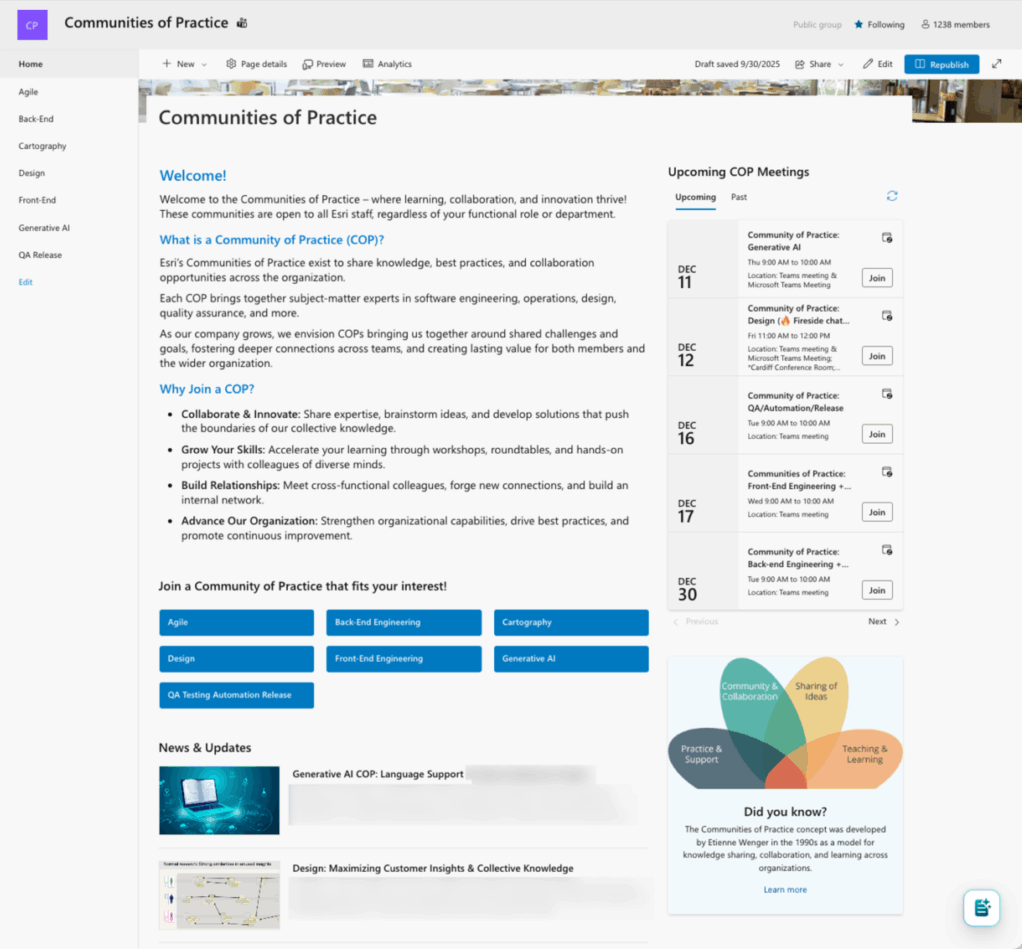
Figure 2: Our internal Communities of Practice site highlights community news, events, and community-contributed learning resources.
Where our communities are today
As we reflect on 2025, we now see seven active communities of practice where over 1,500 staff participate regularly. You can see that some communities split apart, and new ones were started by motivated colleagues who saw an opportunity and benefit to build our craft in particular skills and technologies.
- Frontend Engineering
- Backend Engineering & Infrastructure
- UX/UI Design
- QA, Automation, Release
- Be Agile
- Generative AI
- Cartography
Why we believe communities work
The communities focus on how different teams design, develop, and release software, not the products themselves. Topics are raised by individuals or groups based on interest and opportunity of both well-established practices and emerging approaches.
The model balances low overhead with high value: regular cadence (people can miss a meeting), volunteer leadership (motivated & make it your own), and practical outcomes ranging from documented practices to shared tools.
Where our communities are headed
While our Technical Communities of Practice have continued to grow in scale and scope, we know there are more opportunities for them to be effective in our original vision of connecting and leveling up our staff. Over time we’ve iterated on format, governance, and tooling to better support discovery, inclusivity, and measurable outcomes.
Over the next year we are organizing our archive of resources so team members can discover past talks, techniques, and working-group outputs more easily. This includes piloting AI agents which use our community-created tutorials and meeting discussions to improve the access and impact of emerging best practices.
We acknowledge that not everyone will join a meeting or feel comfortable sharing their experience and ideas. But we do believe that by creating a safe, open place for all colleagues to be invited to collaborate that we can learn together and share to the broader communities within Esri and to the broader industry.
Our hope is that this model can help you and your organization grow effectively. Please comment below and let us know your experiences and any recommendations to build close collaboration across your organizations. We’d love to learn together!