Conservation science has produced groundbreaking advances, from monitoring planetary change via satellites to detecting species from traces of DNA in water. These discoveries transpired because researchers pursued ideas that were uncertain, interdisciplinary, and often difficult to justify at the outset.
Today, however, conservation science is risk averse. This is evident when talking to seasoned scientists and graduate students, reading the latest scientific journals, and submitting grant applications. Bold ideas are shunned in favor of those with more certain outcomes.
There is a rationale for this. Funding agencies typically require evidence that an idea will work. They want to know it will build on pilot data or draw a clear line to existing knowledge. Furthermore, scientists get rewarded when they publish articles, papers, and books—yet ideas that don’t pan out don’t get written up. Bold ideas that carry real risk don’t get funded or even explored.
As a result, research tends to focus on conservative, predictable topics that are more likely to grace the pages of a scientific journal. But this hampers innovation, especially the kind that enables transformative discovery and change.
Today, as ecosystems get reshaped faster than the conservation field can respond, the risk of incrementalism may be greater than that of trying something new. Conservation writ large must now—perhaps more than at any other time in history—embrace riskier and bigger ideas to accomplish its goals. A new initiative from the National Center for Ecological Analysis and Synthesis (NCEAS) seeks to make that possible.
Big Innovations Start as Long Shots
The past is teeming with risky ideas that led to transformative outcomes. The origins of GIS offer a powerful example.
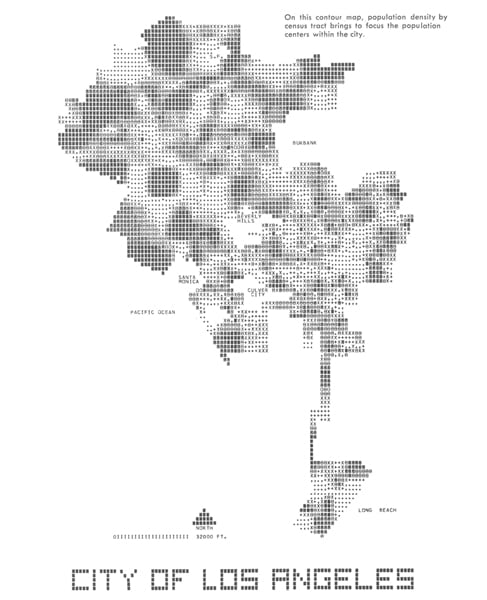
When GIS pioneers began digitally integrating environmental data across landscapes, they advanced a new way of understanding environmental systems. It integrated ecology, geography, computation, and planning long before such interdisciplinary work was commonplace.
It soon became clear that GIS was more than a tool—it was a different way of viewing and comprehending the world. What began as an ambitious experiment in synthesis transformed conservation science and decision-making around the world.
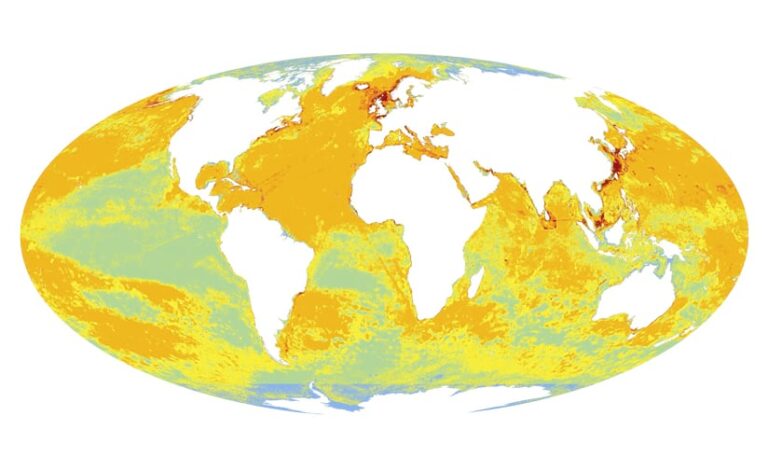
Years later, that way of thinking inspired one of us—Ben Halpern—to ask another ambitious question: Could we map the cumulative impacts of human activities across the entire ocean? At the time, integrating dozens of disparate global datasets—from fishing and shipping to climate change and pollution—into a single spatial framework was technically difficult and methodologically uncertain. Yet advances in GIS and spatial synthesis suggested it was possible.
NCEAS, a research center at the University of California, Santa Barbara (UCSB), took a risk on the idea and supported an incubator team to flesh it out. This led to further funding, and the resultant cumulative human impact maps helped reshape marine spatial planning and ecosystem-based management. The maps gave scientists, governments, and conservation practitioners a shared framework for understanding how multiple stressors interact across ocean ecosystems. Today, cumulative impact mapping is widely used to inform marine protected area design, coastal planning, and ocean policy around the world.
These breakthroughs emerged because risk was met with support, curiosity, and a willingness to imagine what might be possible. The result was research that reshaped how environmental systems are understood and managed.
These stories raise a broader question: What would it look like to intentionally design research systems that cultivate ambitious environmental ideas from the start? Tech startups and venture capitalists have long embraced this approach, as have innovation hubs like the Defense Advanced Research Projects Agency (DARPA). These environments actively encourage high-risk, high-reward ideas. So how can this model be used in conservation science?
A New Way to Incorporate Risk into Science
NCEAS recently launched the Luna Initiative to do just that: incentivize and unleash the exploration of riskier ideas in environmental science.
Luna brings together small, interdisciplinary teams to investigate bold, untested ideas. The goal is to embrace ambitious exploration and discover moonshot ideas for the planet. Not all the ideas that get funded will work, but the ones that do have the potential to be transformative.
As a conservation science community, we need to reframe failure so it is not something to be feared but is, rather, a critical way to learn and filter ideas. Indeed, a key element of supporting risky ideas is to celebrate and learn from those that don’t work. They are a vital part of innovation.
A different kind of research may emerge in this environment. Someone may develop a way to use AI to identify ecological tipping points before they occur. Or figure out how to fully automate biodiversity monitoring. Or discover a novel approach for measuring and understanding microbial ecology.
These ideas might not succeed exactly as imagined, but neither did many of the innovations we now take for granted. The challenge lies in creating enough space for transformative ideas to emerge. And creating this space may be one of the most important investments conservation science can make.
Urgency Changes the Equation
Today, factors including climate change, biodiversity loss, wildfire, drought, ocean warming, and rapid social change are reshaping ecosystems faster than scientific institutions can respond. To overcome institutional barriers, various components—including people with different perspectives and lived experiences, diverse datasets, and new methods—will need to come together in settings where unconventional connections can emerge and be tested.
NCEAS has long served a central role in incubating this kind of synthesis. The Luna Initiative matches the urgency of the moment. We hope others will join us.
In a rapidly changing world, the greatest risk isn’t in exploring bold ideas; it’s in failing to pursue them at all.
Learn more about Luna and its current areas of focus, as well as opportunities to participate.