As the conservation landscape evolves and the world grows more connected, it has never been more important for data to be accessible, reliable, and comprehensive. This year, a significant addition to ArcGIS Living Atlas of the World made waves: ProtectedSeas, a pioneering project committed to mapping and sharing global ocean protection data, is now part of this influential geographic resource.
This exciting collaboration not only elevates the visibility of vital data on marine protected areas (MPAs) but also underscores the transformative power of community-provided content, expert curation, and the far-reaching benefits of making these resources available to all.
A Formidable Collaborative Initiative
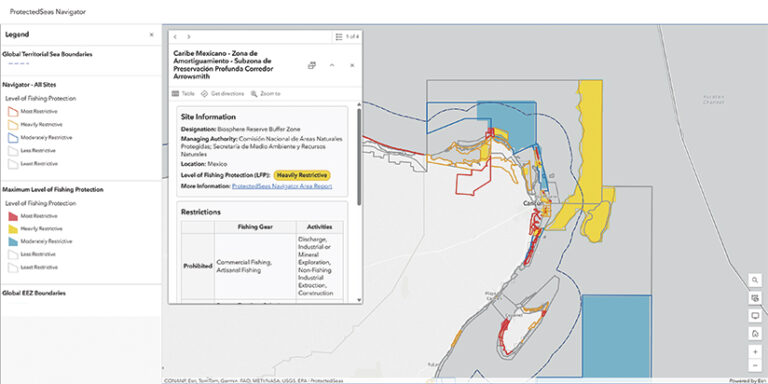
ProtectedSeas is more than a dataset; it is an ambitious, collaborative initiative aimed at enhancing understanding and stewardship of the planet’s marine environments. By providing detailed, standardized, and up-to-date information on MPAs and their regulations, ProtectedSeas empowers decision-makers, researchers, coastal communities, and advocates worldwide.
ProtectedSeas’ contributions to ArcGIS Living Atlas—the world’s largest authoritative collection of curated geographic information—marks a major milestone in the quest for healthy oceans.
Strengthened Marine Conservation Offerings
At its core, ArcGIS Living Atlas is a dynamic repository of geographic knowledge. It brings together authoritative maps, layers, apps, and datasets from a worldwide network of contributors.
ArcGIS Living Atlas thrives on collaboration and community. It draws from government agencies, nongovernmental organizations (NGOs), academics, researchers, and passionate individuals who provide rich, trustworthy, authoritative data to millions of users every year.
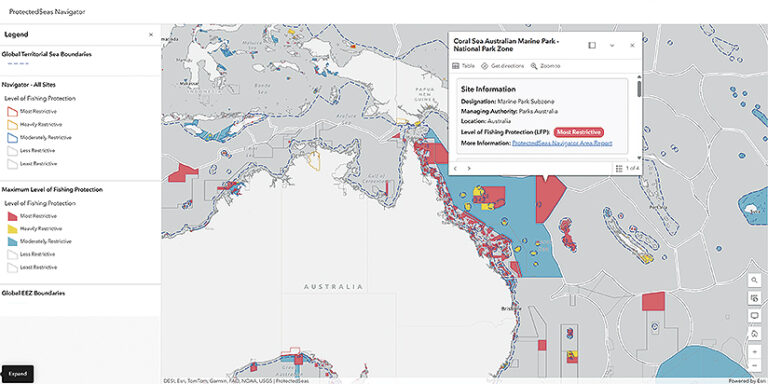
By adding data from ProtectedSeas, ArcGIS Living Atlas strengthens its marine conservation offerings. Users can now explore up-to-date spatial representations of MPAs, complete with legal regulations and management information. This integration means that policymakers, educators, and explorers have seamless access to crucial data that can inform research, drive action, and inspire stewardship.
A Vibrant Network of Contributors
ProtectedSeas’ journey to ArcGIS Living Atlas is a testament to how important community-provided content is to understanding what’s happening around the globe today.
Geographic data is never static; it grows, shifts, and refines as the world evolves. ArcGIS Living Atlas relies on a vibrant network of contributors to ensure that its collection remains relevant and robust. Community-provided content, like that from ProtectedSeas, brings local expertise, fresh perspectives, and real-world insight that centralized data sources alone can’t match.
The model of open contribution that ArcGIS Living Atlas relies on also fosters a spirit of shared responsibility. When communities, organizations, and individuals add and refine data, they become invested in its accuracy and impact.
In the case of ProtectedSeas, the organization’s firsthand knowledge and ongoing engagement with marine protection efforts ensure that the information it provides is both current and deeply informed by those closest to the issues.
Rigorous Curation Ensures Quality
The value of any dataset lies in not only its breadth but also its reliability and usability. ArcGIS Living Atlas is known for its rigorous curation: Every contribution is reviewed, validated, and enhanced to meet high standards of quality. This process ensures that users—from scientists to students—can trust the data they find.
ProtectedSeas’ inclusion in ArcGIS Living Atlas ensures that the project’s meticulous research is bolstered by the ArcGIS Living Atlas team’s commitment to excellence. ProtectedSeas doesn’t simply upload data that could easily be forgotten; the ArcGIS Living Atlas team integrates, visualizes, and updates the organization’s datasets to reflect the latest developments in marine protection policy and practice. The result is a resource that is both comprehensive and actionable.
Wide Availability Democratizes Data
Perhaps the most profound outcome of this collaboration is that high-quality ocean protection data is now available to the public. Anyone, anywhere can access and use ProtectedSeas’ datasets. Whether you are a scientist tracking biodiversity, a student learning about oceanography, a policymaker drafting new regulations, or a concerned resident advocating for your local coastline, you have authoritative, up-to-date information from ProtectedSeas available at your fingertips in ArcGIS Living Atlas.
This high-use, open-access model democratizes data. It bridges the gap between knowledge and action, making it possible for communities around the world to participate in decision-making and advocacy. The widespread availability of ProtectedSeas’ data means that marine conservation efforts can be more informed, more inclusive, and ultimately, more successful.
Real-World Uses of the Data
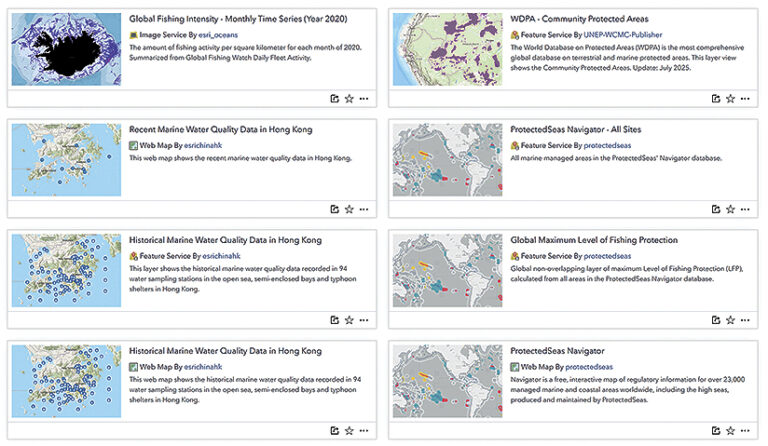
Having ProtectedSeas’ data in ArcGIS Living Atlas is already making a difference. Researchers leverage these layers to identify gaps in protection, assess compliance with international agreements, and track conservation outcomes. Coastal planners and local governments use the data to align new developments with ecological priorities. Educators employ the data to bring the ocean to life in classrooms. And NGOs use the maps to engage with the public and advocate for stronger protection of the world’s oceans.
Moreover, the integration of ProtectedSeas’ data into ArcGIS Living Atlas facilitates cross-sector collaboration. Conservationists, scientists, policymakers, and the public can all start from the same trusted information, building partnerships and strategies that are grounded in shared facts.
A Tool that Grows in Value and Utility
Adding ProtectedSeas’ data to ArcGIS Living Atlas is more than a technical upgrade; it is a symbol of the possibilities when communities, experts, and technology collaborate. As more organizations contribute their knowledge to ArcGIS Living Atlas, and as curation continues to ensure the quality of this data, the tool will only grow in its value and utility.
Looking ahead, the ArcGIS Living Atlas team expects to engage in more collaboration, receive richer datasets, and make a deeper impact. ProtectedSeas’ contributions will undoubtedly inspire others to share their data with ArcGIS Living Atlas, knowing it is a platform where data not only lives but also thrives—and constantly evolves to meet the challenges of a changing world.
Charting a Course Together
The oceans connect everyone around the world, and protecting them requires communities of all sizes to work together. Integrating ProtectedSeas’ data into ArcGIS Living Atlas is a powerful example of how open, curated, and community-driven content can drive positive change. By making high-use, high-quality data available to everyone, people everywhere are empowered to understand, protect, and celebrate our blue planet.
As you explore the new marine protection layers in ArcGIS Living Atlas, remember that every map tells a story, and every story has the power to inspire action. Let’s continue to build, share, and steward the world’s knowledge, together.