
When organizations ranging from pipeline operators to public health agencies need to modernize their GIS implementations, Esri partners can help. Their expertise in deploying and maintaining Esri software and systems can transform a company’s GIS operations from basic mapping to enterprise-wide systems management.
Discover how four Esri partners collaborated with customers of varying sizes, from large electrical contractors to small-town utilities, to ensure that everyone working on key projects has the comprehensive geographic context they need.
A More Efficient Way to Manage Utilities and Public Works
For the utilities and public works departments at the Village of Mukwonago, Wisconsin, antiquated and siloed systems with fragmented workflows and cumbersome reporting made it difficult to operate efficiently and maintain regulatory compliance. To modernize the departments’ asset management processes, the village brought in Ruekert & Mielke, Inc., to implement its GIS-based asset management solution, AssetAlly 2.0.
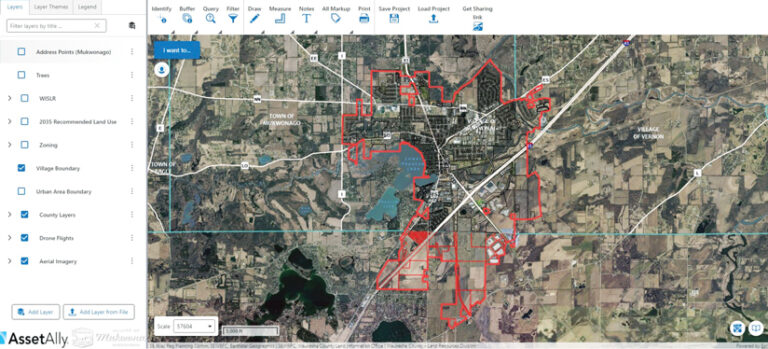
The solution leverages VertiGIS Studio, from another Esri partner, VertiGIS, for advanced web and mobile app development. AssetAlly is fully integrated with ArcGIS Online and relies on ArcGIS Dashboards and ArcGIS Hub to unify data and workflows across departments.
Mukwonago’s utilities department manages the village’s water distribution and wastewater collection systems, and AssetAlly supports the department through routine valve exercising, hydrant flushing, maintenance hole inspections, sanitary pipe jetting, and more. The public works department uses AssetAlly to administer its forestry, street maintenance, and stormwater management systems. The solution helps staff streamline tree planting; detect illicit stormwater discharge; inspect stormwater systems; clean catch basins; and record data on street plowing, salting, and brining. It also simplifies compliance by collecting and summarizing data for water system reporting to the US Department of Natural Resources.
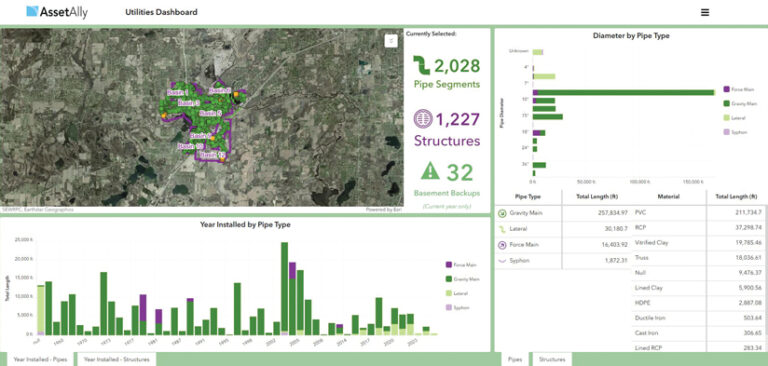
In short, AssetAlly 2.0 has transformed Mukwonago’s operations. Workflows are streamlined, data accuracy has improved, and compliance reporting is simpler. The village now operates with a modern, GIS-driven asset management system that enhances efficiency and transparency for staff and residents.
GIS Modernization Has Short- and Long-Term Gains
Across the pipeline industry, operators are modernizing their GIS environments to address growing regulatory complexity, improve data governance, and establish scalable platforms that support both current operations and future digital initiatives. As GIS evolves from a mapping tool into an enterprise system of record, many organizations are reassessing legacy architectures in favor of more standardized, integrated approaches.
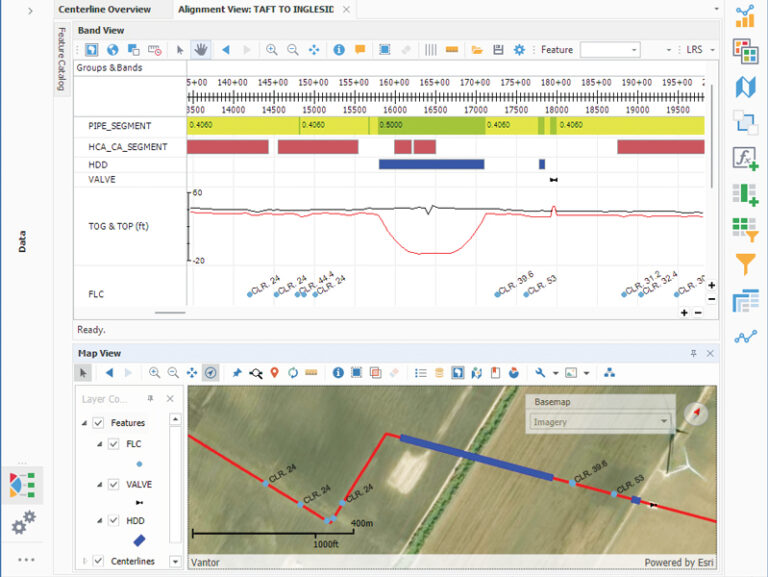
Geonamic worked with Plains All American Pipeline to modernize its GIS environment. The project fortifies the midstream infrastructure company’s existing operational needs and longer-term enterprise requirements.
Plains’ legacy systems constrained data governance, workflow efficiency, and the company’s ability to scale its GIS capabilities. Geonamic focused on establishing a standardized GIS platform for spatial data management, mapping, reporting, and analytics that spans pipeline operations. The work included upgrading Plains’ GIS foundation, adopting an industry-standard data model, implementing a new linear referencing system, modernizing infrastructure, and establishing consistent enterprise workflows.
These types of modernization efforts reflect a broader industry emphasis on creating authoritative geospatial systems that can support regulatory reporting; operational visibility; and collaboration across engineering, integrity, and operations teams. Setting up a common GIS framework allows organizations to better align spatial data with business processes while providing a foundation for future expansion.
Esri is supporting the program through ArcGIS Pipeline Referencing (Esri’s software for pipeline data management) and by providing ArcGIS Utility Network configuration and architectural design services. The partner-led implementation of Esri technology is enabling Plains to develop a modern, scalable pipeline GIS environment.
The objective was to create a single, integrated GIS environment that supports regulatory reporting, informs operational decision-making, and provides a framework that can be extended to additional business units and workflows over time. For Plains, this vision is now becoming a reality.
For Infrastructure Projects, Geographic Context Comes First
Aldridge Electric, a leading electrical contractor in the United States, delivers complex utility construction that spans coasts and climates, with regulatory requirements that vary by jurisdiction. Long before crews begin work, estimators must weigh site conditions, supplier reach, subcontractor performance, and schedules. But getting that information in a consistent, continually updated way was difficult.
It lived in spreadsheets and emails. Files tailored to personal preference were hard to share and easily lost. Legacy KMZ files were useful but inconsistent. Searching past bids and outcomes for comparison was not easy. Staffing and revenue planning often came down to guesswork.
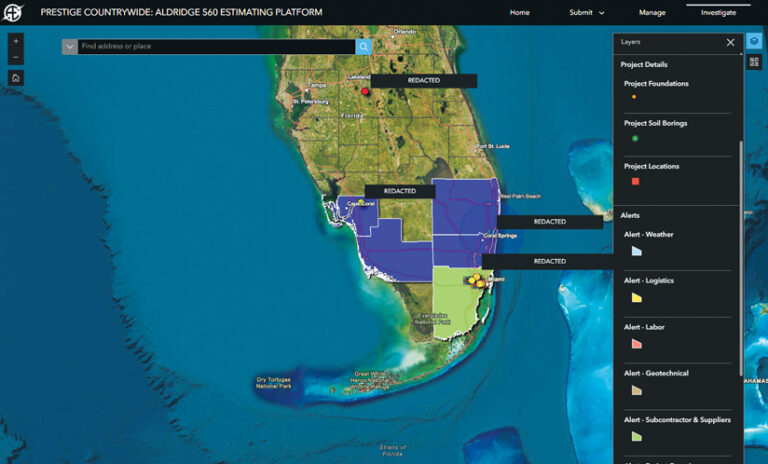
To bring a full picture into one workflow, Aldridge worked with Woolpert to build an ArcGIS technology-based portal that assembles location context, project history, and schedules in a map-first workspace and presents everything in the order that estimators use. The system shortens the path from intake to action and supports daily decision-making.
Developed inside the company’s own ArcGIS environment, with data stewardship remaining in-house, Aldridge’s new internal workflows moved staff off spreadsheets and ad hoc KMZ exchanges to a live ArcGIS ecosystem.
Intake begins with three ArcGIS Survey123 forms that capture the essentials of a new project, such as its scope, schedule, costs, and supplier information. An ArcGIS Experience Builder web app mirrors the steps estimators take from there, so the map is where their work happens. Using ArcGIS Notebooks to automate data tasks, categories and units stay aligned as data gets updated, and it all feeds the estimating report. As a result, the geographic context arrives in real time—with the opportunity, not after it.
In coastal Florida, for example, a dashboard shows active and pending bids alongside a weather layer that informs planning during storm season. This puts history, capacity, and local constraints on the same screen as the bid.
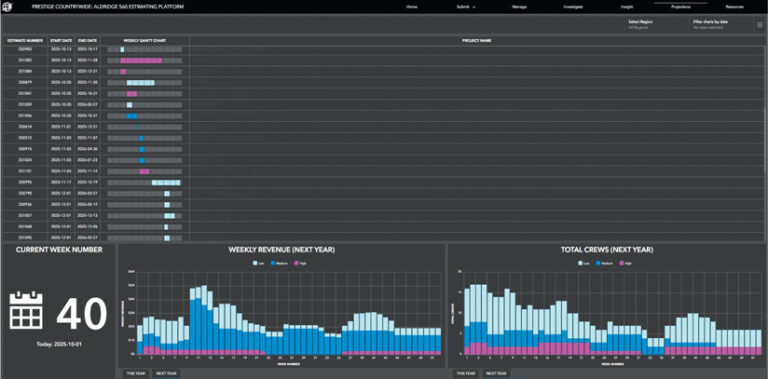
The new system also converts data into weekly revenue results and crew needs, so Aldridge can anticipate demand and forecast staffing needs and revenue. As projects accumulate, estimates carry more context with less effort, meaning the system’s value builds with use. All this continually improves bid comparisons and subcontractor management.
Aldridge will keep refining the portal so that decision-making is clear and hard-won insights remain within reach.
Enhancing Public Confidence in 5G Technology
The Lithuanian National Health Center (known by the acronym NVSC) is responsible for protecting public health. This includes ensuring that electromagnetic field (EMF) radiation remains within legally established limits.
Although leading international health authorities, including the World Health Organization and UK Research and Innovation, have found no conclusive evidence of harm from exposure at regulated levels to radiofrequency electromagnetic fields (RF-EMFs), the rapid deployment of 5G across Lithuania raised public concern. NVSC faced the challenge of not only monitoring EMFs nationwide but also providing clear, trustworthy information to the public to assure people that EMF levels are under control.
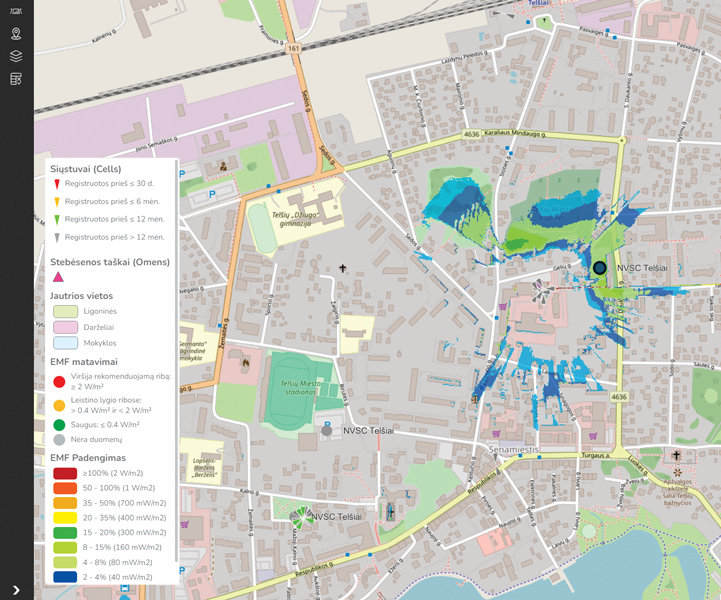
Traditional approaches—such as reacting to complaints by making on-site measurements or deploying dense networks of fixed EMF sensors—were either inefficient, slow, or prohibitively expensive to implement and maintain at a national scale. So NVSC engaged with Cellular Expert, which develops radiofrequency planning and EMF modeling solutions, such as CE Express EMF, that are based on ArcGIS technology.
Together, NVSC and Cellular Expert (CE) deployed the NVSC EMF control system, built on ArcGIS Online and CE Express EMF, to shift from a reactive monitoring model to a proactive, data-driven approach. The system automatically integrates authoritative data from Lithuania’s Communications Regulatory Authority, including all active radio antennas and time stamps indicating when the antennas were installed or modified.
CE Express EMF automatically and regularly calculates a theoretical nationwide EMF heat map that publishes as an ArcGIS Online web service. NVSC experts can view and analyze it within their NVSC EMF control system environment. This allows them to instantly identify antennas that have been installed or modified within the last 30 days, six months, or year or earlier, and assess potential EMF exposure areas. Instead of investing in an extensive fixed-sensor network, NVSC operates a limited number of movable telemetry EMF measurement stations. The stations are distributed to NVSC’s regional offices and deployed selectively for preventive inspections or complaint-based investigations—guided by the EMF heat map.
The ArcGIS Online environment integrates theoretical EMF modeling with real measurement data, enabling NVSC to precisely and cost-effectively oversee EMFs nationwide. Additionally, the public can access select EMF measurement results via an interactive web app, built with ArcGIS Experience Builder. The app increases transparency and expands public trust in 5G safety.
Through this collaboration, NVSC has improved operational efficiency, reduced monitoring costs, sped up response times, and enhanced confidence in EMF regulation and control.