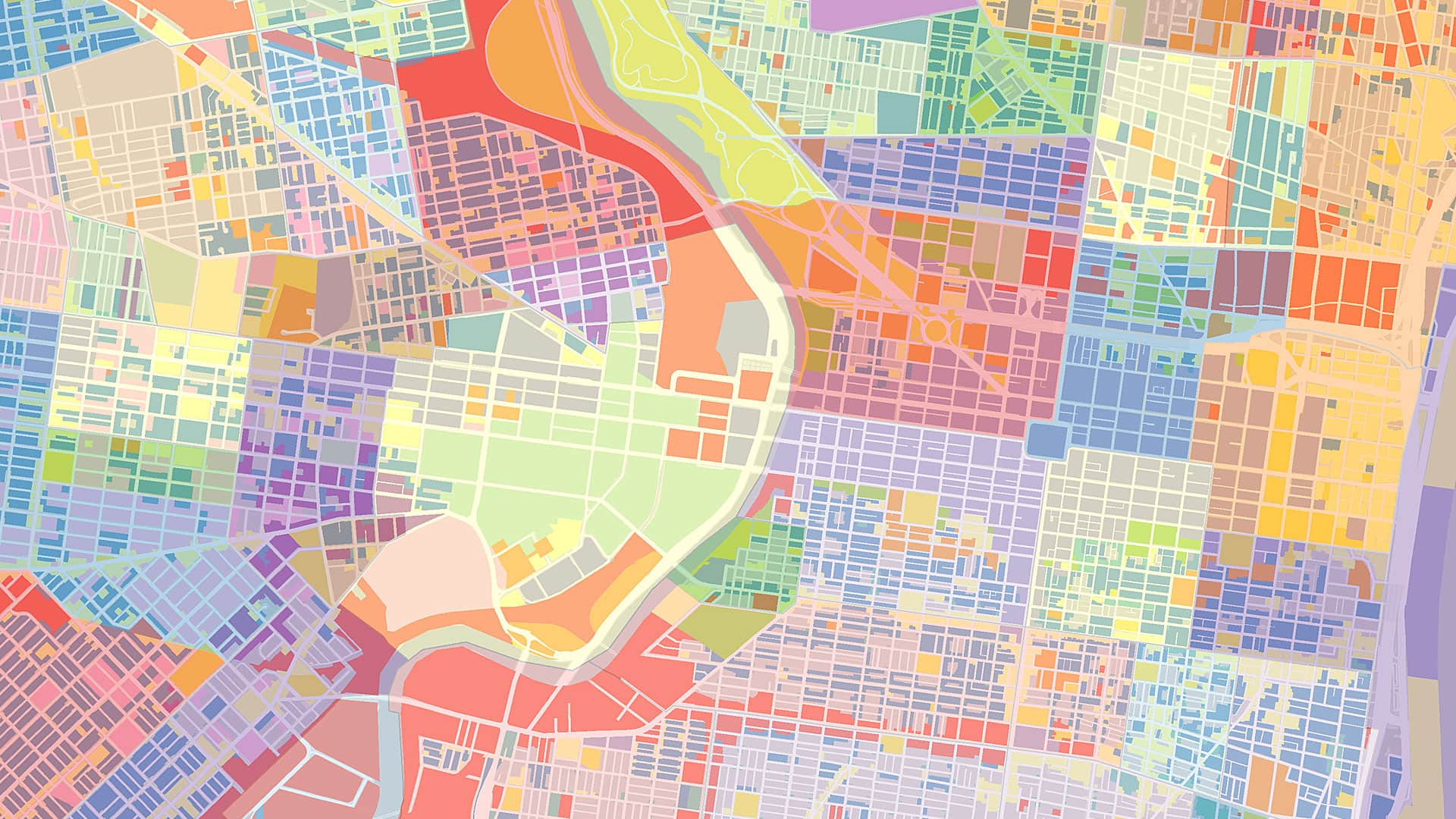
On first thought, language and maps may seem very different from one another. Language is what people use to speak and write. Maps are what people use to find places. Digging a bit deeper, however, reveals that these two modes of communication are actually quite similar.
Both are human inventions. Both help people understand their environments and how to live together in a complex world. In many ways, language and maps do similar work: They show us where we are, what matters, and how we can move forward.
Just as language enables us to orient ourselves in the mental and cultural world, maps help us orient ourselves in physical and social space. They are not only tools for information or travel—they are tools for human life itself.
Tools for Thinking
Language helps us organize our thoughts. We use it to describe things, ask questions, and express complex ideas. Maps do something similar: They help us make sense of the space around us. They show us size, direction, and connection. In both cases, we take something too big to hold in our minds and place it into a system we can understand.
This means both language and maps are cognitive tools. They are part of how we think—not only about the world but also about ourselves.
Tools for Acting
Language is also a tool of action. We use it to give instructions, make decisions, influence other people, and work together. Maps function in a similar way. They help us plan, choose paths, and make movements. Whether used by a hiker in the mountains or a politician drawing borders, maps guide people’s actions in the real world.
Again, we see a shared function between language and maps: Both systems help us go from thought to action.
Systems for Communication
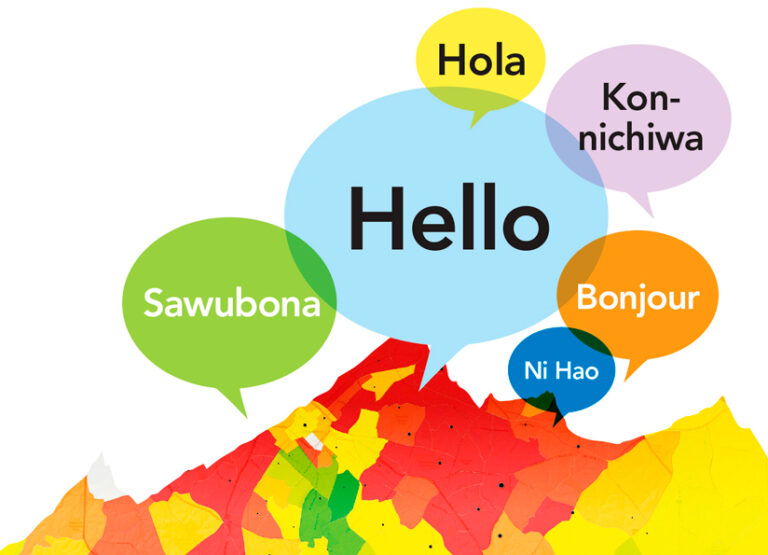
Language is our main method of communication. It allows us to share feelings, knowledge, memories, and questions. Maps also communicate—through symbols, shapes, and colors. A good map can speak across language barriers, cultures, and even time.
In this way, both language and maps are media for passing on information—from person to person and generation to generation.
Models of the World
One important thing to remember is that neither language nor maps show “the truth” directly. They are models—tools that simplify, focus on certain details, and omit others. Language is not reality; it is a way to describe it. A map is not the landscape; it is a representation of it.
Because of this, both tools are powerful. They shape how we see the world, what we notice, and what we ignore.
Carriers of Power
With the power of language and maps comes responsibility. Who writes the language? Who draws the map? These are not small questions. Language shapes how we think about identity, history, and truth. The same is true for maps: they define borders, make political claims, and include or exclude people.
So language and maps are not neutral. They can be used to support power or challenge it.
Cultural Meaning
Both language and maps carry deep cultural meaning. The words people use come from their traditions, values, and past. Likewise, the symbols, place names, and colors employed in maps reflect what a society deems important.
In this way, language and maps help people keep and share their cultural identities.
Always Changing
Language continually evolves. New words come into fashion and old ones fall out of use. Social media, new technology, and global communication all shape the way we speak. Maps also change. Digital tools such as GPS and GIS allow people to make and update maps in real time. Changes to the environment, migration, and politics also create new mapping needs.
What this means is both systems are dynamic. Language and maps grow and evolve with us.
Tools for Creativity
We must not forget the creative aspects of these two systems. Language is not only for facts—it also gives us poetry, stories, jokes, and songs. Maps, too, are not only for navigation—they are used in art, protest, games, and fiction. Think of mind maps or fantasy maps. These are ways humans use structure and space to express their feelings and ideas.
Thus, both language and maps are not only technical, but they are also poetic.
A Critical Perspective
Of course, the idea that maps and language are helpful tools sounds positive, but these modes of communication must also be viewed through a critical lens. These tools don’t just show us the world—they also shape it. This means they can also limit our view. Languages may ignore or erase underrepresented voices, and maps can leave out certain people.
AI systems, for example, now use language and maps based on data that may carry old stereotypes or perpetuate inequalities. If we are not careful, we risk building systems that repeat those same exclusions on a much larger scale. So while language and maps help us make sense of the world, they can also hide, distort, or even control it. Being aware of this is essential—especially in a time when machines also employ these tools for us.
In the Age of AI
AI can already write text, answer questions, and draw maps. These AI systems are fast and powerful. But we should always remember that they still rely on tools that were made by humans, for humans.
The basic functions of language and maps—to help people think, act, communicate, and understand—will not disappear, but they may change. And we must ensure that these changes still support people, not just machines. Because in the end, language and maps are more than tools. They are part of what makes us human. They connect us to each other—and help us find our way not only on Earth but also in our minds, cultures, and the future.