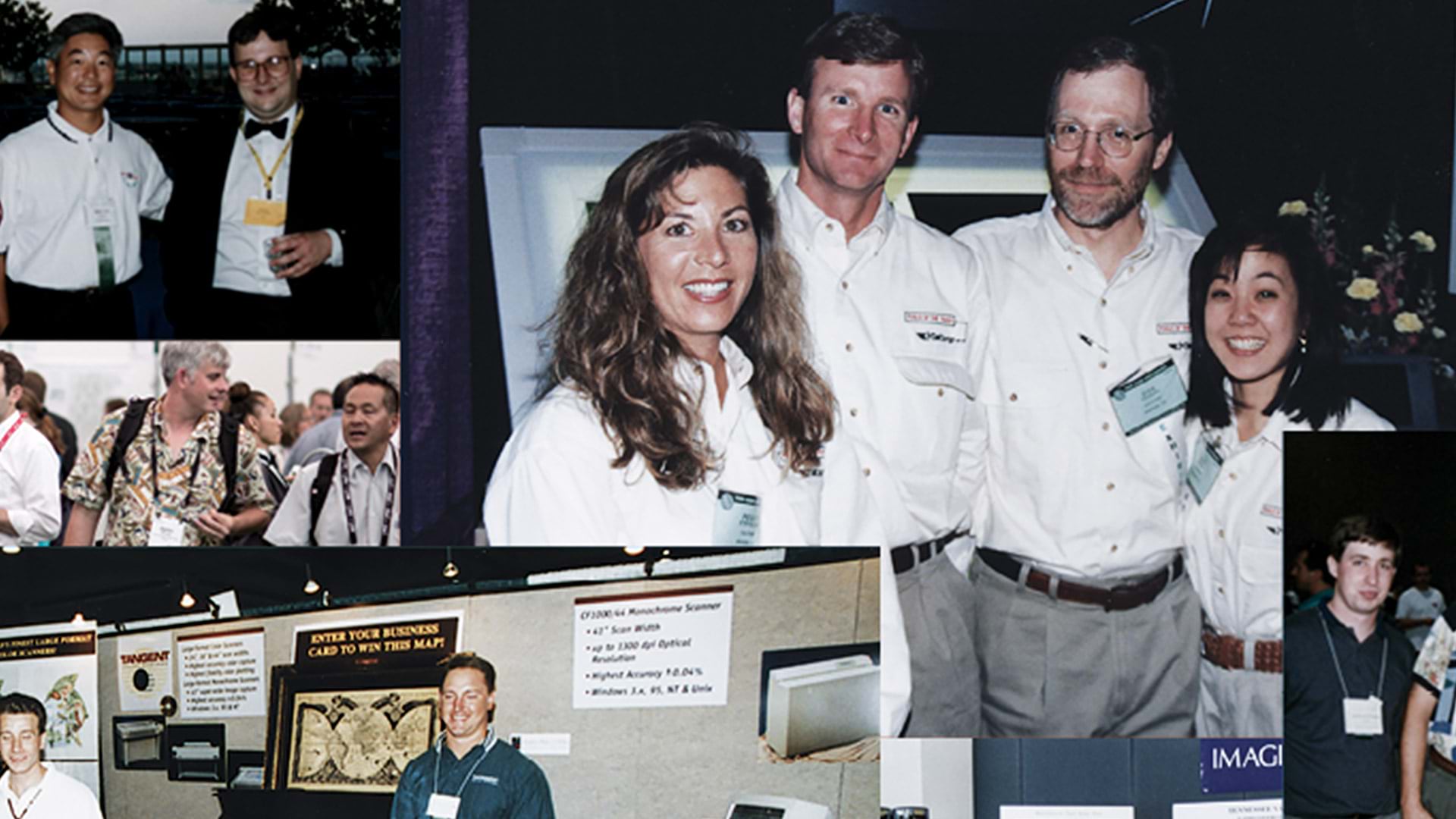
When Clint Brown joined Esri in August 1983, GIS was barely an industry. The software ran on high-end minicomputer systems that cost close to a million dollars to install. Only a small number of organizations could afford to experiment with the technology. Those early users weren’t following best practices—they were inventing them.
Today, Brown serves as Esri’s director of software products, a role shaped by decades of listening to how people actually use GIS in their work.
From the earliest user meetings to today’s Esri User Conference (Esri UC), Brown reflects on how peer-to-peer sharing—of maps and methods, via personal stories and professional workshops—helped grow a community that transformed GIS from a niche field into an enterprise-wide technology that’s vital to all industries and sectors.
The following Q&A has been condensed and edited for clarity.
Q: When you think back to the first Esri user meetings in the 1980s, before there was an official Esri User Conference, what do you remember?
A: What stands out most to me is just how early it all was. At the time, GIS was growing, but there weren’t established best practices—a shared language or documentation to look to for how to do the work. Everyone was essentially inventing their own approaches as they went.
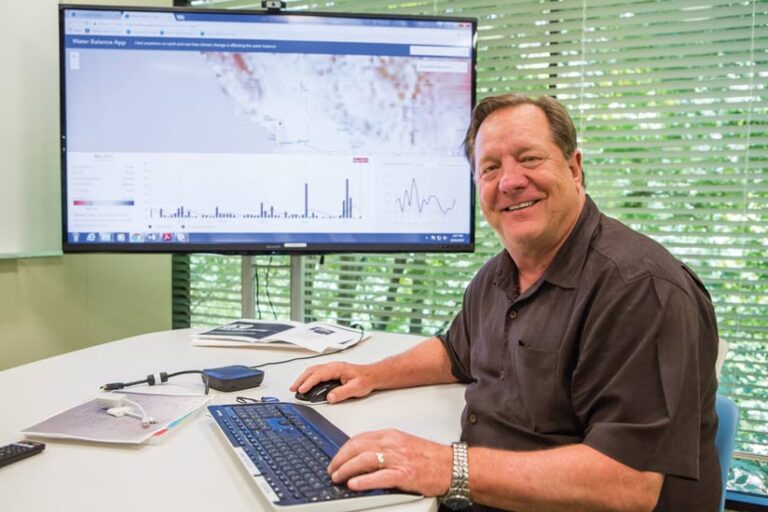
That’s what made those early user meetings so important. They became a space where people could compare notes: what they were trying, what was breaking, what was working, and what they were learning along the way. It wasn’t formal instruction. It was practitioners trying, together, to make sense of a new technology.
My first experience with that was as a user, not as an Esri employee. I attended the third Esri user meeting in May 1983 while I was working at the US Fish and Wildlife Service. For the first few years, the meetings were held on Esri’s campus in Redlands, California, during spring break at the local Montessori school, which Esri shared grounds with. There were 18–20 of us in the room, representing roughly 10 organizations, figuring things out in real time.
That act of learning directly from users—that willingness to share with each other—became the foundation for how this community formed. In many ways, those early conversations set the tone for how GIS would evolve: not just as software, but as a practice shaped by the people using it.

Q: From the very beginning, listening to users—on support calls, in documentation work, and in meetings—was central to your work. What did that teach you about how people were learning GIS?
A: When I began working at Esri in August 1983, one of the first things I was given was a paper on thinking about software as a product. It introduced eight principles: specifications, testing, documentation, release planning, naming, release notes, training, and user support. I had no previous exposure to the ideas and tenets that paper outlined, but it became the framework we implemented to support our software development, and one we still use today.
In my second week, I started answering technical support calls. Those calls quickly became one of the fastest ways to understand how GIS was actually being used. You could start to recognize patterns. Certain problems kept showing up. New approaches were emerging.
A lot of learning came through those conversations. Users were not just looking for help with commands in ARC/INFO’s text-based interface; they were also trying to assemble workflows and make decisions about methods. These were things we had to figure out how to address within those tenets.
Answering and responding to those calls became a guide for identifying the topics and workflows we needed to write about. That work shaped our documentation and training and, eventually, the technical workshops at the conference. That combination of listening closely and then capturing what we heard as teachable practices became a durable tradition. It helped the community learn faster, it evolved software development, and it helped us build better support for how GIS was being used.
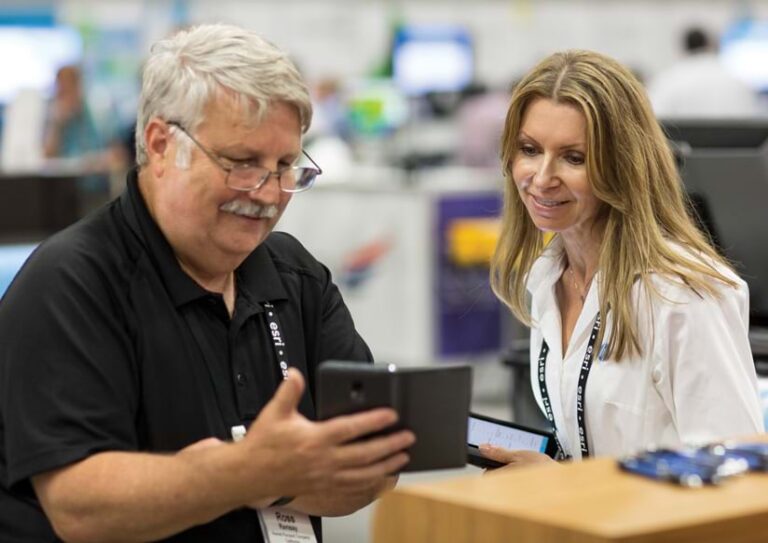
Q: You’ve often pointed to 1986 as a turning point, when the map gallery and technical workshops were introduced at the Esri UC. What changed once users started bringing their own maps and teaching one another in workshops?
A: By 1986, one of the clearer signals coming out of support calls was the need to help a growing GIS user community connect with each other, not just with us at Esri. Learning had been happening for years, but we needed ways to make it more visible and tangible. The map gallery was a result of that shift.
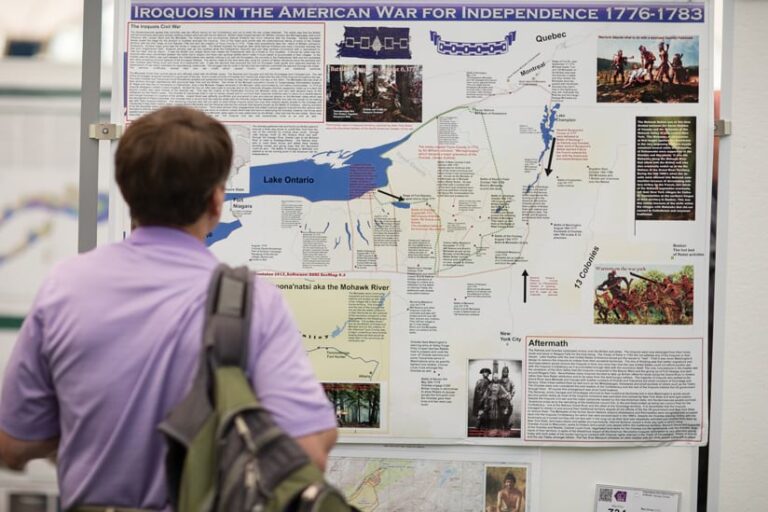
For the first time, users brought maps that represented months or years of work and put them up where others could see them. You could walk around the room, look at the maps, and immediately understand how different organizations were applying GIS. That visibility changes how people learned from each other.
The same need showed up in the technical workshops. We had already recognized that documentation could only go so far in explaining the software. Workshops created space for people who were deeply invested to work through ideas together. What mattered most was the synergy that came out of that participation. The questions people posed—and worked through together—often pushed the community further than any single explanation could.
And we needed that. Making learning visible changed how Esri thought about GIS, how we communicated about it, and how we supported it. It influenced our writing, our documentation, and how we stayed engaged with users on real problems, accelerating GIS development.
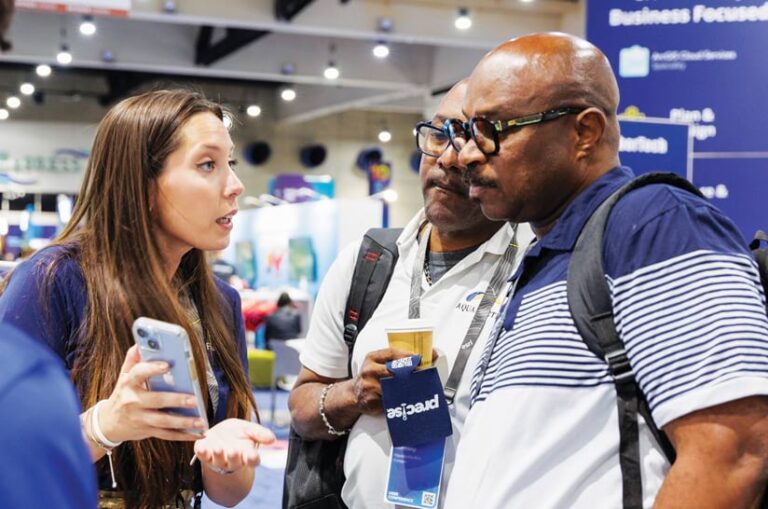
The 1986 Esri User Conference became a place where the community could see itself learning, and that spirit is still what makes the week such a critically important and energizing experience today.
Q: How did that early culture of sharing at the Esri UC shape the way Esri built and delivered GIS as it became more widely adopted?
A: That culture of sharing changed how we thought about delivering GIS to our users. It made clear that this wasn’t software meant to be used in isolation. GIS could be applied at different scales and in different contexts. If we wanted it to scale, we had to design and deliver it in a way that supported that diversity of use.
Over time, that’s where ideas like spatial data infrastructures (SDIs)—the technologies, policies, and institutions that, together, make geospatial data usable—started to matter. Early SDIs were an important step because they put more geographic information on the web as shareable resources. But the limitation was that SDIs often stopped at individual datasets. What users actually needed was the ability to bring things together into maps and apps and use them to solve problems. That’s where web GIS and shared information systems started to make practical sense.
Q: Today, sharing data and collaborating across organizations is essential, especially in moments of crisis. What lessons from that culture of sharing still shape how GIS is practiced now?
A: For me, Hurricane Katrina was the moment that really changed GIS. When it hit the Gulf states in August 2005, people suddenly needed the same data at the same time, and they didn’t know where to get it. I remember getting calls before the storm from people asking where they could find basic layers. There was a lot of duplication, a lot of overlapping effort, and no clear authoritative source. It was chaotic.
That experience made something very obvious: You can’t collaborate under pressure if data only lives in one place or inside one organization. In moments like that, the idea that every system is separate just doesn’t hold up. Those lessons pushed the community toward shared services and authoritative information that could be reused and combined. A lot of the early thinking behind ArcGIS Living Atlas of the World came from that reality—not just from the idea that everything would be digital but from the need to have information ready and accessible when it mattered.
COVID showed what that looks like when the scale is global. When people talk about the Johns Hopkins COVID-19 dashboard, what stands out to me isn’t just the dashboard; it’s the fact that it worked because a community came together around shared information. We had built systems that could scale, and we’d learned—sometimes the hard way—that keeping things simple is what makes them hold up under pressure.

Q: As GIS continues to grow and take on more complex challenges, what do you think is most important not to lose from those early, community-driven moments?
A: What I think matters most is staying connected and continuing to share with each other. A lot of the most important shifts we’ve made didn’t come from big plans—they came from listening closely and paying attention when something wasn’t working.
As things scale, it’s easy to assume the technology will carry itself. But GIS has always been strongest when it stays grounded in real problems and real people.