Pat Dolan ran almost every morning. A high school cross-country state champion and scholarship track athlete, he was the guy at the local fun run who could really fly. When he won, he would give his coworker’s name, and they’d share a joke when the announcer called the winner.
Dolan, then a solutions engineer at Esri, gave technical demonstrations for visiting customers at the Redlands headquarters in California. He scripted the demos and practiced them until they were polished. He had props—a gas meter, a clock he’d dial in to unfolding events—that he stashed around a small stage in the corner of the executive conference room.
When Esri president Jack Dangermond or another executive brought a group into the building, Dolan was ready with a scenario:
“It’s 3:00 a.m. There has been a train derailment,” he’d begin.
Visitors clicked through the software as his narrative progressed. Five computers delivered five experiences for five different roles within an organization. This was enterprise GIS.
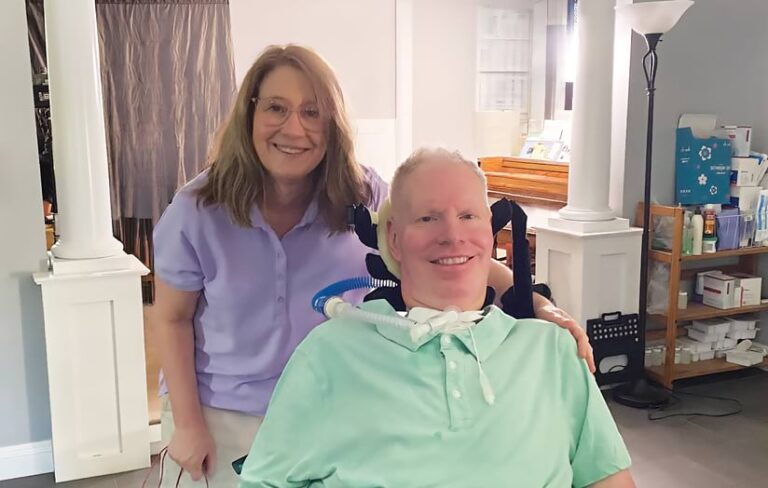
“Pat brought the idea of structured demos to Esri,” said Chris Thomas, Esri’s director of government markets. From there, he explained, Dolan’s ideas evolved into what are today mature departmental programs, including the Executive Briefing Program and the Geo Experience Center.
Dolan was recruited to Esri by Tim Rankin, Esri’s technical marketing manager. Previously, the two had collaborated when Dolan worked at Telvent Miner & Miner (which Esri partner Schneider Electric later acquired), an engineering firm in the utilities space.
The duo helped usher enterprise GIS into mainstream data management. In the early 1990s, very few utility companies were using GIS. Today, it’s a must-have technology.
Dolan and Rankin had a complementary dynamic. “I am an outside thinker and have to talk my way to a conclusion,” Rankin said. In contrast, Dolan listened, studied the room, and spoke last.
“Pat would end the meeting saying something profound—it was brilliant,” Rankin reflected.
A Call to Advocacy
On one of his usual morning runs, Dolan suddenly fell. A couple mornings later, he fell again, and within a week, lost his balance while walking. Doctors eventually diagnosed him with amyotrophic lateral sclerosis (ALS), also known as Lou Gehrig’s disease—a fatal, degenerative illness with no treatments that stop the disease, or cure.
Devastated, Pat and his wife, Mara, had a million urgent questions and few answers.
“After I accepted my diagnosis, I knew I wanted to apply my GIS skills to the fight,” Dolan said. “At one of my first clinic visits, I saw how I could do it.”
The United States has around 300 ALS clinics. These clinics bring a coordinated care team together in one visit: neurology, respiratory care, nutrition, speech and swallowing, physical and occupational therapies, social work, and mental health support. Every three months, patients report to a clinic where the care team monitors disease progression, manages symptoms, and plans care as the patient’s needs change.
The Dolans found an ALS clinic practically in their backyard—at Loma Linda University Medical Center, a 15-minute drive from their home. But they had nearly missed it. For Dolan’s initial visits, they drove 70 miles to the Cedars-Sinai clinic in Los Angeles.
At the time, Loma Linda was a new clinic, so it didn’t show up in Dolan’s search results. An ALS Association care manager pointed him in the right direction.
At Dolan’s first visit in Loma Linda, he met a man who had traveled 170 miles from Bakersfield, California. Each clinic session meant two nights in a hotel.
Clinic days leave patients exhausted. Even on the short drive home from Loma Linda, Dolan would often fall asleep in the passenger’s seat. Many patients must drive themselves or risk missing their sessions.
“That’s when I needed to understand access to care for people living with ALS,” Dolan said.
Patient Access Data in One Place
ALS Clinic Advisor was the first of several resources Dolan conceived in what would become the GeoALS Hub, a platform that organizes data by geography to improve care, accelerate research, and support advocacy for the ALS community.
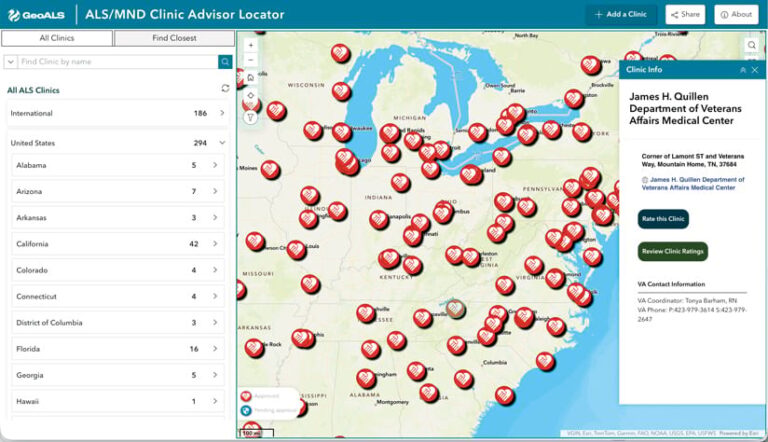
Using ALS Clinic Advisor, patients can search clinics by location, clinic name, and neurologist; filter by rating; and browse services. The app compiles reviews of clinics and clinicians from across the country. Clinicians can see best practices emerging in ALS care and identify areas for improvement. ALS Clinic Advisor is a living survey—people’s review responses appear almost immediately in the dashboard.
The hardest thing was creating the data. “There wasn’t a central database of ALS clinics,” Dolan explained. “I had to visit multiple websites just to find them and identify the care deserts.”
Launching with 100 tracked clinic locations, ALS Clinic Advisor now includes nearly 300 clinics in the United States and 186 more internationally. Validating and updating the dataset are handled by what Dolan calls the Mappers, a volunteer collective of about 20 GIS professionals, ALS advocates, caregivers, and researchers. All this work—plus the volunteers, data, and maps—now make up GeoALS, the nonprofit that the Dolans founded.
The ALS clinic database is one of the most important datasets in the GeoALS Hub. It puts authoritative data from federal agencies and research institutions into geographic context—and it’s open to anyone who wants to build on or analyze it.
No-Hands Mapping
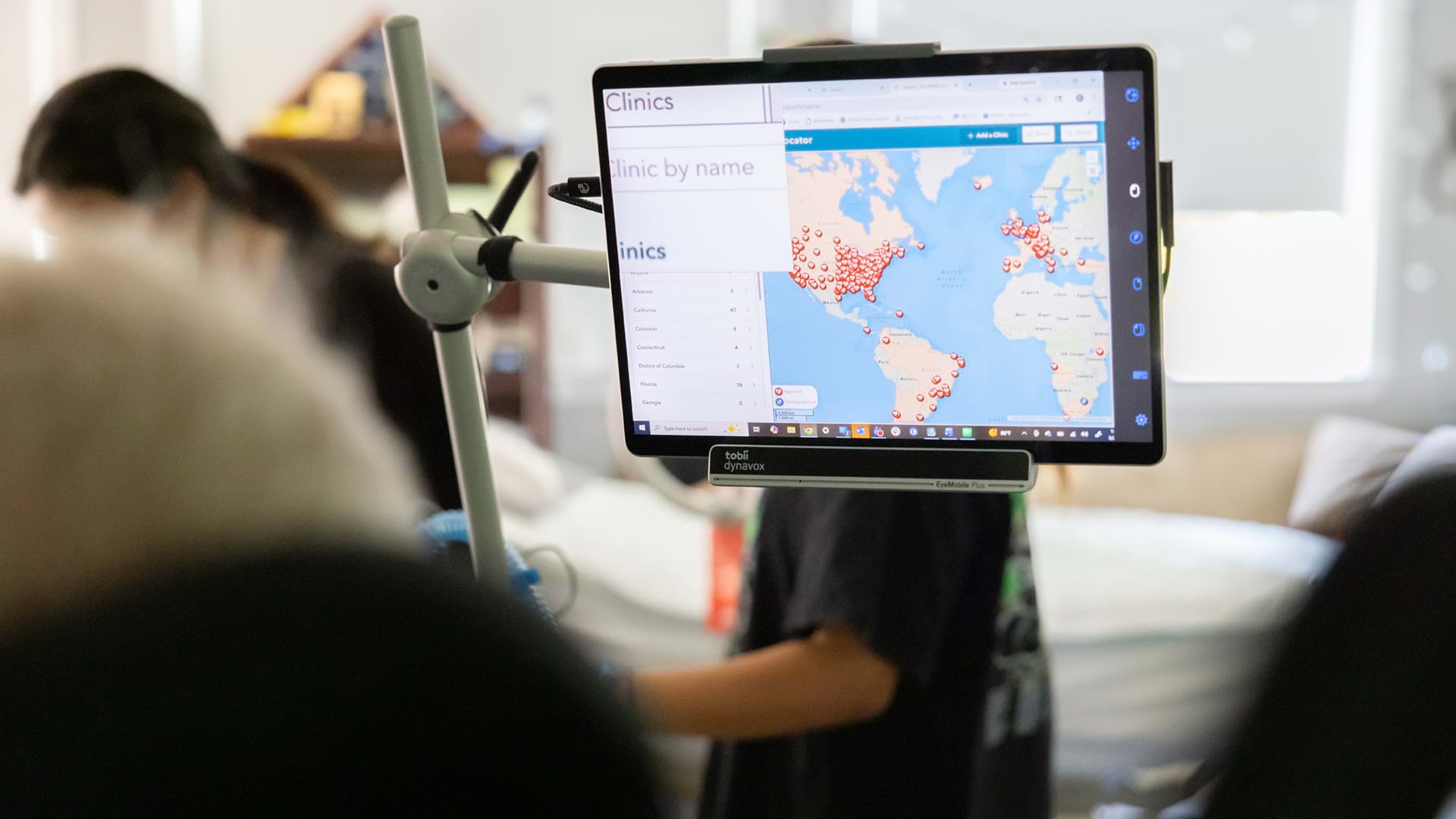
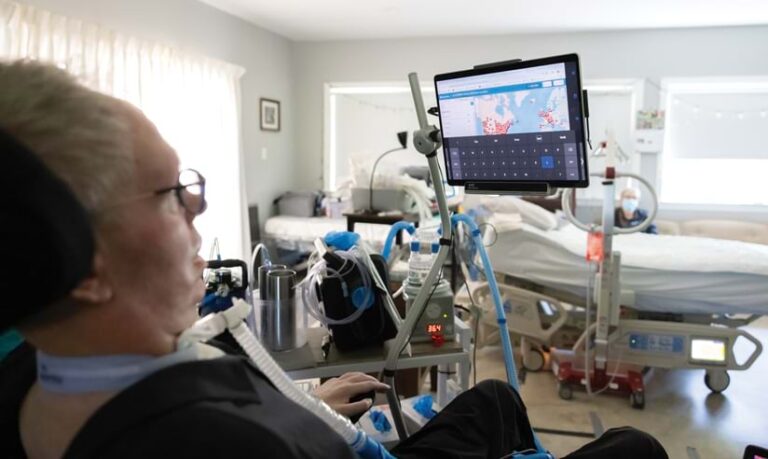
A person with ALS who can no longer move their hands or body often uses their eyes and facial expressions to communicate. Eye-gaze devices include a tiny infrared camera that detects corneal reflection and tracks pupil movement to determine where the user is looking on a screen, functioning like a cursor for typing or commanding an application. It takes time to get used to this technology.
“It took about a month, plus another month to become proficient using ArcGIS Online and ArcGIS Pro,” Dolan said. “You forget that you normally use both hands, your voice, and your eyes to work.”
“Pat can type faster than anything,” Thomas exclaimed. “He’s flying.”
GIS for Political Action
Dolan discovered that other ALS advocates were also working with eye-gaze GIS. Glen Rouse had spent 31 years as a forester for Sierra Pacific Industries. As he lost control of his hands and speech, he directed his energy toward advocacy, gathering data for ALS legislative maps that showed lawmakers exactly how ALS affected their districts and states.
Mara arranged a virtual meeting. Dolan and Rouse collaborated as much as they could before Rouse’s death in 2022. The Dolans continue taking that GIS-based approach to political action.
The Glen Rouse ALS Legislative Viewer filters GIS data into district-level evidence that policymakers can easily understand. Maps back the narrative with data: where people with ALS live, where clinics and services exist, and how those patterns align with congressional representation and ALS policy support. The app shifts advocacy conversations from national averages to local impact.
It was the tool of the moment leading up to the Accelerating Access to Critical Therapies (ACT) for ALS Act. Passed in 2021, the bill invested in and expanded access to investigational therapies for patients who do not qualify for clinical trials. The US Congress passed the ACT for ALS Act by an overwhelming margin, 523–3, and it became law on December 23, 2021.
Esri senior solution engineer Amanda Stanko—whom Dolan has nicknamed “Wing Amanda” for copiloting the ALS work—is his primary mapping partner and copresenter for GeoALS. She steps in wherever needed: making map layers, geocoding tables, coordinating volunteers, and presenting at conferences.
“One of the most amazing things Pat has done is make connections,” Stanko said. “The ALS Association, the Centers for Disease Control and Prevention, Veterans Affairs—all these siloed organizations with ALS data—he got them talking when they weren’t before.”
Outside of rare genetic cases, ALS is considered sporadic. Yet patterns in the data suggest it is not entirely random. Elevated risk among certain groups, including veterans—who are several times more likely to develop ALS—points to possible links with environmental or toxic exposures.
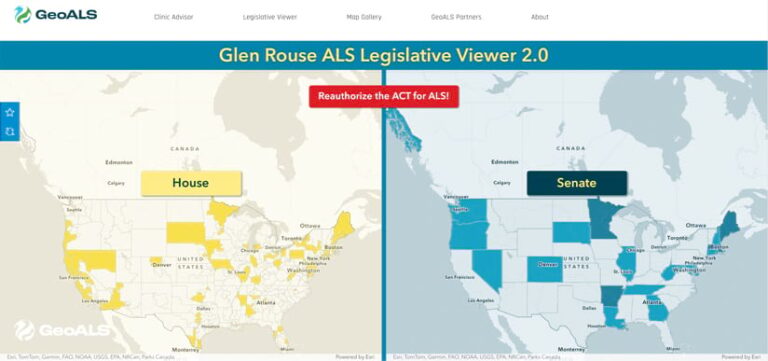
“Amanda and I developed a map showing the number of ALS clinics, veteran populations, and amount of ALS research funding by state and congressional district,” Dolan explained. “This information helped educate Congress on the impact of ALS in their districts.”
For Stanko, the impact was clear during conversations at the Health and Human Services Conference where she and Dolan presented.
“They could go on Capitol Hill with concrete demographic data: These are your constituents. These are the people at risk for ALS. These are the veterans in your district. You need to support this,” Stanko explained.
A Tight Timeline to Act
As Congress considers whether to renew the ACT for ALS Act in 2026, Dolan is doing what helped the law pass in the first place: turning lived experience into evidence that lawmakers can’t ignore. Same message, sharper tools. This is what ALS looks like on the ground—and this is what happens when policy meets, or fails to meet, reality.
Dolan and other ALS advocates are building momentum. A Zoom call in March led to congressional sponsorship and, in April, Representative Mike Quigley of Illinois introduced the ACT for ALS Reauthorization Act of 2026 (H.R. 8205). A simple majority—218 votes—is needed to pass the bill by September 30.
Time is tight in Washington and tighter still for Dolan. His eyes are becoming less responsive. Eventually, paralysis will extinguish his ability to communicate.
The ALS and GIS communities have what they need to continue to support this work: the data, maps, and systems that Dolan has built to last.