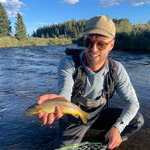
On a typical day of fieldwork in northern Michigan, an aquatic resource technician from the nonprofit Trout Unlimited (TU) will trek through the white cedar and hemlock woods of Huron-Manistee National Forests, lugging heavy survey gear along rugged hiking trails. It’s difficult work. The forests are littered with treacherous two-track roads, and the weather can be especially hot and humid in the dead of summer.
After hiking through the tamarack bush, the technician comes to a stream that’s cold to the touch, even in the heat. This is due to the strong groundwater influence and the shade of the canopy from the thick forests particular to this region.
However, the work site is impeded by a road crossing that blocks trout migration and increases temperatures downstream, damaging the ecosystem and the species that call this water home, like massive mayflies and mottled sculpin.
But the technician is here for the brook trout. This vibrant salmonid is a native indicator species, meaning that if its populations dwindle, it’s a sign that something unnatural is affecting the health of the entire ecosystem. The trout’s ecology requires habitat parameters like river substrate, dissolved oxygen levels, cold water, healthy surrounding forests, and connected stream networks for survival and reproduction.

The brook trout is also the mascot of TU, a conservation organization that operates throughout the United States. Its technicians survey streams like those in the Huron-Manistee National Forests to conserve and restore trout populations. TU is committed to identifying and removing barriers to aquatic organism passage by using GIS technology such as ArcGIS Survey123, ArcGIS Field Maps, and ArcGIS Experience Builder to reconnect stream networks for all the species that live there.
Site and Survey
Coldwater streams are defined by the Michigan Department of Natural Resources as streams capable of remaining below 63.5 degrees Fahrenheit year-round, even throughout the hot summer months. Coldwater is an ecosystem service made possible by groundwater influence, forests, and a well-connected stream network.
Although the Great Lakes region is rich in hundreds of these tiny stream networks, they are often blocked by road crossings throughout the area—a problem not only for the brook trout but for the entire ecosystem. TU is dedicated to reconnecting these networks and restoring habitat for brook trout with the help of GIS software. This focus also serves the needs of many other Great Lakes riverine species.

TU technicians restore miles of reconnected habitat by collecting data on barriers and removing the road crossings, culverts, and other human-made structures that inhibit aquatic organism passage.
Surveying these streams is the first step in the process. TU technicians complete the Aquatic Barrier Stream Crossing Survey on a daily basis to identify potential barriers to a stream network. This survey requires many fluvial, erosion, and habitat measurements, including flow rate, stream bank at full width, and structure width.
Technicians use the offline-compatible ArcGIS Field Maps. The app identifies work sites for the day and links the associated survey defining the style of fieldwork needed.
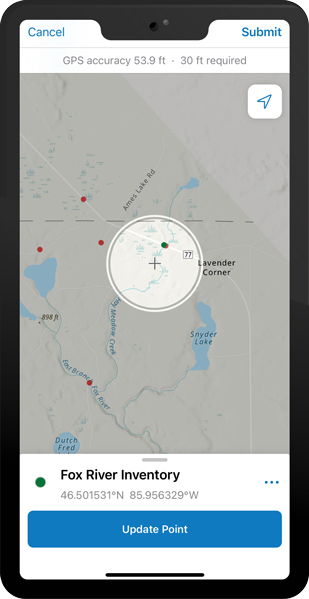
After surveying a site, the technician submits the completed survey using ArcGIS Survey123 with an immediate barrier score response characterizing the severity of the barrier’s disruption to the stream network. This is then sent to an online database to prioritize sites for restoration potential.
Prioritization considers habitat reconnection potential, cost of reconstruction, and landowner relationships, among other factors. Once the construction phase is completed, TU staff can continue further up the stream network to find additional barriers and reconnect more segments of habitat.
TU staff then monitor these restored sites through recurring biological surveys focusing on fish and macroinvertebrate communities, using ArcGIS Field Maps to document fish populations and other variables before and after construction takes place. With a completed project, TU can calculate the connected stream mileage to the next barrier by updating its public Stream Reconnection Map.
Putting the Pieces Together
TU collaborates with agencies and funding partners, including the USDA Forest Service, National Oceanic and Atmospheric Administration, US Fish & Wildlife Service, and National Fish and Wildlife Foundation, to reconnect hundreds of miles of upstream coldwater habitat for aquatic species like brook trout, providing climate resilience to freshwater resources.
This work is made possible through several ArcGIS field applications, especially data collection in ArcGIS Survey123. This app is essential for technicians to collect geomorphic data and determine if a stream location acts as a barrier for aquatic species at certain flows.
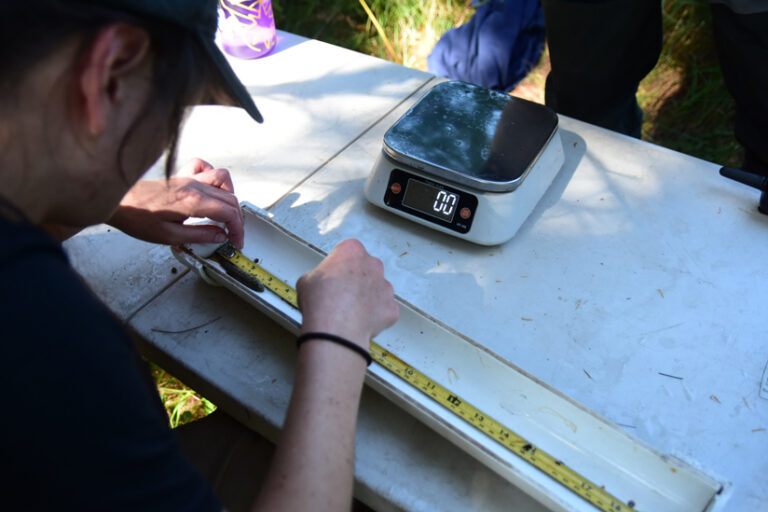
ArcGIS Field Maps is an essential tool for its offline capabilities and live tracking of progress. The effectiveness of restoration work is monitored through the uses of habitat and biological surveys—including macroinvertebrate surveys, stream temperature measurements, and electrofishing surveys that focus on native brook trout populations. Data collection efforts are designed and executed through ArcGIS Field Maps for both the office and the field.
Additionally, TU used ArcGIS Experience Builder to create the Stream Reconnection Map, which identifies sites that TU has identified as necessary for stream reconnection at any stage of the project. This includes information such as the particular watershed and stream location of the site, the year stream reconnection construction was completed, and the funding sources of the project.
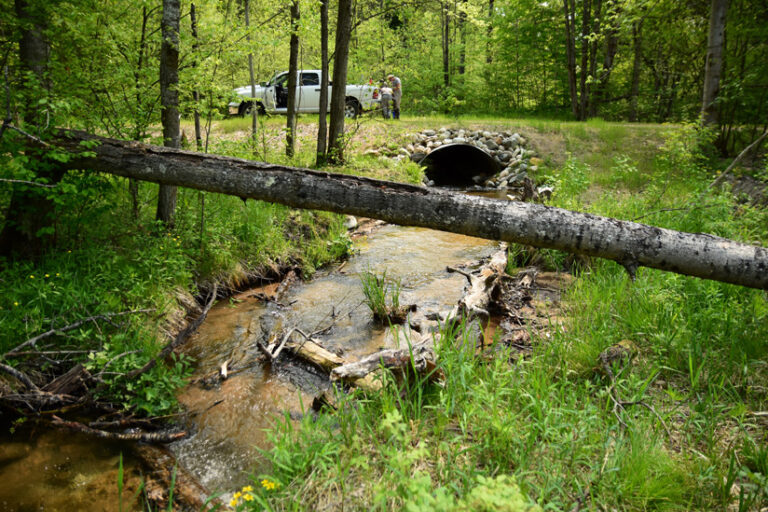
With these GIS applications, TU aims to continue monitoring the progress of stream reconnection for federal and private partners as well as for local chapters and TU members.
Ideally, resources like the Stream Reconnection Map help present an ethical and sustainable perspective for aquatic ecosystems and human transportation in the Great Lakes region. By using and sharing these resources, TU can continue to grow its engagement with more people who live near these waters, as well as with others who collaborate, advocate, and hope for better stream health.
To follow the progress of the stream reconnection project, visit TU’s Stream Reconnection Map.

About the author