For over 15 years, frox Die IT Fabrik has been developing software solutions for digital surveying and mobile GIS data acquisition.
The company delivers high-precision measurement tools for critical infrastructure and has a diverse client base that includes government agencies, infrastructure firms, environmental organizations, and utility providers. Because of this, frox’s suite of digital surveying and mobile GIS applications—such as FX Smart, FX Reality, FX Collector, and FX Survey—need to be able to work effectively and efficiently in a variety of situations.
However, the company has faced technical difficulties typical of code bases that have evolved over several years. A traditional, monolithic software architecture began to slow down maintenance, updates, and innovation. Furthermore, with the upcoming retirement of the software’s underlying GIS technology, ArcGIS Engine, fast approaching in 2026, engineers at frox seized the opportunity
to modernize.
The goal was to transition to an architecture with a smaller footprint for lightweight applications designed for modern mobile devices and rugged tablets. Frox also aimed to use a developer kit that supported the latest high-performance layer types within the ArcGIS ecosystem, particularly for the integration of vector tile basemaps. It had to build applications that would run seamlessly in both online and offline environments. Finally, frox needed flexible, self-contained deployments that would allow applications to be deployed side-by-side on devices, simplifying ongoing maintenance and management.
A Surveying Solution
With existing expertise in .NET and C#, the frox development team turned to ArcGIS Maps SDK for .NET. Not only does the SDK include a modern 64-bit architecture and support for the latest Microsoft .NET application development platform, it also enabled the development team to integrate its existing processes of continuous integration and delivery, saving the time required to reimplement them. The modern, asynchronous design of the API, along with support for .NET features such as nullability, allowed frox to build applications that are more responsive and robust than they were previously. Comprehensive support for the .NET Multi-platform App UI (MAUI) desktop and mobile cross-platform framework were also crucial to frox’s decision to use .NET Maps SDK.
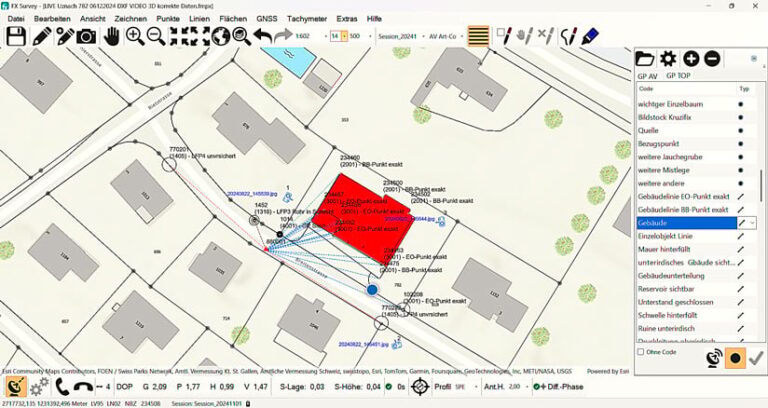
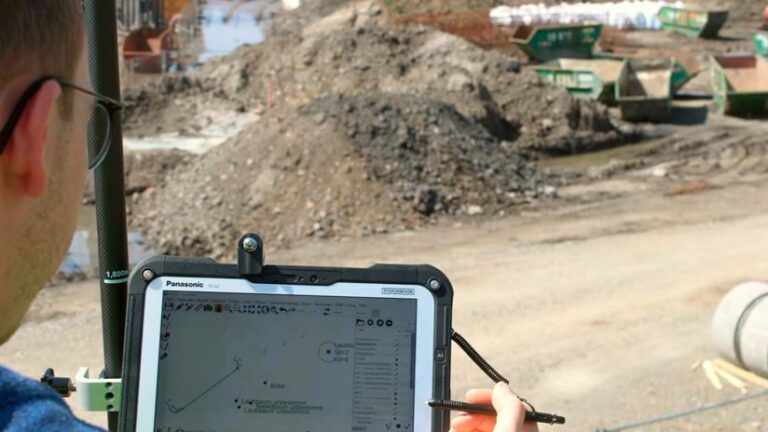
To facilitate a smooth transition for its development team and end users, frox opted for an incremental migration approach to .NET Maps SDK with FX Survey. FX Survey is a digital field book that provides precise on-site measurement and data capture through integration with high-precision GNSS, total stations, CAD plans, GIS data, and integration with the back office. The transition process involved gradually reimplementing functionality while maintaining a period of dual operation, during which the team added the new logic using .NET Maps SDK to the existing architecture.
The first step was to separate the business logic, GIS logic, and UI logic. Next, the team abstracted the core logic and implemented it to support both the current MapView UI control in .NET Maps SDK and the corresponding legacy MapControl in ArcGIS Engine. The final stage was to methodically migrate each feature or function.
A crucial workflow within FX Survey includes the ability to import CAD plans so that users can visualize and interact with these designs. To support this workflow, the team used functionality in .NET Maps SDK to create new mobile geodatabases on the device, define table schemas, and populate those tables with data.
The development team also took advantage of the open-source toolkit included with ArcGIS Maps SDKs for Native Apps, which simplified development by offering controls that can be used out of the box or customized to meet specific requirements. Frox used the BasemapGallery control to give end users easy access to a choice of high-
performance basemaps from either ArcGIS Location Platform or their own organizations. Frox also implemented the dynamic legend control to help users understand symbols and styles on maps.
“The extensive and deeply integrated functions in FX Survey, coupled with the complexity of the existing code, made the transition a significant challenge that took over a year, said Christoph Babilon, frox’s head of business development. “However, we can now assert with complete confidence that this decision was the right one, as the performance, stability, and usability have been elevated to an entirely new standard.”
A Successful Implementation
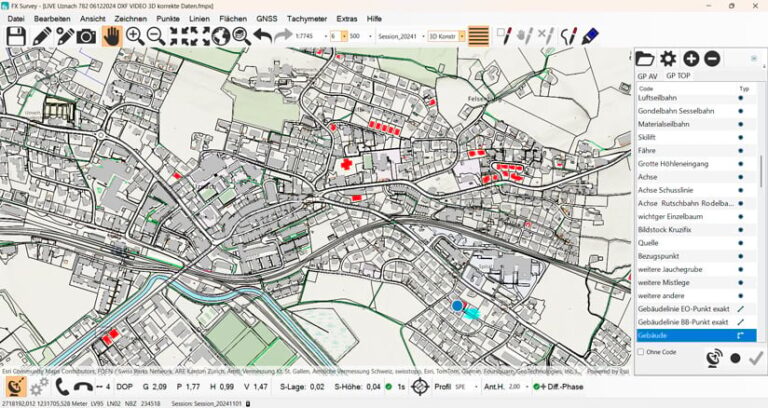
The Native Maps SDK collection provides common API patterns for working with online and offline data. With this capability, FX Survey can support both online and offline scenarios, ensuring data access in the field and allowing mobile workers to continue their tasks even with limited or no network connectivity. With .NET Maps SDK, frox could also take advantage of the deployment options offered by ArcGIS, including software as a service (SaaS) via ArcGIS Online, self-hosting with ArcGIS Enterprise, and consumption-based data and location services through ArcGIS Location Platform. The integration with ArcGIS Location Platform and ArcGIS Online unlocked access to ready-to-use, high-performance basemaps. Familiar fundamental concepts within .NET Maps SDK, coupled with extensive documentation, samples, tutorials, and an active online community, significantly reduced the learning curve for the development team.
After the successful migration, FX Survey pilot users reported a 25 percent reduction in time spent on measurements in the field and an 80 percent reduction in time spent during postprocessing in the office, primarily due to the high accuracy of the data at time of capture.
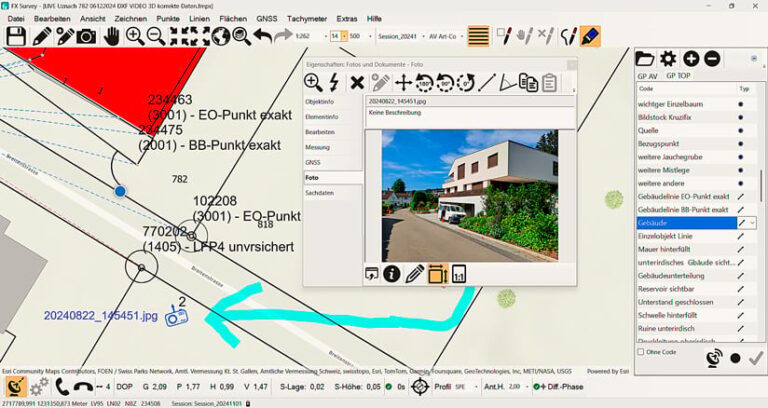
A key feature of frox’s FX Survey solution is its efficient, robust, and secure flow of digital data and information between the field workforce and the back office. With the flexible licensing model of Native Maps SDKs, frox has created solutions that are relevant to customers both with and without existing ArcGIS implementations. For instance, customers with established ArcGIS setups can take advantage of their existing user types.
Moreover, frox developers found significant value in their ongoing engagement with Esri engineers and leaders, both through the Esri Community channels and at in-person meetings during Esri’s international developer summits. The frox development team members could seek advice, confirm their design and implementation strategies, and stay informed about upcoming releases.
Frox has an ambitious road map for FX Survey, including maximizing offline workflows using web maps and offline map areas. Additionally, the team is focused on continuing to harness the cross-platform capabilities of .NET Maps SDK to leverage existing .NET and C# development skills for a range of mobile apps, including FX Reality and FX Smart for Android and iOS.
About the authors

Sneha Suresh