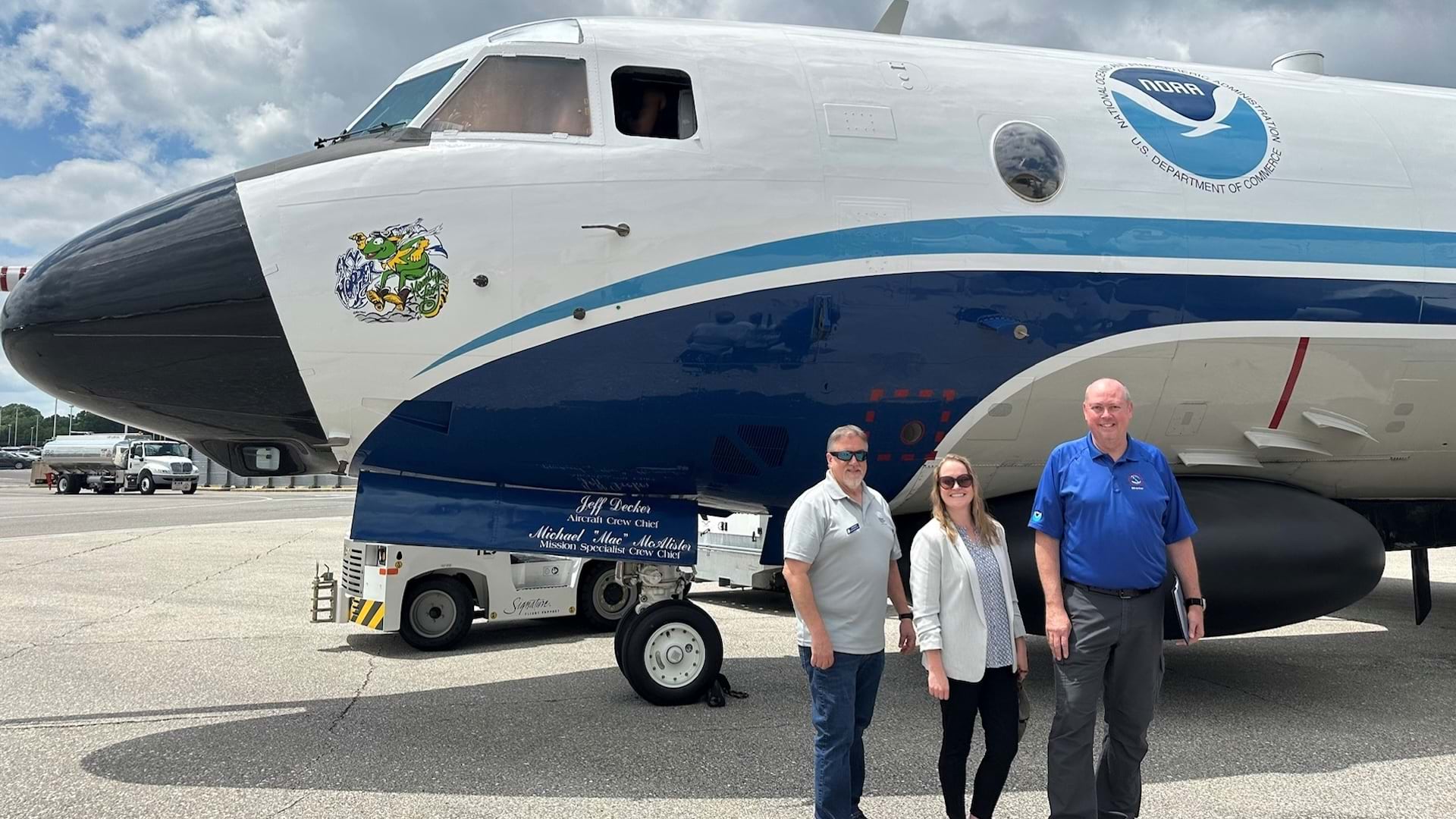
Carrie Speranza arrived in Pensacola, Florida, as a 22-year-old soon after Hurricane Ivan, when the destruction stretched as far as the eye could see. “It looked like a bomb had gone off,” she recalls.
Trees stood bare, with clothes hanging from branches “like ornaments,” she says. Everywhere she looked, homes and businesses had been reduced to rubble.
Then, she stepped on a piece of broken glass and looked down.
It was a family photograph that had survived where the house had not.
She was there to assist with debris management as part of FEMA Corps, a service program of the Federal Emergency Management Agency (FEMA). It was in that moment that the human impact of the work became clear.
“It truly is the lives of people,” she remembers thinking. “I think that I can help make a difference.”
Speranza had always wanted to have an impact. As an environmental science graduate in the Pacific Northwest, she initially thought that might mean saving salmon. Instead, a devastating hurricane season redirected her career to Florida, where she found herself going door-to-door helping survivors navigate one of the worst times of their lives.
Over 20 years later, that unexpected detour has grown into a career that has spanned disaster response, public policy, and national leadership. Today, Speranza serves as the director of emergency management solutions at Esri, where she helps agencies leverage GIS and location technology to better serve their communities.
This interview has been edited and condensed for clarity.
Q: What does emergency management actually look like as a profession?
A: At its core, emergency management involves building systems, connecting partners, and reducing risk. We are fundamentally in the business of people. While many associate the field strictly with disaster response, response is just one phase of a massive, continuous cycle. We spend the bulk of our time identifying hazards, developing plans, training partners, and preparing communities before a crisis hits.
When an incident does occur, we coordinate the response, drive the recovery, and find ways to build long-term community resilience before the next event.
The cycle never truly ends.
That inherent complexity is exactly why the profession attracts people from so many different backgrounds. Some come from geography or GIS, while others study communications, psychology, engineering, public policy, or social work.
Q: What skills and qualities help people succeed in emergency management?
A: I sometimes call myself a disaster diplomat because so much of emergency management involves bringing people together. Just like traditional diplomats, we broker relationships, negotiate, and bridge gaps—whether we are helping organizations plan before an event or convening leaders to navigate an active crisis.
The other half of the job is systems thinking. Emergency managers organize hundreds of moving pieces into structures that can scale for any situation. We draw on tactical execution, strategic program design, and systems engineering for a strictly practical goal: Mobilize the right people and resources to solve problems in real time, from long-term community recovery to immediate response.
This adaptability extends to how you enter the field. While specialized graduate degrees exist, there is no single mandatory educational path. Instead, we prioritize continuous learning. Organizations like the International Association of Emergency Managers [IAEM] are crucial here—they provide targeted training, issue the Certified Emergency Manager [CEM] credential, and offer incredible peer networking.
Ultimately, you have to stay flexible. No two communities or disruptions are identical, and real-world events will always test even the best-laid plans. My advice to students is simple: Keep learning and say yes to the job. Remaining open to unexpected opportunities is exactly how most of us found our way into emergency management in the first place.
Q: Where does GIS fit into emergency management careers?
A: In my current role, I constantly tell people that location is the root of all risk. Your geography directly dictates the threats you face, the public services available to you, and your community’s overall resilience. Because of this, location and emergency management go hand in hand.
For students wanting to focus on GIS, emergency management absolutely needs you across this entire cycle. We use spatial data daily for proactive flood and hurricane forecasting, logistics modeling, and situational awareness. Layering this information allows us to stress-test infrastructure and fix deficiencies before an incident ever happens. Then during a crisis, our dedicated GIS units activate within the incident command system [ICS] to drive real-time resource coordination, damage assessments, and search-and-rescue operations.
At the same time, you don’t have to be a full-time GIS practitioner. Personally, I know just enough to be dangerous. Because modern operations move only as fast as data flows, emergency managers must understand how dozens of disconnected technology systems communicate with one another. Having that high-level overview—rather than technical mastery—is what empowers you to ask better questions and make better decisions.
Whether you focus on policy, communications, leadership, or GIS, a foundational grasp of location technology makes you a more effective emergency manager.
Q: How do people find their way into emergency management careers?
A: One of the things I appreciate most about emergency management is that it lacks a single pathway. I was originally hired to conduct wetlands analysis after Hurricane Frances in 2004 because of my environmental science background. Instead, I found myself supporting long-term disaster recovery and discovered a profession I didn’t even know existed. My story is incredibly common.
You see this cross-disciplinary nature everywhere. Professionals enter from government, nonprofits, or the private sector. Beyond “emergency manager,” you will find fulfilling careers in risk management, business continuity, supply chain security, asset protection, or community resilience planning—all built on the exact same core principles.
For students building a résumé, volunteering with organizations like the American Red Cross, Team Rubicon, AmeriCorps, or local community emergency response teams [CERT] is the perfect starting point to learn these foundations.
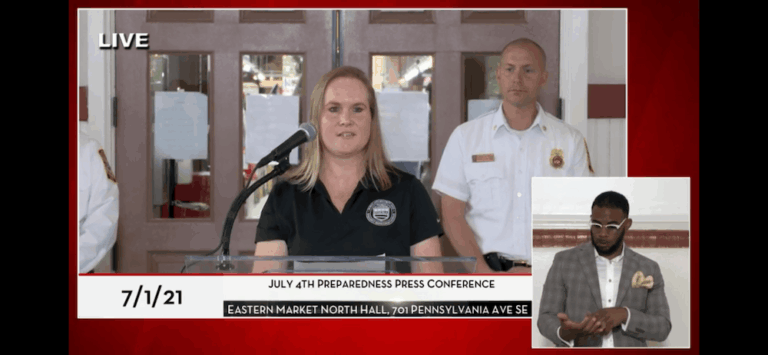
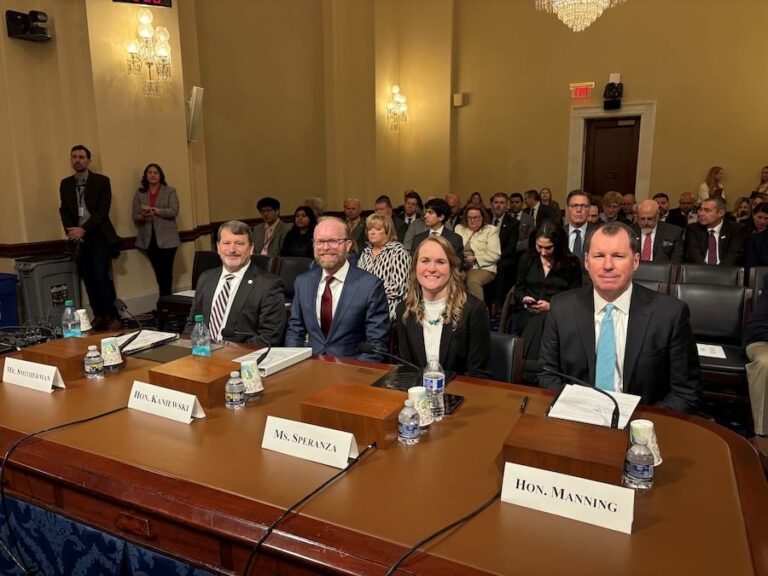
I have been very intentional about diversifying my portfolio. After moving from disaster recovery into consulting, I joined public service. As the deputy director of the District of Columbia Homeland Security and Emergency Management Agency [HSEMA], I helped lead operations for the nation’s capital. Later, I helped shape the broader profession through leadership roles with the IAEM and the FEMA National Advisory Council, which included testifying before Congress on the future of emergency management. At Esri, my job is to educate and inform emergency managers on what GIS can do to help them save lives.
Looking back, each experience gave me a different perspective on the same challenges. The best emergency managers usually possess that kind of diverse background because they understand how all the moving pieces fit together. That is why I tell students never to box themselves in. Focus on collecting experiences, learning skills, and understanding problems from multiple angles. The profession will take you places you never expected.
Q: Why do you love this work, and what advice would you have for readers who finish this article and say, “This is the field for me?”
A: The people. Emergency managers are my people. We understand each other in a way that is hard to explain to outsiders. We spend our lives thinking about risk, resilience, and community vulnerability. While that can sound negative to others, it is simply how we view the world.
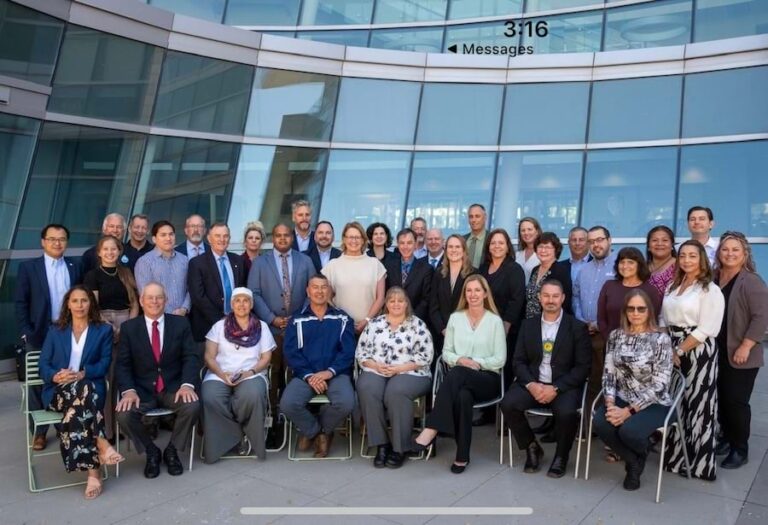
It is a truly magical community. I have watched colleagues step up and step in, time and time again, regardless of exhaustion or how many consecutive days they’ve worked. They give themselves tirelessly to the mission because they care deeply about the communities they serve. That dedication fills my bucket and keeps me coming back.
Personally, one of my proudest achievements is helping establish National Emergency Management Awareness Month. Because emergency managers usually work behind the scenes, I wanted our profession to receive its overdue recognition. Seeing emergency managers celebrated by their communities and leaders will always bring me immense pride.
If I could leave students with one final piece of advice, it is to be intentional about the specific impact you want to have on the world—be the change.
To learn more about how GIS supports emergency management, explore Esri’s free massive open online courses (MOOCs), online communities, industry solutions, and the Esri Disaster Response Program.