

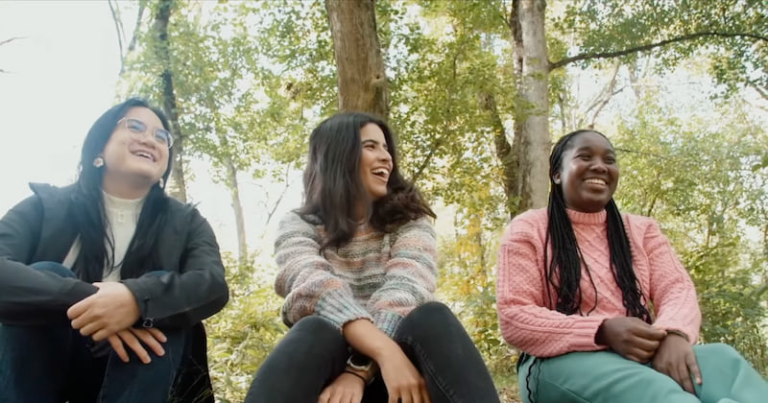
Four young adults entered the 2024 ArcGIS StoryMaps Competition as relative GIS beginners. When they started an eight-week virtual learning program, they had minimal geographic knowledge. Yet they walked out of the competition as finalists, and two of them won awards for innovative storytelling with ArcGIS StoryMaps.
This transformation was enabled by a partnership between the National Geographic Society, one of the world’s largest scientific and educational societies, and The Nature Conservancy (TNC), a global environmental organization dedicated to conservation. The joint externship program that facilitated this journey has connected more than 1,600 young adults from 146 countries and equipped them with conservation knowledge and GIS technology to address environmental challenges in their communities.
Through virtual mentorship and democratizing access to tools such as ArcGIS Online, ArcGIS Survey123, ArcGIS StoryMaps, and ArcGIS QuickCapture, the program is helping build the next generation of conservation professionals.
Uniting for Youth Empowerment
The partnership began in 2020 when senior leaders at the National Geographic Society and TNC recognized a shared mission of conservation science and education. After about a year of planning, the two organizations launched the first externship cohort in 2021, creating a fully codesigned and cocreated program, according to Lina Gomez, vice president of strategic innovation and youth initiatives at National Geographic.
The program brings together TNC’s conservation science expertise—backed by about 6,000 staff members, including about 900 scientists—with the society’s network of more than 3,000 National Geographic Explorers. Explorers are scientists, conservationists, educators, and storytellers who receive support from the National Geographic Society for their work. Kate Ireland, director of youth engagement at TNC, said the program’s success stems from constant collaboration.

Program participants learn while following one of three different tracks: Marine and Community Conservation, Freshwater and Community Conservation, or Community Conservation Data Visualization and Mapping. The Data Visualization and Mapping track was added in response to participant interest and feedback, Gomez said, demonstrating how the program adapts to emerging needs in the conservation field.
Throughout their time in the program, students engage in the following:
- Virtual classes: Groups meet online during an eight-week period to focus on their chosen topic.
- Mentorships: Students from around the world connect with each other online, work with learning coaches, and interact with mentors to learn more about program topics from industry experts.
- Workshops: Collaborative sessions emphasize research best practices, presentation techniques, and other career-readiness skills.
- Digital presentations: Each participant selects a locally relevant conservation issue to investigate, applying newly learned methods and skills to create and conduct an interactive digital presentation.
Breaking Barriers Through Virtual Learning and Technology
The fully remote, virtual format of the program, which requires a commitment of about 10 hours per week, has helped it achieve global reach. It also removes barriers for young people who attend college or work full-time.
“Within a single cohort of 100 students, we might have as many as 75 countries represented,” says Ireland. “There’s real geographic diversity that’s made possible only by virtue of it being virtual.”
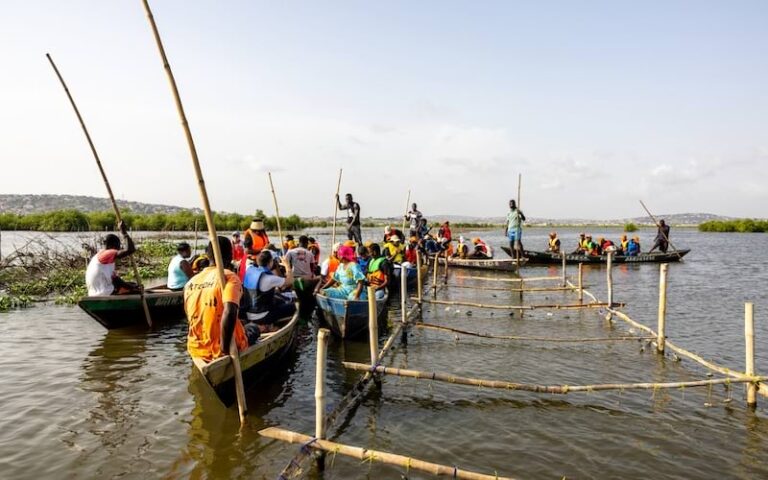
Students use ArcGIS StoryMaps to create their final presentations. They also employ ArcGIS Online for mapping and analysis and Survey123 and QuickCapture for mobile data collection. These tools are selected because scientists and stewards use them every day, explains TNC geospatial data administrator August Schultz.
“Esri’s web GIS and mobile GIS solutions help democratize access to geospatial technology, helping our students engage meaningfully with data-driven conservation solutions without needing extensive desktop software expertise,” says Schultz.
The stories made with ArcGIS StoryMaps and the maps that externship participants create are hosted in ArcGIS Online. Participants can use their finished stories as portfolio pieces that demonstrate technical skills and conservation knowledge when applying for internships, grants, and even their first conservation jobs.
Ross Donihue, lead content strategist for Esri’s ArcGIS StoryMaps team, says the projects don’t just inform; they inspire action.
“ArcGIS StoryMaps combine maps, multimedia, and text to create immersive, impactful stories,” he says. “The externs are harnessing geospatial technology to bring their stories to life, amplify community voices, and visualize data with clarity and purpose.”
Expert Guidance Shapes Conservation Leaders
Mentorship is a key part of the externship program. Participants attend weekly hour-long mentor sessions in small groups, working with conservation scientists, field practitioners, and National Geographic Explorers. Additionally, the full cohort of 100 people gathers online weekly to hear expert speakers and participate in career panels featuring staff from both organizations.
The program also benefits from a partnership with Esri, whose team members provide expertise on effectively using ArcGIS StoryMaps and other geospatial tools. Since spring 2022, Esri’s ArcGIS StoryMaps team has provided demonstrations, tips, and Q&A sessions to help students communicate their conservation work.
From Learning to Leading
The program is in high demand, with more than 80,000 applicants vying for the 1,600 spots that have been offered to date. Both organizations hope to scale the program to reach a total of 5,000 participants by 2030, according to Ireland.
The externship program has awarded more than $400,000 in seed funding to select externship participants, supporting 230 community conservation projects to date. In each cohort, around 10 percent of the participants each receive $2,000 to implement their proposed solutions. The funded projects span diverse conservation challenges across multiple continents.
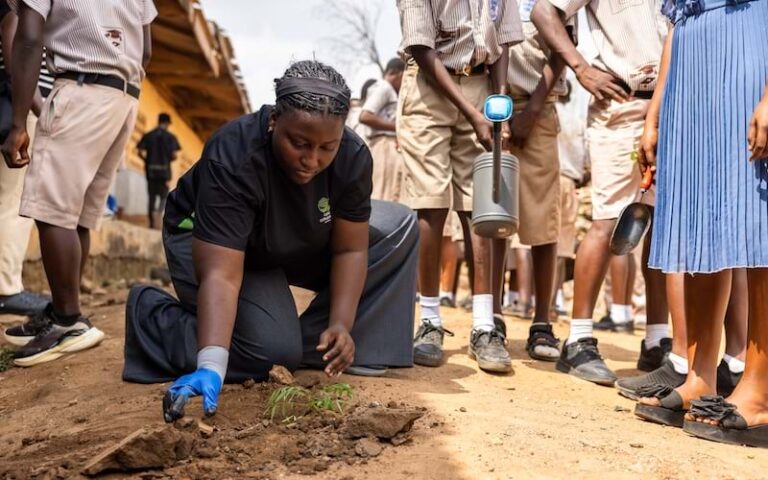
For example, Peter Kurveski from North Macedonia used drone mapping, GIS, and machine learning technologies to determine where to plant nonnative and endangered plant seeds, displaying the results on a map. This helps determine where to disseminate vulnerable plants to new, suitable environments and ecosystems—aiding with species survival, biodiversity, and ecosystem health.
Another student, Tomás Pinzón in western Colombia, addressed marine plastic pollution that threatens the area’s rainforests, tropical islands, and mangroves. Pinzón created a festival to engage and educate young students about this issue with activities such as beach cleanups and art projects.
Surveys revealed that program participants gained important knowledge about conservation careers, with participants reporting a 41 percent increase in their level of knowledge about jobs in this field. The program has created a global alumni network of young conservation professionals who continue collaborating and supporting each other’s work. This growing community represents the future of conservation, ready to address environmental challenges at local and global scales.
“It’s imperative that we have young storytellers who are passionate about this kind of work,” Ireland says. “The externship gives them the opportunity to dig into and develop their passion for an issue and to develop solutions—and . . . an outlet to tell their story.”