
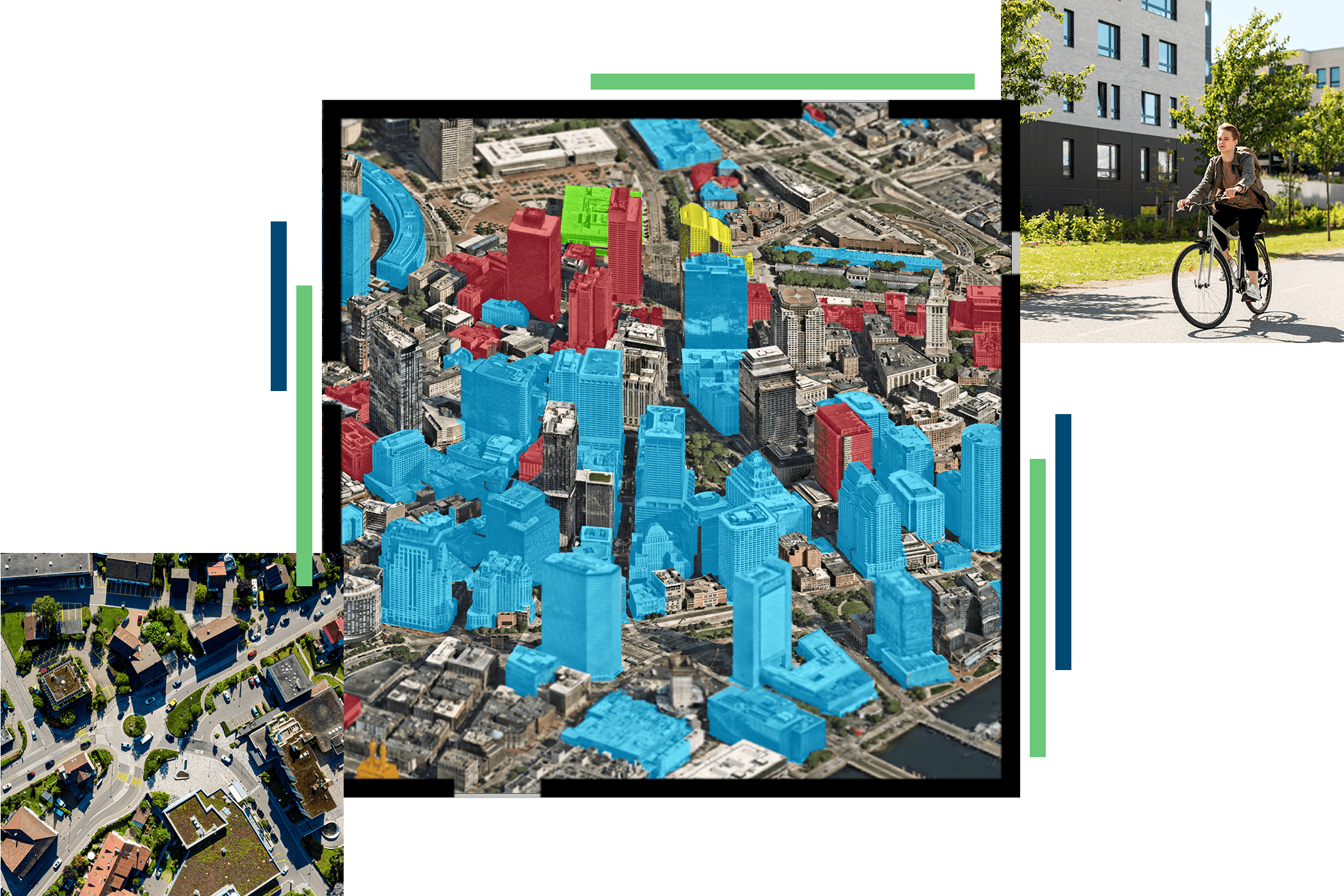
Photo-realistic renderings backed by GIS analyses help stakeholders understand the consequences of a particular design. Read more
Implementing a large-scale bridge repair plan required expanding GIS infrastructure and integrating a new traffic modeling application. Read more
Viewshed and line-of-sight analysis aid in picturing how new development might impact the skyline or views to landmarks. Read more
The Automated Design Module populates modeled corridors with optimal vegetation types and patterns to increase wildlife movement. Read more
In Suriname, indigenous people’s spatial knowledge is incorporated into digital maps for conservation planning. Read more
ArcGIS can be designed to predict multiple potential outcomes for a rural region experiencing rapid land-use change. Read more
Development team models, visualizes, compares, and communicates the advantages of alternative scenarios. Read more
Esri CityEngine improved the model by creating 3D geometry and applying textures. Holograms provided unique views for stakeholders and the public. Read more
The University of Alberta uses GIS to manage a $1.5 billion expansion and maintain the facilities on its 200-acre campus. Planners relied on ArcGIS and geodesign to analyze and evaluate the impacts of design alternatives early in the development process. Read more
It is crucial to determine a more balanced and integrated approach to flood management and land-use planning in Southern California to conserve beneficial values provided by alluvial fans while minimizing risk. Read more