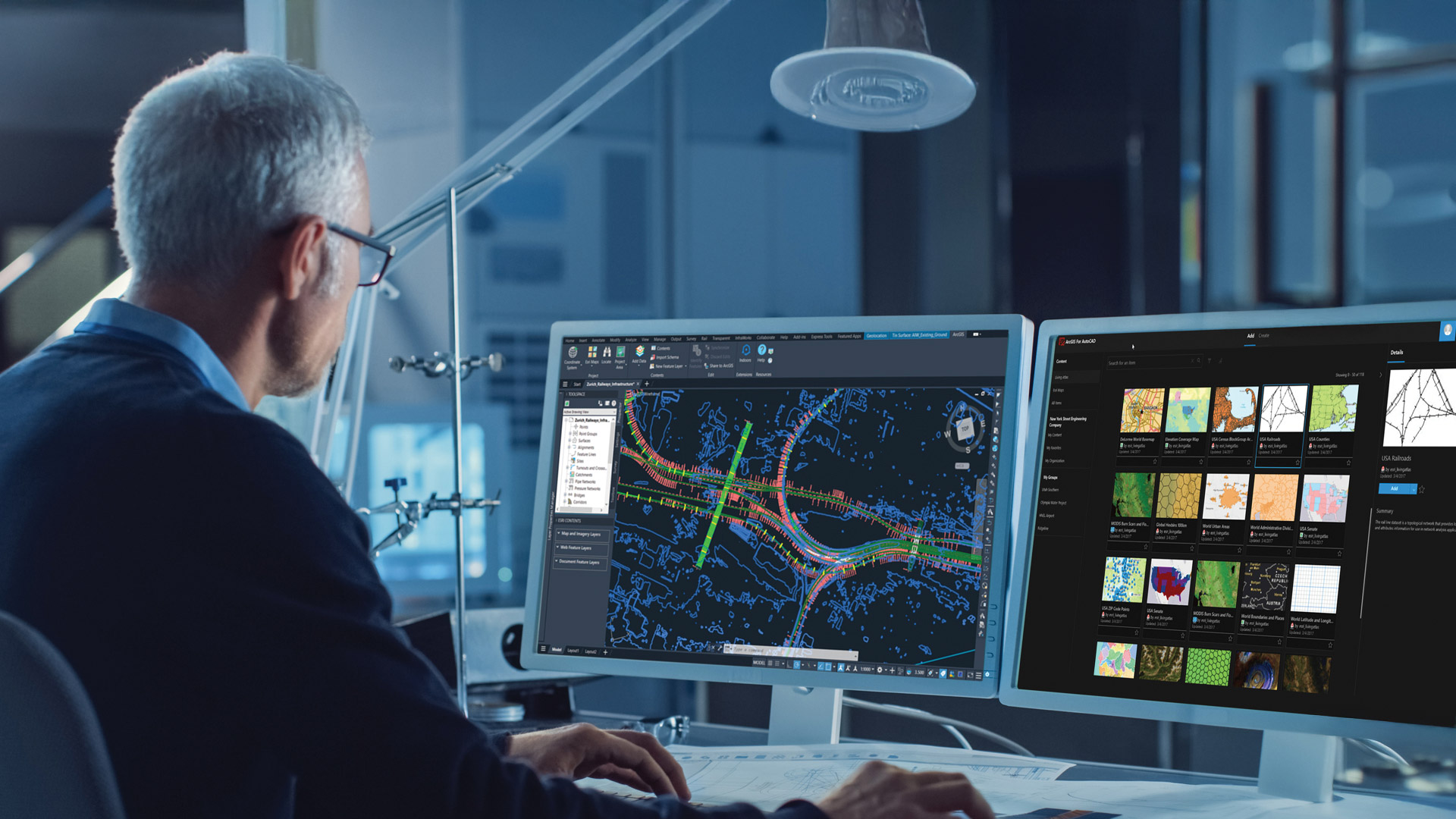
For decades, the worlds of GIS and computer-aided design (CAD) operated separately, with little to no direct connection. GIS professionals analyzed spatial relationships, while civil designers used CAD to craft engineering plans.
That divide is closing at HDR, a global professional services firm and Esri partner. By leveraging a strategic partnership with parcel data provider ReportAll, as well as the integration capabilities of ArcGIS for AutoCAD, HDR’s design teams can now access live, authoritative GIS data within their native Autodesk Civil 3D environment, streamlining how civil designers plan and execute their projects.
Building on Better Data
With more than 14,000 employees in over 200 locations around the world, HDR tackles large-scale architecture, engineering, environmental, and construction design projects. Many of these projects span multiple municipal and county jurisdictions, which adds complexity.
For these undertakings, having a clear picture of existing conditions—including accurate parcel data such as property tax boundaries, ownership, and land-use constraints—is the foundation of a successful project.
“Accurate parcel data allows our teams to immediately understand landownership, identify regulatory or physical constraints, and spot opportunities for development, conservation, or community engagement,” said Bridget Brown, vice president and director of geospatial services at HDR. “The sooner we can get that data into the hands of our project teams, the better. It accelerates decision-making when we have trusted datasets from the start.”
Overcoming the Data Disconnect
The first challenge was accessing this crucial data efficiently. The conventional workflow—where a civil designer requests parcel information from a GIS analyst, who then packages and delivers static files—is slow and inefficient. This approach sets off a cycle of requests and manual data handoffs, extending project timelines and isolating civil designers from the dynamic data they need to make informed decisions.
To break this cycle, HDR teamed up with Esri partner ReportAll, a data vendor that provides a comprehensive, nationwide parcel data solution. ReportAll specializes in aggregating and standardizing parcel information from thousands of counties across the United States, providing a single source of truth.
HDR and ReportAll built their partnership on the concept of authoritative data, according to Scott Nelson, ReportAll sales director.
“We’re refreshing our data here every single day,” he said. “And for most parcels across the US, we will provide a link to the county GIS page so that a team at HDR can identify a parcel that’s of particular interest. They can just click on that link to go directly to that county page to do more research and to verify that none of the data has changed.”
A Direct Line from GIS to Design
The next challenge was getting the data to civil designers without disrupting their established workflows in Autodesk Civil 3D.
The key to bridging this gap has been ArcGIS for AutoCAD—a no-cost plug-in app from Esri that integrates ArcGIS directly into the AutoCAD and Civil 3D environments. Once installed, the app appears as a ribbon in the design software, providing on-demand access to GIS maps, features, and imagery.
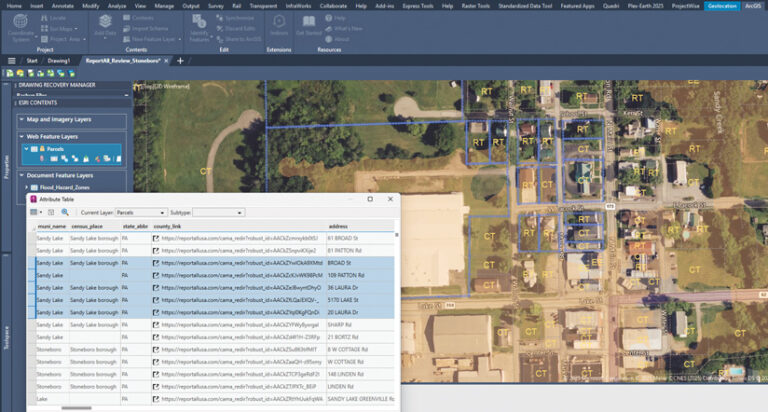
This integration allows HDR’s civil designers to stream ReportAll’s data directly into their projects. Rather than working with static files, they connect to a live feature service—a web service that provides access to geographic data, allowing users to view, query, and sometimes edit information via the web. This ensures that civil designers are working with the most current information available.
“ReportAll makes our parcel data available to clients in different formats and delivery methods according to their needs,” said Dave Fuhry, ReportAll co-owner and chief technical officer. “In this case, HDR is utilizing ReportAll’s feature service, which enables on-demand streaming of the freshest data we have, through ArcGIS for AutoCAD, to HDR.”
This connection eliminates the need for manual data requests and file conversions, enabling a seamless flow of information from the GIS database to the CAD drawing.
Getting Data to Civil Designers
HDR adopted this new workflow while following a simple but powerful principle: adapting it to existing workflows, according to Brown.
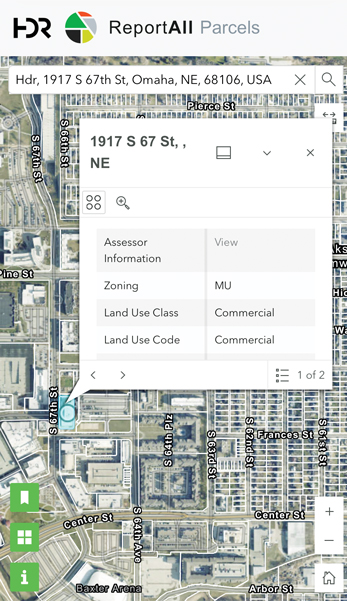
For nontechnical users and project managers, the HDR team built a simple web viewer that combines premium parcel data with other publicly available information from ArcGIS Living Atlas of the World. For GIS professionals and civil designers, HDR provided direct access to the feature service, allowing designers to pull the data into their own custom web maps or into Civil 3D via the ArcGIS for AutoCAD app.
“It’s super helpful to have parcel-level [information] right inside the design tools we’re already using,” said Brown. “There’s no more jumping between platforms or emailing files back and forth. The data just flows in, making everything faster and easier.”
HDR’s civil designers quickly adopted the technology, said Chris Abbott, senior GIS analyst at HDR.
“ArcGIS for AutoCAD isn’t just a cool tool,” Abbott said. “It’s making collaboration between GIS and design teams smoother than ever.”
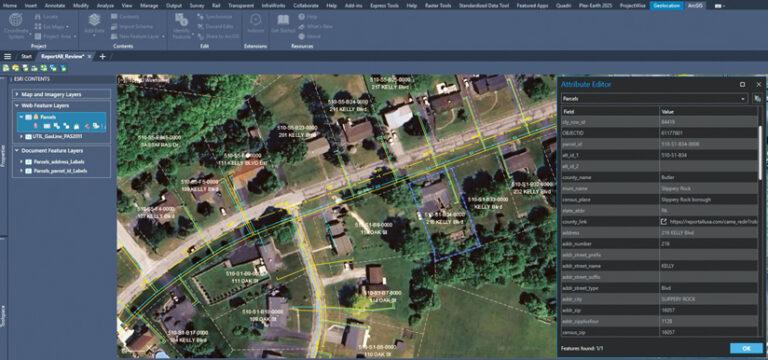
The app allows HDR teams to import key GIS layers such as parcel boundaries, zoning, land use, and environmental constraints from concept-phase web maps into CAD templates. CAD designers can query rich attribute tables within the design environment, revealing relationships between features that might otherwise go unnoticed.
ArcGIS for AutoCAD also supports automated label generation using ReportAll content and customizable LISP files. This enables tailored symbology and shared editing of design files—all within the CAD platform.
“It’s great because our CAD folks don’t have to learn a whole new software suite,” Abbott said. “They get the data they need, in the format they’re used to, and it just works.”
This direct access has not only streamlined existing tasks but also sparked new ideas.
“Once our designers see what’s possible with parcel data, they immediately ask, ‘Can we get [another dataset] here too?’” Brown explained. “They’re realizing they can access all kinds of data right in their own design tools.”
A Culture of Collaboration
This project is part of a broader shift at HDR, embodied by an internal initiative called “CAD and GIS Are Friends.” The goal is to connect the two disciplines, share best practices, and improve project delivery via better collaboration.
Quick buy-in from local HDR offices was a testament to the immediate value civil designers recognized.
“We made their workflows more efficient by empowering them to have access to the data right away,” Brown said.
She added that, when real estate professionals have a web map where they can simply click on a parcel to get assessor information, it saves time and eliminates ambiguity about which properties to research.
A Return on Data Investment
While the initiative is still relatively new, the benefits are already clear. According to an initial business case developed at HDR, the time spent researching parcel data using the old workflow typically ranged from one to four hours per parcel, whereas having instant access to a nationwide dataset has reduced this by at least half, according to Brown. This allows teams to focus on other tasks.
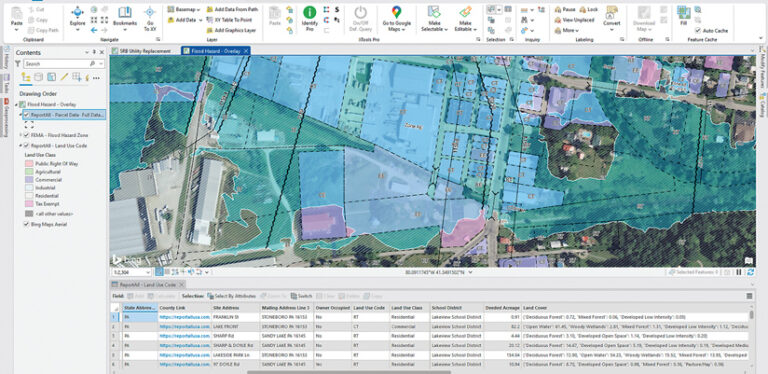
The original business case for ReportAll came from HDR’s right-of-way teams, which wanted a faster way to research tax parcels.
“We knew that with direct links to assessor data, we’d save a ton of clicks and manual effort,” Brown said. “And we really liked the idea of having a standardized data schema to reduce time spent normalizing data across regions.”
The real surprise was the secondhand value of simply making this data available to all teams, she added. Once designers and analysts realized they could access consistent parcel data directly in their workflows, it opened the door to broader adoption and even more time saved.
The “CAD and GIS Are Friends” initiative is rooted in four strategic principles that guide HDR’s approach to data, Brown said. The first two are empowering teams with the best information and using the idea of premium data as a strategic investment.
“The third thing is, we are meeting teams where they are, in the platforms they already use—no extra logins, no switching systems. That makes adoption faster and change management a whole lot easier,” Brown said. “Finally, there’s broad cross-disciplinary value when we expose these premium datasets to our project teams.”
Enhanced Design, Collaboration, and Customization in ArcGIS for AutoCAD
The November 2025 release of ArcGIS for AutoCAD provides powerful new capabilities to enhance civil design decisions and improve collaboration between offices and field teams. ArcGIS for AutoCAD supports both services-based and file-based workflows, allowing users of Autodesk AutoCAD and Autodesk Civil 3D to work with GIS content from either ArcGIS Online or ArcGIS Enterprise.
This release enhances support for a variety of services, including map image, dynamic imagery, and feature services (points, lines, and polygons). A key update for feature layers is support for related records, which allows users to instantly view and edit related GIS data, such as asset conditions from field inspections, directly within their designs. This helps civil engineers make more informed decisions using the most up-to-date information. The new capability complements existing workflows that use branch versioning—an ArcGIS capability that allows users to simultaneously collaborate on the same data, enabling teams to incorporate design recommendations without overwriting project data.
The release also adds support for m-enabled polylines, which preserves linear alignment information from a GIS. This is critical for civil-to-field workflows involving infrastructure such as roads, rails, and pipelines. With this feature, civil designers can use asset centerline data from ArcGIS to better inform their plans, while also sharing stationed centerlines with field crews to help them get accurately situated on-site.
ArcGIS for AutoCAD also supports coded domain values, sublayers, and attachments to features and is compatible with ArcGIS Field Maps, parcel fabric in ArcGIS Pro, and more. A new Microsoft .NET SDK gives developers expanded options to customize, automate, and extend ArcGIS for AutoCAD to create experiences tailored to an organization’s specific needs.