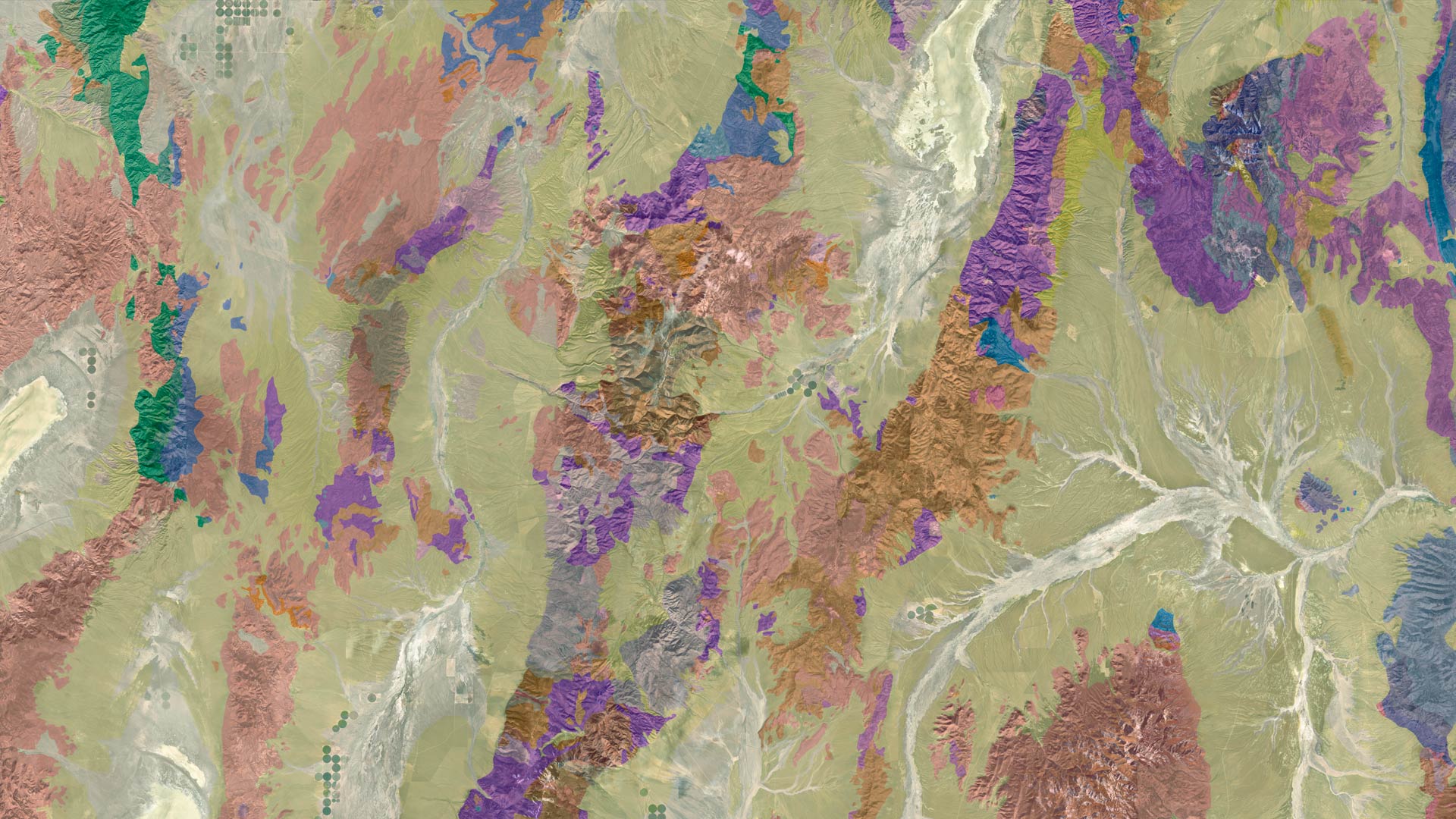
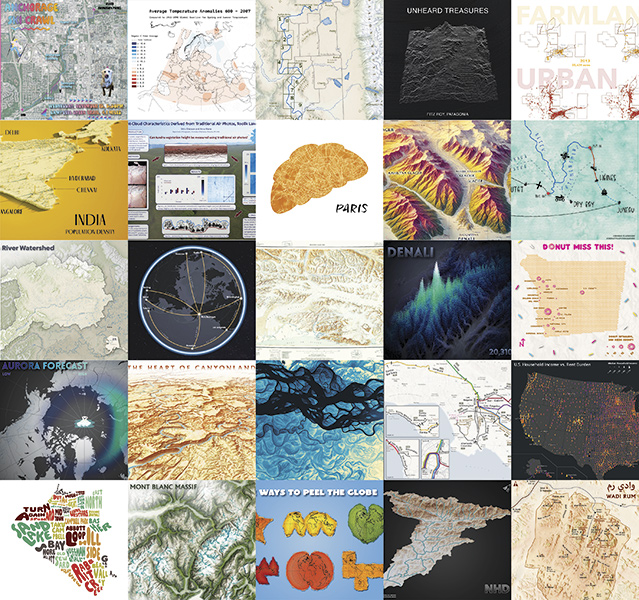
In November, cartographers around the world are taking part in the 30-Day Map Challenge, an annual social mapping challenge that encourages participants to make a new map every day for 30 days. Held each November since 2019, the 30-Day Map Challenge focuses on practical cartography, according to its creator, Topi Tjukanov, a GIS engineering manager based in Finland.
Tjukanov posts the categories for each year—ranging from points, lines, and polygons to vintage style—on 30daymapchallenge.com. Many cartographers who participate in the challenge learn new mapping techniques and approaches. Some share their work on social media, inspiring others to level up their own cartography skills.
Creating a Map a Day for a Month
The story of this project began in 2019 when Tjukanov was riding a bus to work in Helsinki. While browsing posts on Twitter—now called X—he came across an online event called Inktober which challenged artists to create a new ink drawing based on a different theme each day in October and post their work to social media.
“At the time, I was already making a lot of maps, and I figured others might enjoy doing the same, especially with some creative structure,” said Tjukanov, noting that creating 30 maps in 30 days would likely be a real challenge. “I never expected it to catch on the way it did.”
When Tjukanov posted his idea on Twitter back in 2019, “the response exploded,” he said. “It became clear there was a real appetite in the [mapping] community for something like this.”
Advancing Skills—and Careers
Tjukanov’s success in creating and organizing the annual project helped him land his current role at Mapbox, he said. Many participants have advanced their careers or gained new skills because of the challenge, he added.
“One of the best parts has been seeing people gain the confidence to share their work publicly for the first time and then grow from there,” he explained.
Shira Ellenson, an Alaska-based cartographer and senior geospatial analyst at Esri partner Dewberry, said her first experience with the challenge in 2024 inspired her to try new mapping approaches and share her work online. When she participated in the challenge, she saw it as a way to put together a mapping portfolio.
“Not only was it a really fun process, [but] it inspired me to go outside my comfort zone to try new tutorials, software, and geoprocessing tools,” she said.
Creating 30 new maps from scratch is indeed a challenge, according to Ellenson, which is why, for the 2024 challenge, she made about 20 new maps and revised others she had already created.
“Many of the maps I designed for the contest aren’t ones I’d typically make for work, but having the space to flex creative muscles was a great opportunity,” she said.
For example, one challenge map that Ellenson created was inspired by a climbing trip she took in Jordan. Using color, topographic details, and iconography, the map evokes the country’s history and arid landscape while providing the impression of looking up at the mountainous terrain—just as a traveler on the ground would.
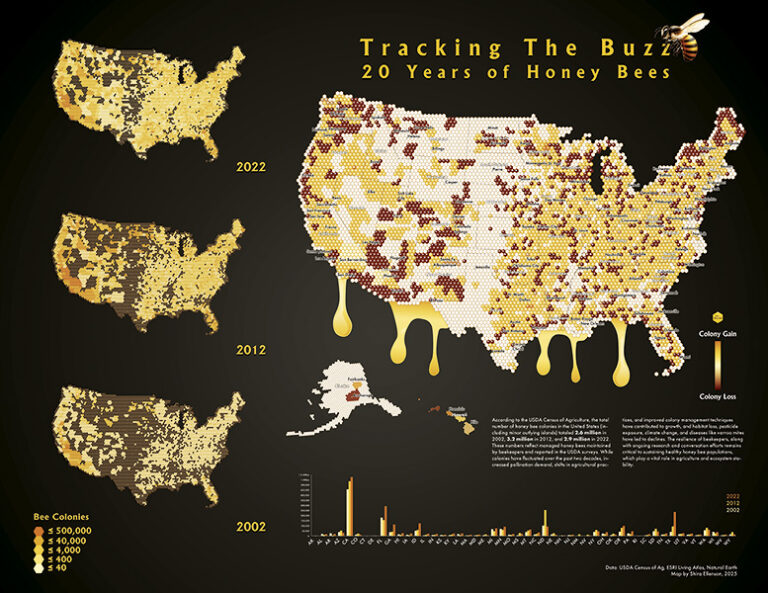
Another of Ellenson’s maps, inspired by a tutorial from Esri cartographer and ArcGIS Online blogger John Nelson, won Best Artistic Map in the 2025 Women in GIS map contest and second place in the professional category of the GIS Certification Institute’s 2025 map contest. Titled “Tracking the Buzz: 20 Years of Honey Bees,” Ellenson’s map uses hexagons to evoke beehive cells and illustrate changes in honeybee colony numbers from 2002 to 2022.
Steady Participation Despite Social Media Changes
While the fragmentation of social media has posed challenges for how participants share their work, Tjukanov said such changes have led to new spaces for the community to grow.
“It’s hard to predict exact numbers,” he said, “but participation has remained strong every year.”
In 2024, he noted, one LinkedIn post related to the challenge received more than 50,000 views, while thousands of maps were shared on X throughout November.
“I expect a similarly strong turnout in 2025, especially as more people across different platforms get involved,” he said, adding that the challenge is meant to be open, welcoming, and tool-agnostic.
“Whether someone is an experienced GIS professional or just experimenting with mapping for the first time, there’s space for everyone,” he said. “That’s been key to keeping it fun and inclusive year after year.”