

A career in conservation starts with the curiosity to understand how living systems work—and how to protect them. This curiosity shaped the career of Sunny Fleming, the director of conservation solutions at Esri. As an undergraduate studying art, Fleming found herself more fascinated by the subject matter her work centered on—biology, plants, and ecosystems—than the medium itself. With encouragement from a professor, she pivoted into biology and a new career path.
“It can be so scary to make that change, but there are opportunities in every path that you take,” says Fleming. “I really don’t think that art and science are all that much different. In both cases, there is the critical component of observation, and then translating that into a study.”
Today, Fleming helps develop geographic information system (GIS) solutions that enable organizations to address complex conservation challenges. In this interview, she shares how conservation careers bridge scientific understanding and real‑world application, the different career paths available, and the skills that can help you be successful in this field.
This interview has been edited and condensed for clarity.
Q: How do people find their way into conservation careers?
A: Early on, the best thing you can do is pay attention to the kinds of problems you enjoy working on and the type of work you’re drawn to. Then, seek opportunities that give you more exposure.
That exposure can come from a class, a project, volunteering, or simply talking to people who are doing the work. Even informal conversations can give you a much clearer sense of what different roles actually look like.
Conservation itself is a wide spectrum of activities. There’s the side grounded in scientific understanding—ecology, biodiversity, the natural sciences—and then there’s the more applied side, like land management, policy, planning, and implementation. There’s a lot of overlap between them across industries.
Q: How should people think about choosing a major or course of study if they’re interested in conservation?
A: This is where things can get confusing because degree titles don’t always tell the full story. In my experience, biology programs tend to go deeper into the natural sciences, ecology, botany, taxonomy, and biogeography. You’re building a foundation in how ecosystems function and how biodiversity is maintained.
Environmental science programs can lean more toward policy, consulting, and navigating environmental regulations. Both are valuable, but they prepare you for different kinds of work.
What really shaped my path was getting involved in a research project as an undergraduate. I was hired to help with small tasks like pressing plants and organizing materials, but one of the main deliverables for that project was in GIS. Neither of the professors I was working with did GIS themselves, so I started teaching it to myself as a way to make sure the project could be completed.
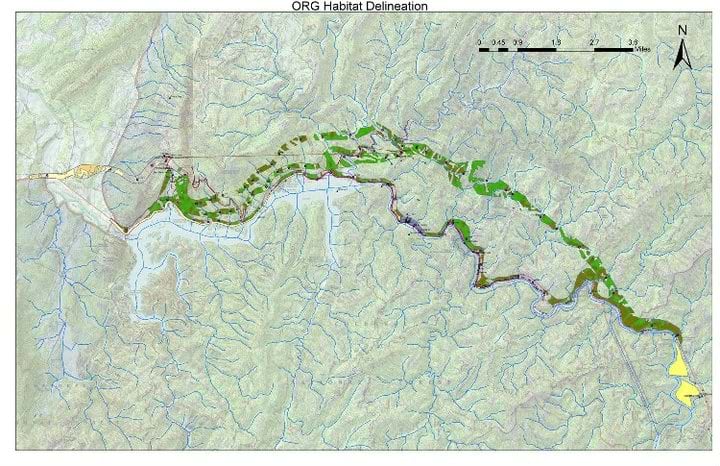
That experience changed everything. GIS became a way for me to connect the science I was learning—taxonomy, plant distributions, and conservation topics—to something practical and usable like data, maps, and analysis. That project gave me both context for my studies and a skill set that ended up shaping the direction of my career.
Q: What skills and working styles tend to do well in conservation and environmental work?
A: One of the most important things is being honest with yourself about what you’re good at and what you’re not. Some roles are deeply academic and research‑focused. Others are more applied, such as making decisions about how land and resources are used.
I’m much more drawn to big‑picture thinking and understanding how systems fit together than chemistry or lab work. That self‑awareness matters because conservation and environmental work take many forms.
Communication consistently rises to the top across all of those roles. These topics can be technical and abstract, and if you can’t explain why the work matters, it’s hard to build understanding or support. Being able to translate complex ideas without losing the science behind them is critical.
So is being comfortable making mistakes. I taught myself GIS because I needed to get something done, and I had plenty of heartache messing up data and hitting walls. But I also loved that part. People who work this way tend to enjoy the challenge—figuring out a way around it and getting hooked on solving the next problem.
Q: What do career paths look like across conservation and environmental protection, and how do tools like GIS fit into that work?
A: In conservation, roles focusing on land and natural resources management might include working as a wildlife biologist, conservation biologist, or land manager with a state agency, nonprofit, or parks system. The work is very applied and often centers on habitat management, restoration, and monitoring biodiversity. Skills such as spatial analysis can be applied to both planning and prioritization—helping answer questions like where a species might exist, so fieldwork can be more targeted.
When you look at where that work happens, nonprofits are a good example of how varied it can be. They’re often doing some form of science and implementation and then communicating the impact of that work. You can be a strong scientist, or someone doing hands‑on land management or communications, and still play a critical role. And those same skills often carry over into more policy‑driven environmental protection work.
Environmental protection roles tend to be more closely tied to policy and regulation. Job titles like environmental scientist, environmental specialist, or environmental consultant are common, and the work often involves permitting, compliance, and oversight. You’re still thinking about environmental systems, but you’re doing it through a regulatory and planning lens. In practice, that might look like someone in environmental protection using spatial analysis to better understand where projects intersect with sensitive resources.
What’s important to understand is that these paths aren’t fixed. The work itself is often shaped by the skills you bring into a role. As you gain experience, learn new tools, and better understand the kinds of problems you want to work on, your career often changes with you.
Q: What does “making a difference” look like in this kind of work?
A: I think a lot of people imagine impact as something immediate or highly visible, but in reality, it’s often incremental. Sometimes it’s helping an agency make a better decision, even if the outcome isn’t perfect. Other times it’s narrowing uncertainty, improving a process, or giving people clearer information. A lot of the work happens behind the scenes, and you don’t always see the result right away.
Over time, those small improvements add up. That’s what makes the work meaningful for me—knowing that even if you’re not always on the front line, the work you’re doing is helping people make better choices and move things in the right direction.

Esri offers a wide variety of massive open online courses (MOOCs), tutorials, and other resources for GIS and conservation.