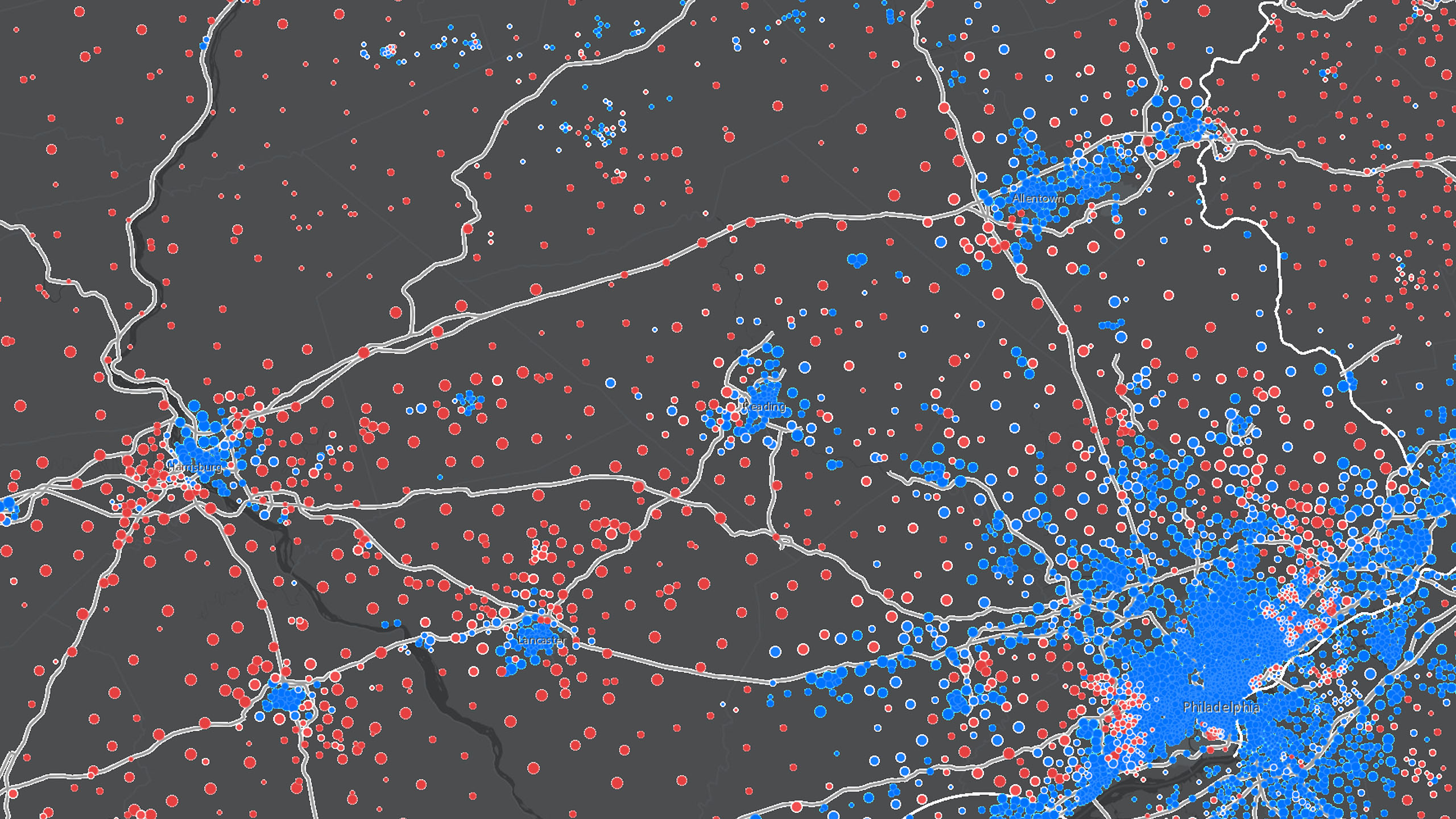
Whether you’ve jumped on the bandwagon or are puzzled by it, you’ve probably seen some form of the trend this year: unicorns have invaded our products.
Did you indulge in the sugary goodness of Starbucks’ limited-time Unicorn Frappuccino? Perhaps you’ve witnessed your teenage daughter flip out over that new rainbow unicorn highlighter (we’re talking makeup here, not school supplies). So what’s the deal?
When it comes to trends—from those that delight to those that perplex—one thing companies can count on is that certain buyer types and geographies drive every craze.
Crossing Continents
In Fast Company‘s recent article “The Unicorn Craze, Explained,” writer Elizabeth Segran examines the influences and manifestations of the fad—from unicorn pool floaties to rainbow bagels—and how location-based insight can help retailers and manufacturers capitalize on such trends. Segran writes:
Right now, the best way to sell American Millennial women anything vaguely shiny, glittery, or colorful is to "unicornify" it. That demographic is mad for the mythical horned creatures: Searches for "unicorns" reached an all-time high in the month of April.
While Segran explores possible explanations behind Americans’ penchant for the fabled creature, it’s clear that understanding where trends are captivating consumers is just as important as understanding why—maybe more so.
The article spotlights the surging success of Australian skin care company Frank Body’s body scrub, which leaves skin with a sparkly glow. The product was dubbed a “unicorn scrub” by major publications and sold out in American stores shortly after its launch. But in Australia, it didn’t fly off the shelves.
“Unicorn was not a word that we would have used to describe the scrub,” Jess Hatzis, cofounder of Frank Body, tells Fast Company. “But it just so happened that its release was quite timely, right on the cusp of a trend that was sweeping through the States—though not so much here in Australia.”
While Frank Body’s success owed more to happy coincidence than a location-based marketing strategy, other companies can combine location intelligence (where the trends are) with demographic and psychographic data (who’s buying and their personalities) to predict where a trend might expand—often to the level of specific regions and cities. Additional data, such as social media sentiment, can enrich real-time business intelligence to help companies catch a trend before it fizzles.

With the unicorn craze resonating especially well in the beauty industry, makeup retailer Wet n Wild is taking the mythical-horse trend by the reins—primarily by understanding whom to target—and moving quickly to seize the opportunity. According to Fast Company, Wet n Wild attracts consumers in their teens, but it also has a strong base of older customers.

"We're the brand that women tend to buy first because it's affordable," says Aminata Tall, communications director at Wet n Wild. "When they are teens, they can add makeup to their mom's basket at the drugstore. For the young, the unicorn trend is just fun and colorful, but older Millennials are drawn to it because it reminds them of something they grew up with. It's a reminder of what they used to play with, watch on TV, and love."
An Agile Supply Chain
In addition to having a finger on the pulse of what’s popular with its customers and where, another advantage to Wet n Wild’s business model is that the company can act on this intelligence quickly. Segran notes:
Something like a unicorn trend can come and go in a flash, so it takes a nimble brand to produce something that customers want for only a brief moment. Tall says that Wet n Wild is equipped to do this because it controls its supply chain. The company can make a small order and receive products within weeks, as opposed to the six-to nine-month product development period that is more typical in the beauty industry.
The article closes with an important reminder: “Much like the elusive horned creature itself, this trend could disappear at any moment.”
It takes the right combination of business agility and real-time location and business intelligence for companies to give people what they want—no matter how glittery and nonsensical that something may seem to other demographics.
The Esri Brief
Trending insights from WhereNext and other leading publicationsTrending articles
December 5, 2024 |

January 11, 2024 |
September 22, 2026 |

May 26, 2026 |

April 7, 2026 |

June 5, 2025 |