ROADMAP AND IMPLEMENTATION
Customer Spotlight Story
Based in Albuquerque, New Mexico, TXNM Energy is a holding company serving more than 800,000 homes and businesses through its two regulated electric utilities, Public Service Company of New Mexico (PNM) and Texas-New Mexico Power (TNMP).
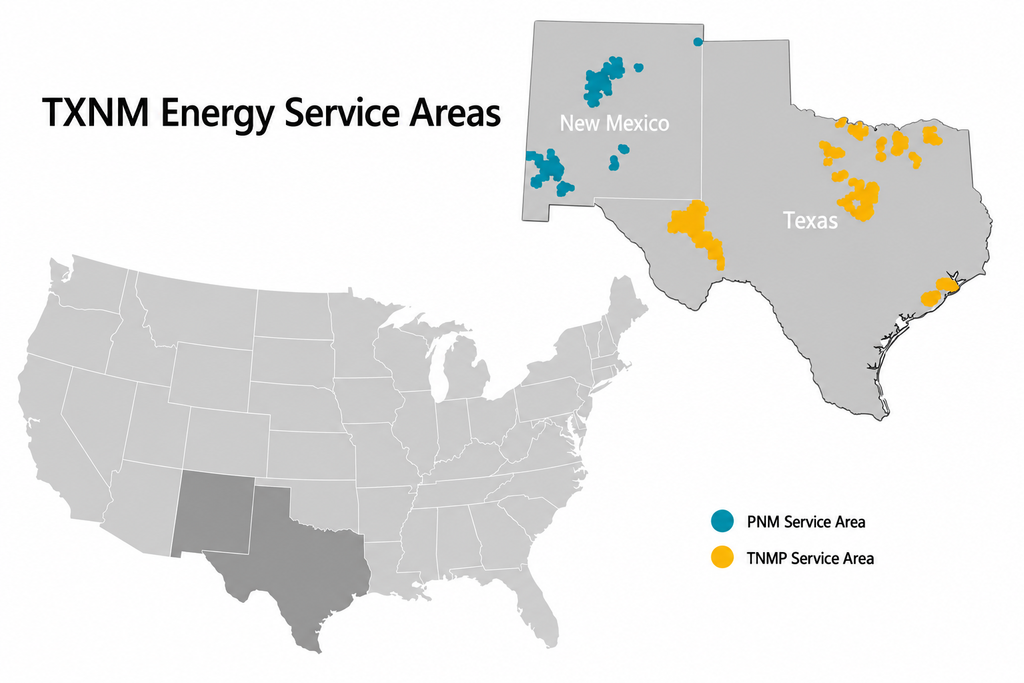
TXNM consists of two utilities serving parts of Texas and New Mexico.
PNM is New Mexico’s largest electricity provider, serving nearly 550,000 residential and business customers, while TNMP provides transmission and distribution services to communities across Texas. Together, the two utilities support customers across distinct service territories while sharing TXNM Energy’s vision to create a clean and bright energy future and its purpose of working with customers and communities to meet their energy needs.
CHALLENGE
With support ending for its legacy technology, modernization was necessary. The project also created an opportunity to address differences between PNM and TNMP. Each utility’s GIS databases used significantly different schemas, making it harder for the shared GIS team to support both organizations efficiently.
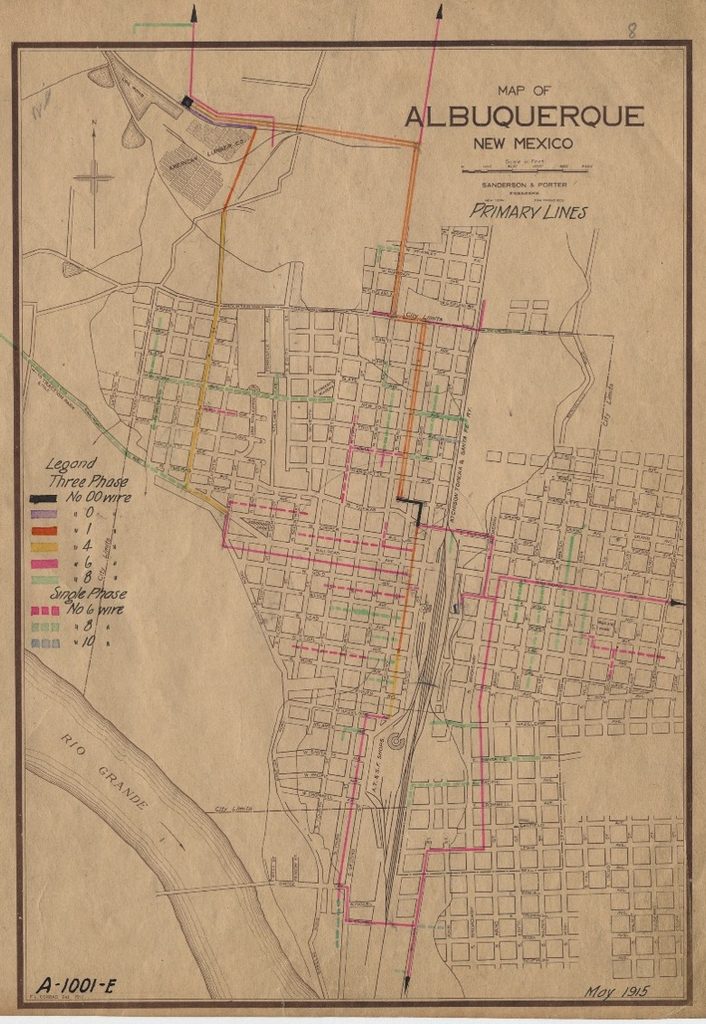
Albuquerque, circa 1915
An initial technology audit identified 95 customizations and 31 integrations that needed assessment to determine what to migrate, replace, redesign, or eliminate. Data also needed cleaning and restructuring before, during, and after migration.

PNM and TNMP had very different digital representations of their networks.
“Over the course of our project, our company, our implementer, and our graphic work design product changed names.” – Melo King, GIS Project Leader, TXNM Energy
Design workflows created another challenge. Engineering design and GIS activities were closely intertwined, with individual designs creating database versions that could remain active for long periods, including abandoned or orphaned designs. Over time, thousands of versions accumulated, complicating reconciliation, posting, and database maintenance while affecting performance.
In the legacy environment, information such as phasing and subnetwork attribution was not always carried consistently to downstream equipment.
Integrations had also evolved independently over time, resulting in different methods for exchanging information with other business systems.
SOLUTION
A central design decision was to preserve PNM and TNMP’s operational independence while improving consistency. The team implemented separate ArcGIS Utility Network instances using a unified data model. Standardized fields, domains, nomenclature, and modeling practices let each utility keep its own database and business processes while giving the GIS team a consistent environment to support.
“The nice thing is that it’s all the same now. We have a modern, consistent approach to integration, which makes it much more sustainable for our team to support.”- Gathen Garcia, GIS Manager, TXNM Energy
The project included a comprehensive Data Quality and Remediation Report, Functionality Assessment Report, and ArcGIS Utility Network Implementation Plan, along with mapping standards workshops that produced detailed data model assessment reports. A technology audit identified and categorized the customizations and integrations to help estimate the level of effort required for migration.
Because many integrations had been developed differently over time, the new environment provided an opportunity to standardize how systems exchange data, using the export subnetwork process to create a more consistent, supportable approach. The team also completed functional requirements traceability across GIS, Work Management, Asset Management, Graphic Work Design, and Fiber Optics mapping.
To address data quality, the project team developed custom remediation tools to resolve major migration issues. They also used ArcGIS Utility Network capabilities to improve connectivity and propagate information, such as phase attributes, throughout the network.
The team replaced legacy auto updaters with attribute rules, improving visibility into automated updates and building new skills, including ArcGIS Arcade. The team deployed both ArcGIS Utility Networks error-free with full subnetworks, supported by custom tools, scripts, field-related integrations, and Field Viewer updates. TXNM Energy also prioritized out-of-the-box ArcGIS functionality. A dedicated Graphic Work Design solution separated engineering design from core GIS workflows. This allowed designers to work independently until completed as-built information entered the production environment.
PARTNER
TXNM originally partnered with POWER Engineers, which WSP acquired during the project.
As part of the roadmap, WSP assessed PNM’s and TNMP’s geometric networks to support consistent ArcGIS Utility Network models. WSP also led the selection of a new Graphic Work Design solution aligned with the broader modernization strategy.
WSP also provided program management for the ArcGIS Utility Network migration and Graphic Work Design implementation, delivered customizations, and supported six integrations.
RESULTS
The project delivered a forward-looking ArcGIS Utility Network GIS on time and under budget.
The modernization went beyond a platform upgrade and included:
- Assessment of geometric networks
- Evaluation of customizations and integrations
- Review of third-party tools
- Identification of operational changes
- Preparation for Advanced Distribution Management System readiness
The multi-year effort concluded with TNMP going live in late 2025 and PNM in June 2026, completing roughly 3.5 years of planning and implementation.
At deployment, both utilities had error-free ArcGIS Utility Networks with full subnetworks, along with custom tools and scripts for deployment and ongoing workflows. The completed environment provides a modern, scalable foundation for Advanced Distribution Management System capabilities and future grid operations.
“Even though we have differing databases for each company, the schemas are the same. This standardization simplifies support and maintenance efforts for the GIS team.” – Gathen Garcia, GIS Manager, TXNM Energy
BENEFITS
The implementation gave PNM and TNMP a modern, scalable GIS foundation ready to support ADMS from day one.
The successful migration positioned TXNM Energy to improve customer service and enable the next generation of grid operations.
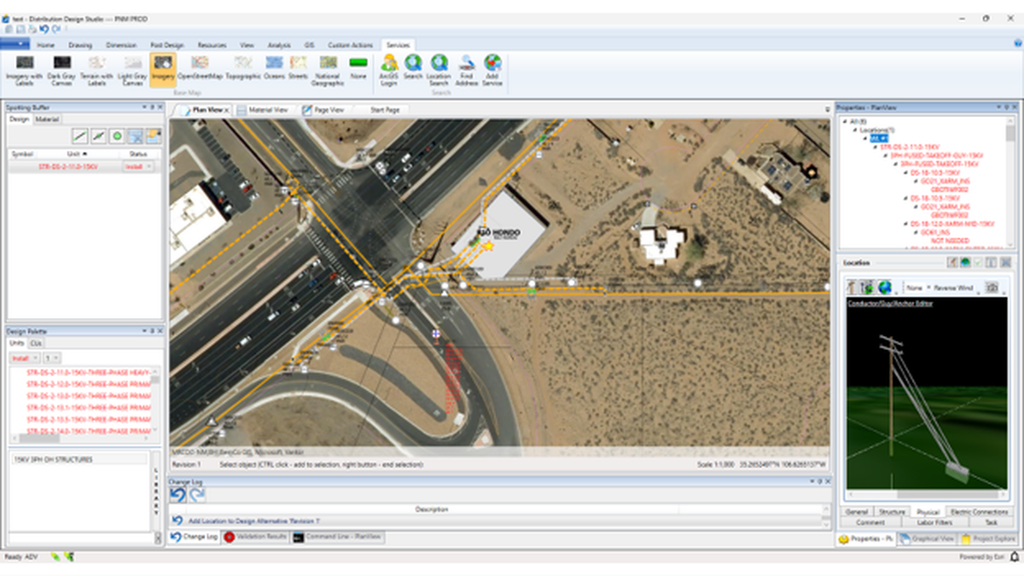
The GIS leveraged ArcGIS’s imagery capabilities.
One of the most significant benefits is standardization without forcing the two utilities to operate identically. PNM and TNMP still maintain separate systems appropriate to their territories, workflows, and business requirements, but the underlying data structure is now consistent. That makes it easier for the shared team to maintain expertise, troubleshoot issues, and support both operating companies.
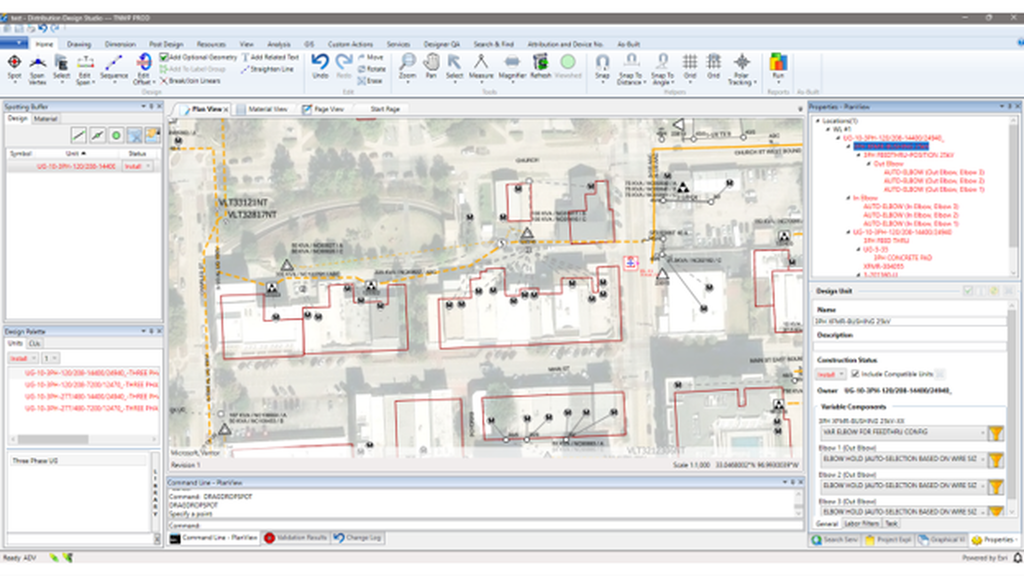
The project provided a modern, scalable GIS foundation for both utilities.
Integration support is simpler.
Previously, interfaces evolved using different patterns and technologies. The new environment standardizes how network data is exchanged, making integrations easier to maintain and support. Separating design from production has also reduced database overhead. Designs remain outside the production environment until they become as-built records, simplifying maintenance and improving performance.
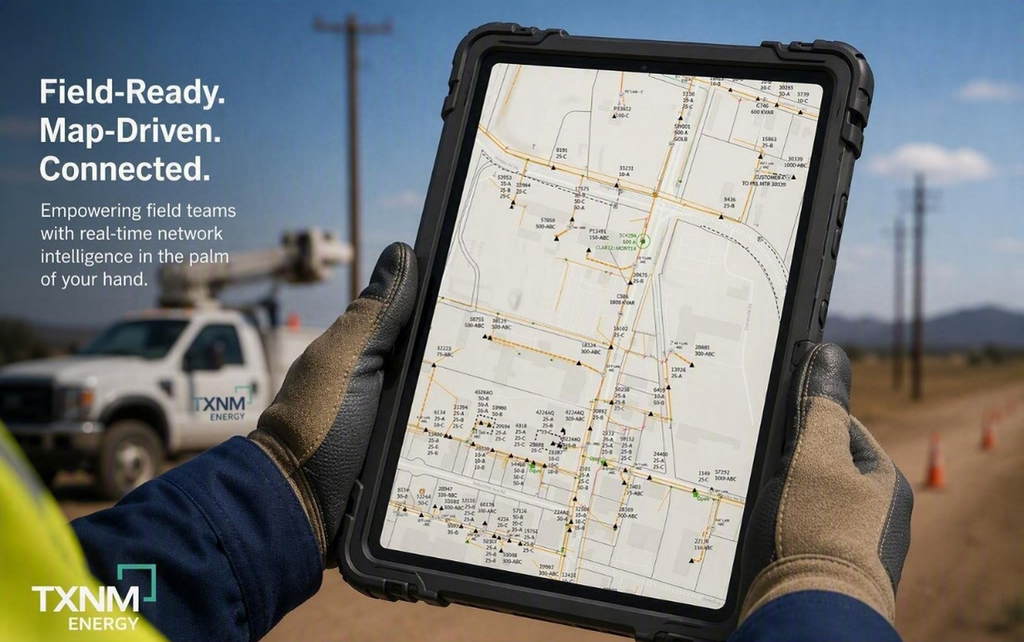
The benefits extend to both office and mobile workers.
The new model has improved data quality through stronger connectivity and better propagation of phase and subnetwork information. Attribute rules also give TXNM Energy greater visibility into automated updates while helping the team build new technical skills.
Together, these improvements create a more consistent, supportable environment that can evolve with future operational needs.
NEXT STEPS
With both utilities live, TXNM Energy is shifting from implementation to optimization, refining workflows and addressing post-go-live needs across field, design, and office users.
A near-term priority is upgrading to ArcGIS Enterprise 12.1 to address issues from the initial deployment.
SUMMARY
Challenge: TXNM Energy needed to replace aging technology while reconciling different data structures, integrations, design workflows, and support requirements across PNM and TNMP.
Solution: The team implemented separate ArcGIS Utility Network instances on a unified data model, standardized integrations and workflows, improved data quality, and separated engineering design from core GIS operations.
Results: TNMP and PNM successfully deployed their new ArcGIS Utility Networks after a three-and-a-half-year effort, with the program delivered on time and under budget.
Benefits: TXNM Energy now has a more consistent, scalable, and supportable environment that improves data quality, simplifies integrations and maintenance, and provides a foundation for ADMS and future grid operations.