
The image features a large solid white area dominating the frame with light-green line at the bottom

Elections

Plan, operate, and communicate electoral processes using GIS-powered election management software, election mapping, and data analysis.

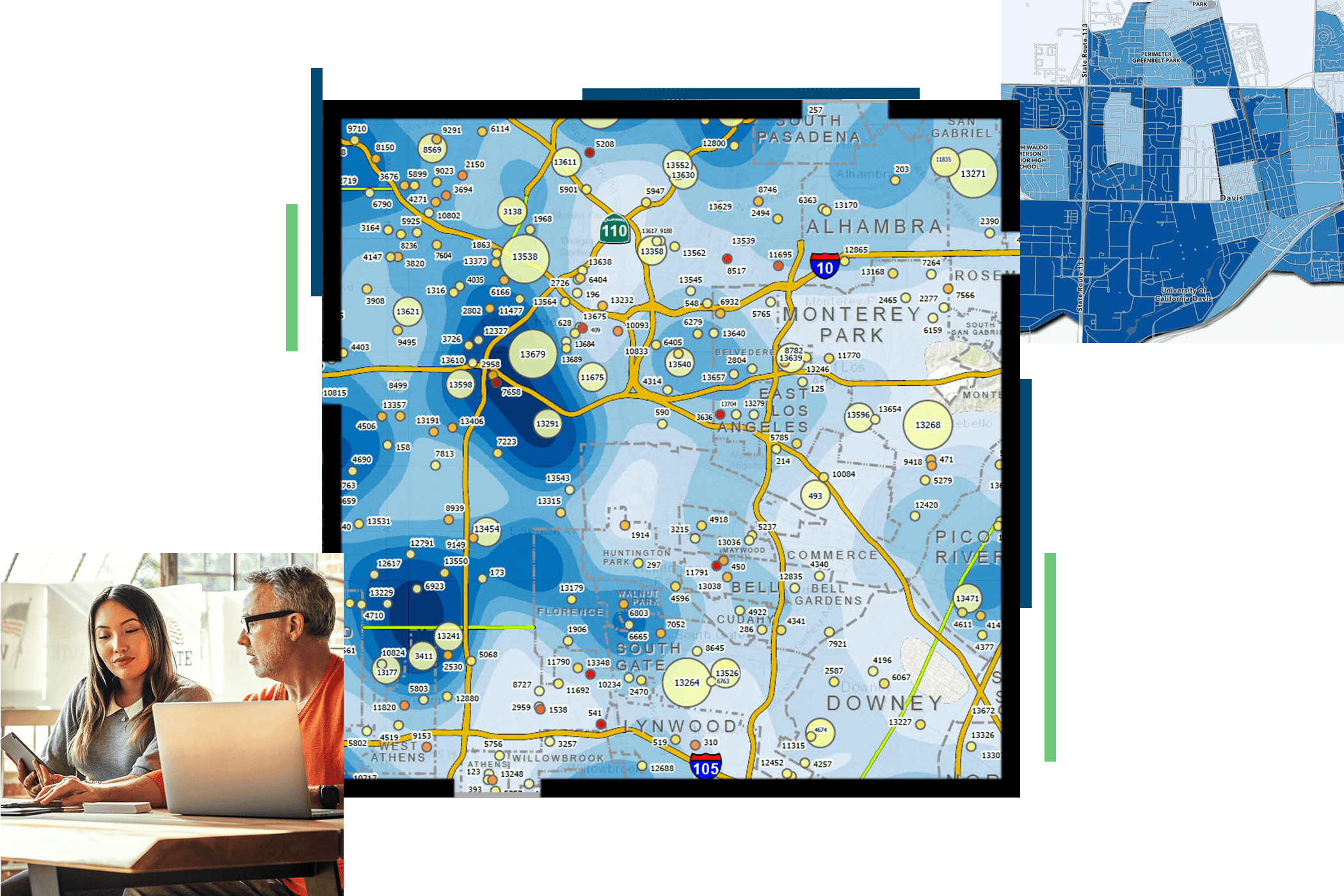
Two poll workers looking at a tablet, a map of polling places near Los Angeles California, and a precinct boundary map

Reimagining the Elections Process Through Location

Geography is the common denominator in elections: where voters live, how residents engage in the voting process, and how officials manage elections.

With elections management software enabled by a geographic information system (GIS), elections departments of all sizes can:

  • Streamline election workflows
  • Support voter services
  • Easily share polling place and vote center information with election mapping
  • Strengthen election data governance
  • Improve readiness and election results reporting
  • Harness geographic data analysis to enhance every phase of the electoral process


Elections office worker using a computer, with a map of polling places, an incident log, and a status graph to the side

Elections workflows

ArcGIS is Esri’s trusted, secure geospatial platform that lets election offices connect people, data, and processes across the election life cycle. Explore how geographic context helps election officials prepare, coordinate activities, and keep stakeholders informed.

Previous
Next

Frequently asked questions

An enterprise GIS provides a shared location foundation that supports the core election workflows, including election planning, election operations, and stakeholder engagement.

Often thought of as election management software combined with election mapping and election data analysis, GIS connects authoritative voter data, precinct boundaries, election workflows, and staff. Election offices can operate with consistency, transparency, and confidence before, during, and after each election.

Nearly every election decision is tied to location, including where voters live, the federal, state, county, and city legislative districts that define ballot styles, and the polling locations that determine precinct assignments.

Election mapping with GIS organizes this information geographically, allowing election offices to manage complex voting geography and voter management workflows more effectively.

GIS acts as the common system that carries authoritative geography across all election workflows:

  • Planning data informs Election Day preparations and election operations.
  • Real-time operational data supports public communication, community engagement, and voter information.
  • Post-election data analysis enables election transparency and continuous improvement for future cycles.

By carrying the same authoritative geography from planning through post-election review, GIS connects teams, data, and decisions. This shared foundation reduces errors, improves coordination, and ensures that voters and stakeholders receive reliable information at every stage.

GIS is used continuously, not just on Election Day.

Election offices use it for election management activities such as maintaining voter and precinct data, refining boundaries, assessing readiness, conducting election data analysis, and applying lessons learned to future elections.

GIS also supports updates to administrative and legislative boundaries, including annexations and redistricting, which increasingly require modernized election workflows.

ArcGIS Solutions provides configurable election software templates that support common election workflows such as precinct management, polling place mapping, election operations dashboards, and public-facing voter information tools.

These solutions help election offices deploy proven workflows more quickly while aligning with enterprise election management systems.

Contact sales

Contact us

Outside the United States