Environmental Consulting

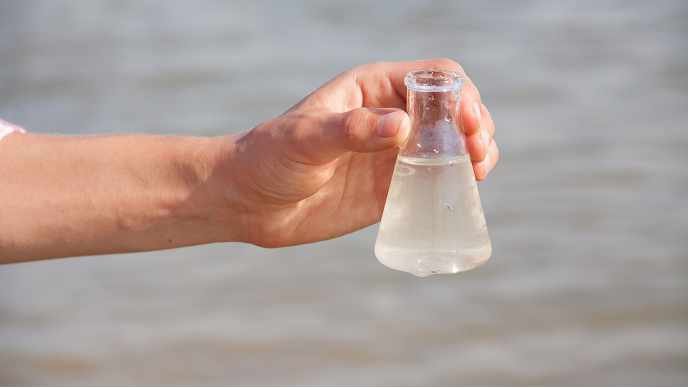
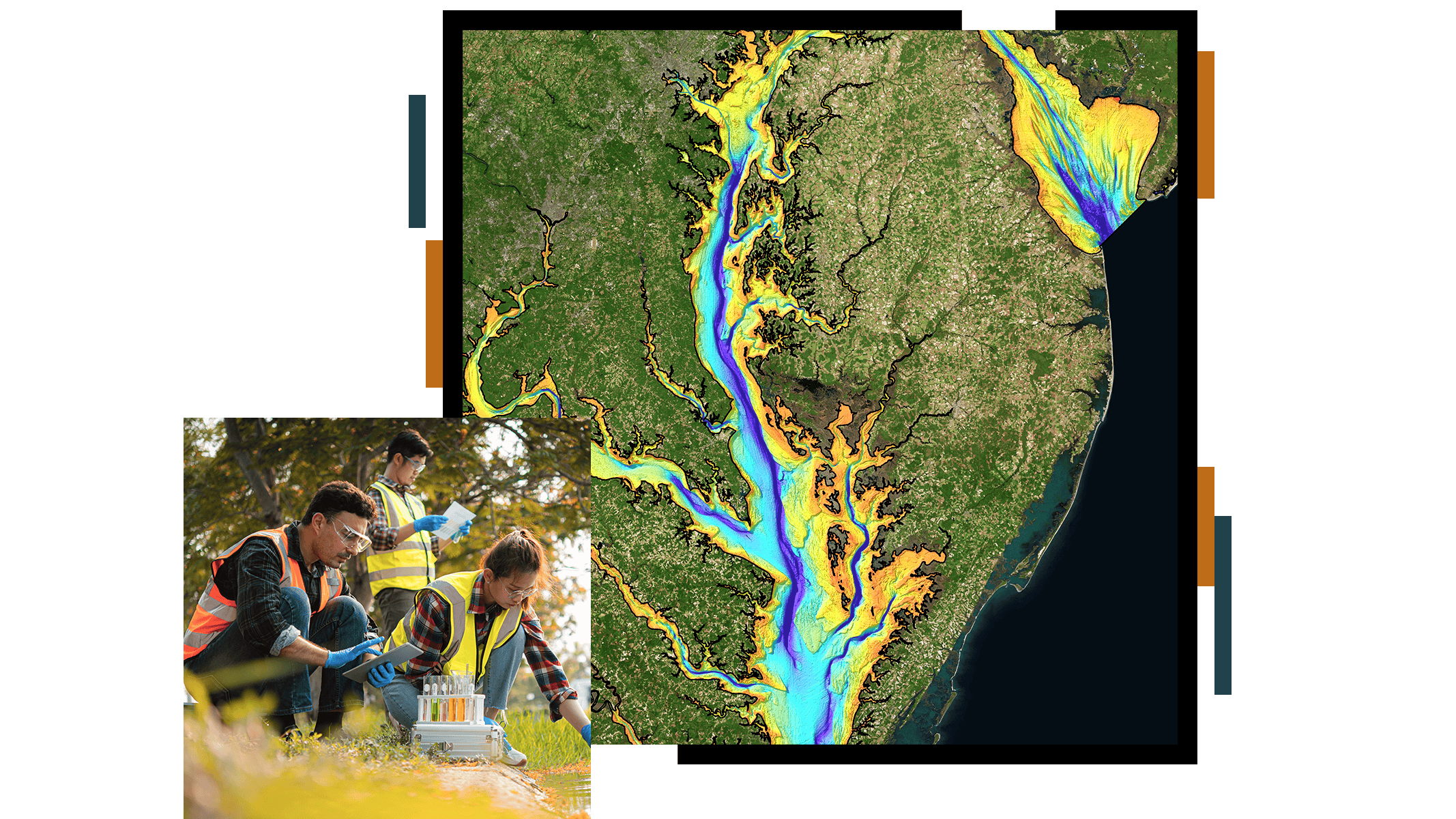
Water scientists collecting water samples from a body of water. A satellite view of the Chesapeake Bay is shown with elevation color-coded.

Leverage GIS for environmental solutions

Environmental consultants use geographic information system (GIS) technology to address environmental challenges like contamination, erosion, habitat, and so much more. By organizing and analyzing spatial data, GIS supports site assessment, cleanup, renewable energy planning, and ecological restoration. These workflows help consultants visualize impacts, model scenarios, and make data-driven decisions that improve environmental outcomes.

Ways environmental consultants use GIS

Environmental permitting and planning

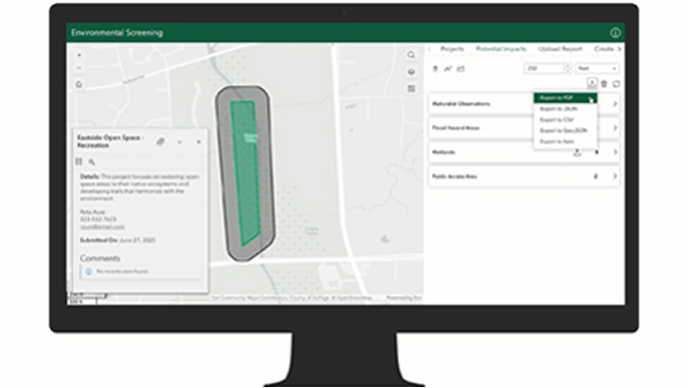
Use ArcGIS to streamline permitting for AEC projects by consolidating maps, plans, and key data in one centralized location. Teams can efficiently evaluate site access, utility conflicts, zoning constraints, and environmental factors, enabling them to make quicker decisions, prevent delays, and keep projects on track. With Esri’s reliable mapping tools, coordination with agencies becomes seamless, stakeholders stay informed, and planning remains clear and confident from inception to completion.

Aerial view of a convention center. Overlaid map details with yellow shading indicating buildings, green lines tracing roads and paths, and circles marking trees.

Site assessment, remediation, and restoration

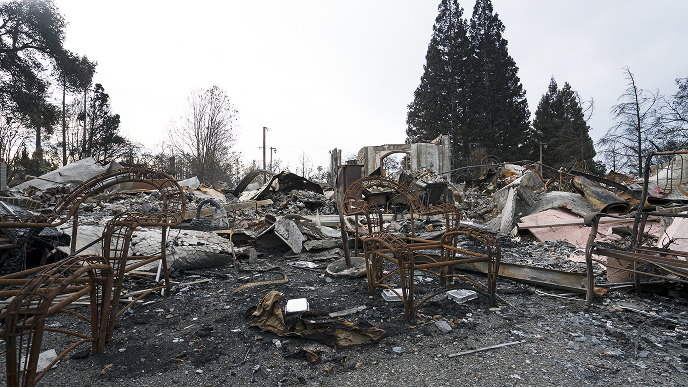
Environmental consultants use GIS to assess contaminated sites, design environmental remediation strategies, and plan ecological restoration. For example, GIS helps map polluted groundwater, model erosion patterns, and prioritize areas for soil cleanup. These capabilities support more accurate planning and faster, more effective environmental recovery on both public and private lands.

City flood zone map, showing water levels impacting infrastructure like power lines around buildings/stadium.

Risk assessment and mitigation

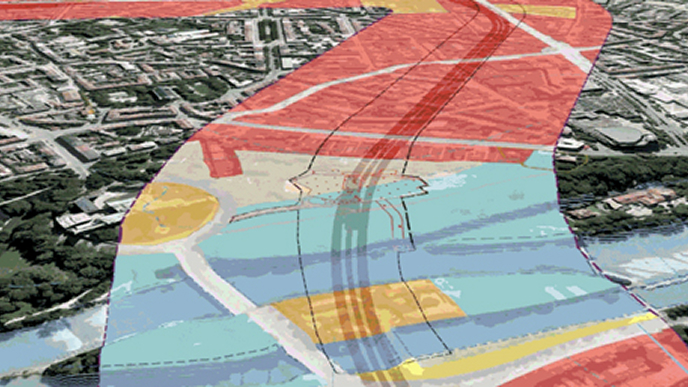
GIS streamlines the identification, assessment, and prioritization of environmental hazards such as pollutants and natural disasters. ArcGIS enables consultants to map contamination plumes, overlay flood risk zones, and analyze proximity to vulnerable populations or ecosystems. These spatial insights help firms evaluate potential environmental impacts on human health and the environment, supporting more informed decisions and strategic planning.

Aerial view of a neighborhood with red roofs and blue flood zones

Compliance, reporting, and regulatory review

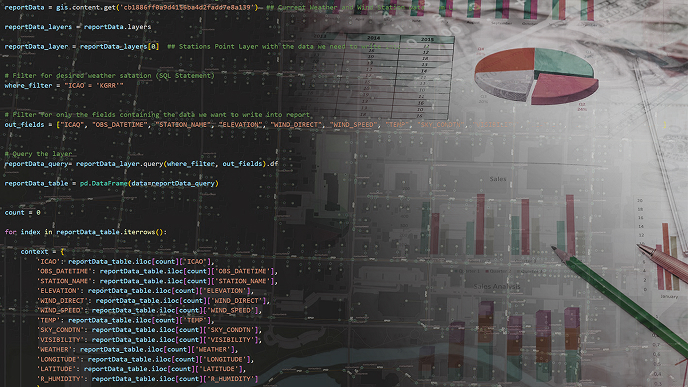
ArcGIS simplifies compliance by collecting and analyzing environmental data from sensors, field reports, and existing site conditions. Consultants can use built-in tools to automate data validation, track regulatory thresholds, and generate accurate, regulator-ready reports. This reduces manual effort, speeds up reporting, and improves accuracy, helping organizations stay compliant, reduce risk, and build trust with the public and with regulators.

A dashboard displaying water quality and bacteria levels in a defined area, complete with a map of sample locations and a time series graph of E. coli concentration.

Contact sales