Introduction
Sunrise Telecom, a regional telecommunications construction company, had operated for years with processes built on habit, experience, and a collection of maps and documents that technicians carried into the field. The system had served the company through periods of steady growth, but as Sunrise expanded its service area and took on more complex work, the limitations of its traditional workflows became increasingly clear.
The turning point came when one of Sunrise’s largest customers delivered a firm requirement. In order for Sunrise to continue receiving timely payment—and to preserve the business relationship overall—the customer needed clearer, more consistent documentation and a more modern, transparent work process. The message was unmistakable: Sunrise needed to modernize its field operations, and it needed to do so quickly.
This customer mandate became the catalyst for Sunrise’s adoption of ArcGIS Field Maps and ArcGIS Enterprise. What followed was a fast and effective transformation that not only addressed urgent external demands but also produced lasting internal improvements across efficiency, accuracy, and safety.
Challenge
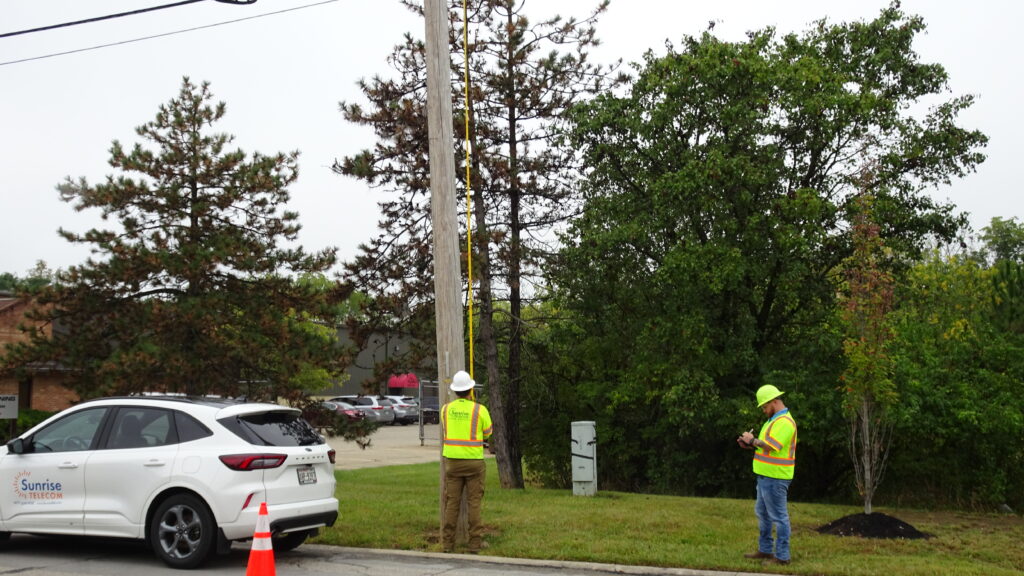
Before Sunrise implemented a GIS-based workflow, the company relied heavily on paper maps and other static documents that were updated manually and distributed to the field. As work progressed, field technicians often found themselves referencing materials that no longer reflected the most recent changes. This created inefficiencies and sometimes required additional trips or clarification from office staff.
“There was a lack of centralized data,” explained Sandy Bethmann, Director of OSP Engineering at Sunrise Telecom. “Another challenge was that customers were demanding more field data collection, more pictures, and more proof of good work.”
The office, in turn, had limited real-time visibility into what was occurring on numerous construction sites. Supervisors and managers often had to wait until technicians returned with notes or updated information before they could reconcile records or verify what had been completed. These delays affected everything from scheduling to resource allocation—and increasingly, customer reporting.
The pressure became acute when Sunrise’s major customer imposed stricter requirements for documentation. Without a way to efficiently provide accurate, location-tied proof of work, Sunrise risked delays in payment. Traditional approaches simply could not scale to meet the level of detail, consistency, and timeliness the customer now required. Leadership recognized that continuing with manual, paper-based processes was no longer viable. The company needed a modern, digital workflow that could provide technicians with current information in the field and give office staff timely updates that aligned with customer expectations.
Solution
To meet the customer’s requirements and improve overall operations, Sunrise deployed a modernized field workflow centered on ArcGIS Field Maps, Survey123, and ArcGIS Enterprise. The company approached the transition with clear urgency. Rather than spending months planning a gradual rollout, Sunrise prioritized speed and practicality, standing up the core system, loading essential information, and enabling field crews to begin working with the new tools over the span of just a few weeks —a remarkably short timeframe.
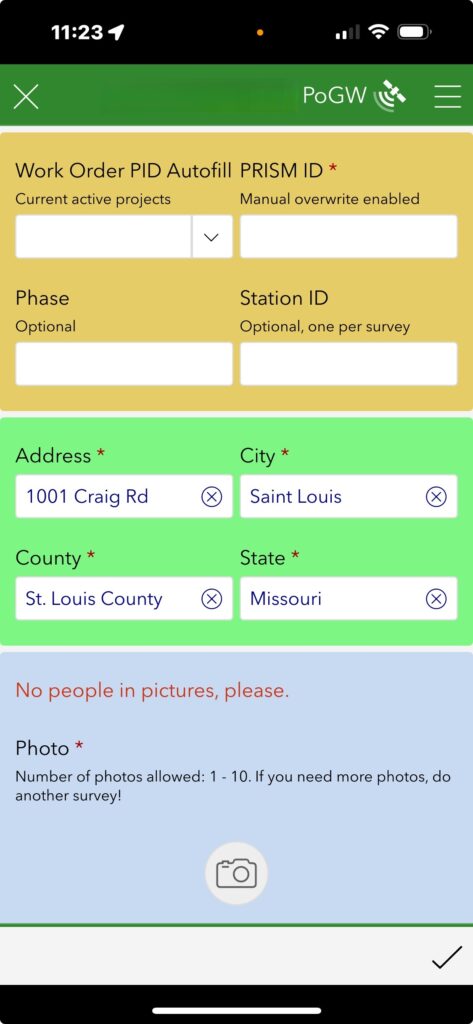
The initial rollout focused on solving the most urgent need: replacing paper forms with digital field workflows. Sunrise Telecom implemented Survey123 and ArcGIS Field Maps to standardize how crews collected construction data, inspections, job completions, and service requests. This effort quickly expanded into a large-scale training challenge, with more than 400 users spread across 20 states and three time zones—many of them field-based and not technically inclined.
GIS Coordinator Joshua Johnson built custom forms and mobile experiences that were simple, guided, and tailored to each role, then worked directly with users to ensure adoption. Often serving as near 24/7 support during the early rollout, Johnson walked technicians through login hurdles, demonstrated mobile interfaces on shared screens or devices, and stayed on calls as long as needed to help users complete a full workflow. “I worked with internal and external users for different integrations,” Johnson explained, “and I think they enjoyed working with me because I’m an open book. I want them to succeed. If we need to sit on a call for an hour to help them get through this so that our systems will work, I will do that.”
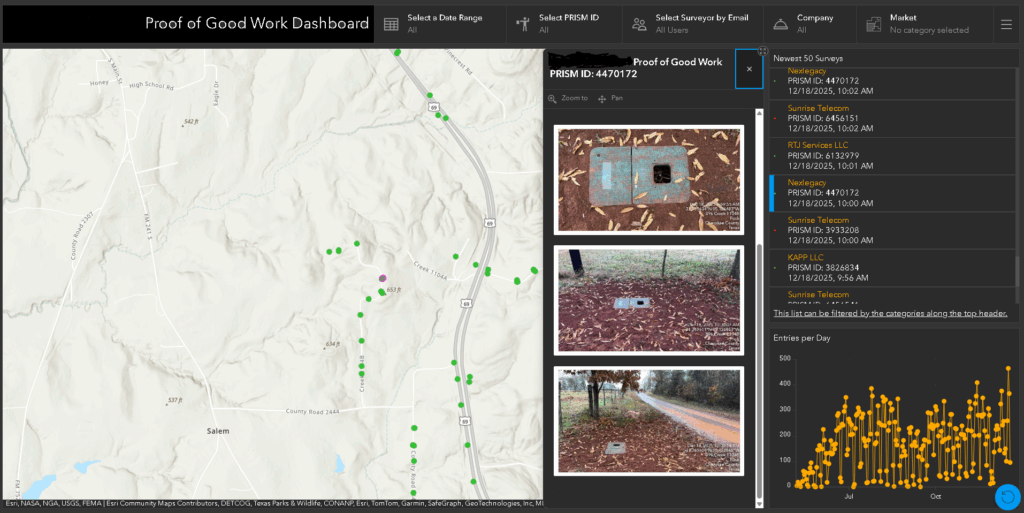
Field technicians quickly gained access to a centralized, current source of information that replaced the outdated documents they had previously relied on. The mobile-based system allowed them to view relevant data in the field and record updates—including notes, photos, and other observations—in real time. These updates flowed directly back to the office, creating a feedback loop that improved accuracy and reduced the manual reconciliation that had once slowed down operations.
From the office perspective, ArcGIS Enterprise provided an immediate improvement in visibility. Supervisors could track progress, review field conditions, and verify completed work without waiting for technicians to physically return or submit paperwork. This level of transparency aligned exactly with what Sunrise’s major customer was asking for: clearer documentation, more consistent reporting, and the ability to validate work more effectively.
Despite the fast timeline, adoption across the team was strong. The straightforward interface and real-world usefulness of the tool helped technicians integrate GIS into their daily routines without disruption. What began as an urgent requirement quickly evolved into a new operational standard.
Results
The transition to a GIS-based workflow produced benefits for Sunrise far beyond meeting the immediate customer mandate. With real-time updates from the field, Sunrise could now provide the clear, verifiable documentation the customer expected. Billing conversations became smoother, service verification became more precise, and the company eliminated delays that had previously stemmed from incomplete or outdated records.
Field operations also became significantly more efficient. By working from current, centrally maintained information, technicians experienced fewer uncertainties and spent less time retracing steps or seeking clarification. The consistency of field data improved as crews documented their work directly within the system, reducing the back-and-forth that once occurred when office staff needed details to complete records or close out tasks. Office personnel gained immediate insight into field activity, enabling faster coordination and more informed decision-making.
One of the most meaningful and unexpected outcomes was the strengthening of Sunrise’s safety program. As field teams began capturing more consistent information—including conditions encountered on site—leadership gained earlier visibility into potential concerns. Supervisors could review photos and notes without delay, allowing safety conversations to be more timely and based on actual field scenarios rather than assumptions. This enhanced awareness supported more proactive decision-making and helped reinforce a culture of safety through better communication and improved understanding of field environments.
Finally, the rapid rollout itself became an operational advantage. By quickly building a functional GIS workflow and then iterating as needed, Sunrise avoided a lengthy transition period and instead built early momentum. As more information flowed into the system, the company’s operational picture grew clearer, enabling better planning and more reliable execution. What began as a response to external pressure ultimately laid the groundwork for a more connected, efficient, and safer organization.
“There’s no limitation,” said Bethmann. “If you can dream it and put in the effort, you can make it happen. The tools are there to reach whatever goal you set.”
Interested in learning more about Sunrise Telecom? Contact Jay Martin, VP of Business Development, at Jay.Martin@SunriseTele.com or 859-630-9879.