We are facing an accumulation of challenges, from global to local, and they are unfortunately set to continue worsening in frequency and severity. For the sake of all our children, we need to be better prepared. We will need to continue finding innovative, collaborative ways to respond that are increasingly effective.
The effectiveness of future disaster management relies on two key aspects: leveraging technology with a geographic focus and harnessing distributed networks of local experts and responders. These two aspects are closely connected, since localized knowledge is inherently tied to geography.
The Geographic Approach to Disaster Management
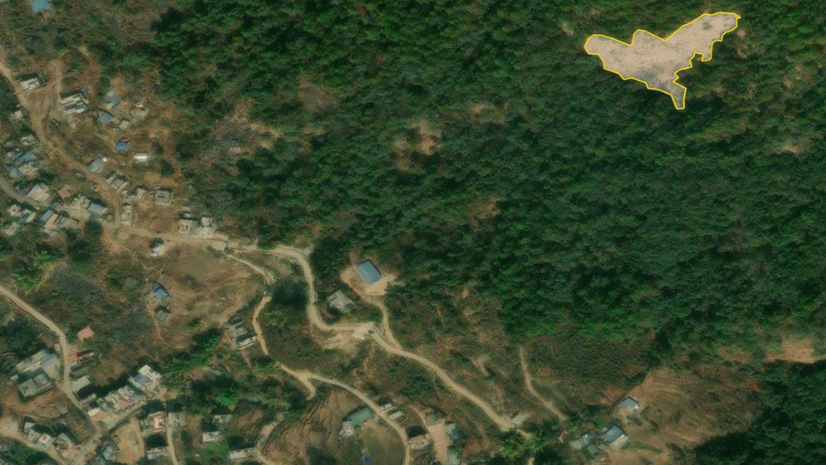
Geographic thinking and the geographic approach to disaster management means recognizing and considering the fact that we are part of an interconnected, global nervous system. We’re not simply an accumulation of point locations and individuals. Maps and aerial perspectives remind us of that all the time; they literally give us the big picture and show us that we are part of a unified, interrelated system.
Nowhere is that more relevant than in disaster risk management (DRM). After all, DRM is inherently geographic. It’s not only about locating hazards and understanding their extent, but also understanding their spatial relationships with other things of interest, like communities, infrastructure, and valuable land. It’s that proximity that turns a hazard into a risk.
Even after a couple of decades working with maps and aerial photos, I am still fascinated by the holistic perspective that maps give us. And that’s always been comforting to me. Maps and geographic thinking, seeing the broader fabric within which we live out our lives, reminds us about the resilience we can find in collective thinking and action. Esri was founded very much on that principle, and its mission to enable positive societal impact through geographic thinking has remained at its core ever since.
Why GIS Is Such a Powerful Approach
Geographic information system (GIS) technology is not merely a collection of tools; rather, GIS comprises an integrated set of systems.
- A system of record that collects, processes, and stores all sorts of geographic data.
- A system of insight that uses geography and spatial analysis to reveal relationships between seemingly unrelated data, thus generating new knowledge and geographic insight.
- And finally, and in my sense most significantly, a system of engagement that uses the common language of maps to communicate, to collaborate, and to empower. In that way, GIS platforms simultaneously have informative power and convening power. They allow us to work better together.
The Power of Local
The 2016 World Humanitarian Summit resulted in a set of commitments called the Grand Bargain, which was an agreement between donors and aid providers to increase the effectiveness and efficiency of humanitarian action globally. One of the key pillars of the bargain is the commitment to better support the localization of disaster risk management, recognizing that the more local the response to disaster, the more effective, efficient, and sustainable it is.
Local knowledge and capacity enable a better targeted and more appropriate response. The way I picture the concept of localization in my mind is to ask, How far out of an event do we need to go to find the resources needed to respond? And the goal of localization is first to know the answer to that question (i.e., locate appropriate resources quickly), and secondly, to reduce this radius over time, for any given point in the world.
Geospatial technologies enable localization. By providing a common cartographic language, we are now truly able to start mirroring the global nervous system of our world. We’re able to integrate our respective communities at all scales into a distributed GIS, or an interconnected system of systems. A system that gives agency to all involved stakeholders, starting with affected communities themselves.
But the technology will never be enough by itself, of course. We need to continue building a distributed community of practice that exchanges knowledge with a common language. Communities of practice like the Flying Labs network represent the future of collective learning and improvement.
Building Distributed Capacity
One of our primary objectives at Esri is to support, as best we can, the move towards distributed capacity development in disaster response. We have a number of long-standing programs that support the use of our tools in disasters and nonprofit work, and we will continue to develop these to be as useful as possible to our community.
One initiative I wanted to mention is that we have been working with Flying Labs and its founding organization, WeRobotics, to see how we can best draw lessons from the Flying Labs model and apply it to fostering a distributed network of GIS practitioners who apply the geographic approach to disaster risk management.
Better Together
We need to build resilience to the threats we collectively face today and tomorrow, and there’s never been a truer moment to say that we’re better together. The path forward requires continued collaboration, knowledge exchange, and collective learning across our global community of disaster risk management practitioners.