When does it become passé to obsess over every turn and salvo in a global trade war? Global executives know the answer is never. Neither they nor the analysts who furnish them with key insights can afford to lose focus on the complicated reality of global trade.
For some, recent twists and turns have induced indecision, a reluctance to make the wrong move when so much is in flux. But the most assured among them take confidence from a secret resource: a map of their operations that reveals where they do business and how they might adjust to emerging trade realities.
Casting About for Clarity on Global Trade
In the global trade shake-up of 2025, conditions change fast. Swiss business leaders recently woke to the prospect of a 39 percent tariff, while EU officials chose to delay counter levies on US goods for six months. America’s senior executives wonder what will change next week and how they might adapt in quarters to come.
Which is to say, the VIX on global trade has rarely been so high.
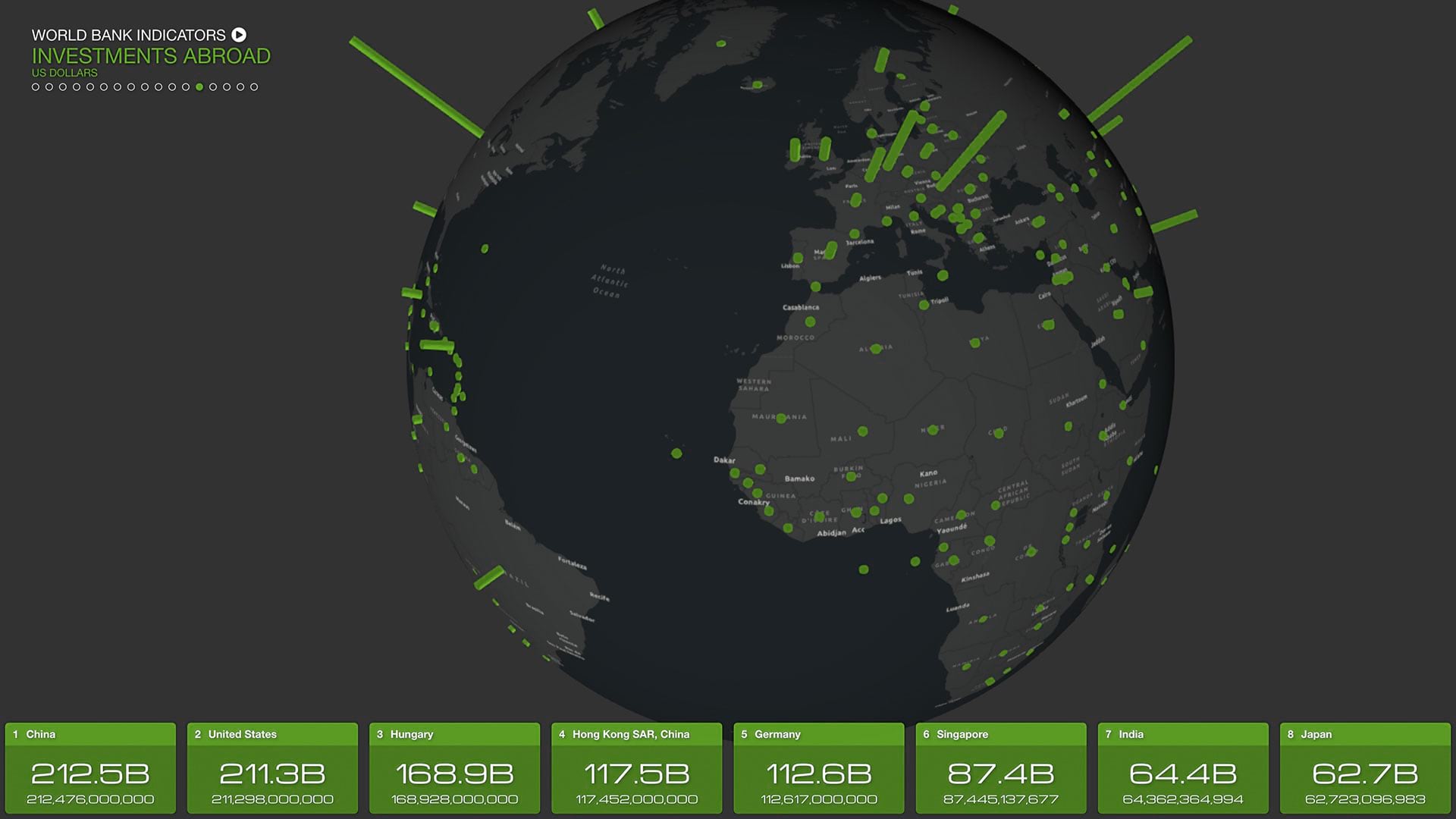
For business leaders, it’s easy to get lost in fluctuating tariff and trade numbers, and easier still when those numbers are scattered across headlines, notepads, and spreadsheets. But trade-related data, such as where suppliers are located worldwide and what tariffs they’re subject to, can be tracked and viewed on a dashboard. With that clarity, decision-makers can make better strategic choices about where they source raw materials, which supply chain partners they use, and where to invest in final assembly operations.
It wasn’t long ago that data-rich maps helped executives manage through another period of uncertainty.
Finding Comfort in the Not-So-Distant Past
When the COVID-19 virus intensified into a pandemic in early 2020, businesses faced massive interruptions—supply chains at less than half capacity, employees out sick, regulations on the rise.
Like today’s trade reshuffling, the pandemic was a geographically complex situation. Executives needed an air traffic control system to track infection rates, local business rules, and other variables critical to business continuity. They found it in a mapping technology that showed how company operations were affected by those shifting conditions.
At one national retailer with more than 200 million annual visitors and outlets in 45 states, a C-suite executive found clarity in geographic information system (GIS) technology.
Working with the company’s GIS team, [the chief security officer] helped create dashboards that revealed the status of the company’s operations across the country at a glance, along with valuable key performance indicators . . .
“Being able to understand at a time when there’s chaos and complexity helps calm the situation, not only to be able to communicate outward and upwards, but just to have a better sense of what’s happening.”
The company’s maps didn’t tame the virus any more than today’s maps can resolve a trade dispute, but they did bring the business into focus for executives. That was possible because the GIS team had “geo-enriched” company data—associating everything from sales receipts to store parking lots to a specific location. They understood not only the business realities of the individual stores, but their aggregate effect on the business.
Five years later, executives need that same kind of context as they navigate decisions about supply chains, business partners, and production locations.
The Far Side of a Global Reshuffle
When business leaders see their operations on a map alongside the latest metrics on global trade, they gain the situational awareness needed to game out scenarios and prepare a response: If tariffs rise in this region, how can we shift production to an adjacent region, and what will the bottom-line implications be? This is the kind of what-if analysis GIS technology thrives on.
Once the dust settles on this global trade reshuffle, clear, information-rich maps will remain an executive’s go-to resource—a single source of truth on sales performance, workforce management, supply chain derisking, and quarterly KPIs.
Volatility will always have its place—a century ago, five years ago, today and tomorrow. In the tumult of global business, the best advice for executives is to keep calm and map on.
The Esri Brief
Trending insights from WhereNext and other leading publicationsTrending articles
December 5, 2024 |

January 11, 2024 |
May 26, 2026 |
September 22, 2026 |

September 15, 2026 |

September 8, 2026 |