The US needs more homes—perhaps as many as 4.5 million more, according to Zillow. Economists for J.P. Morgan peg the current housing shortage—in part a result of insufficient construction, zoning laws, and elevated prices and interest rates—closer to 2.8 million units.
But homebuilders and real estate agents don’t sell houses to statistics—they sell them to people with varying views of what a home should be. For young parents expecting a baby, that might mean a two-car garage and proximity to good schools. For a retiree, it’s a coastal condo with luxury touches that feel like just desserts for a lifetime of work.
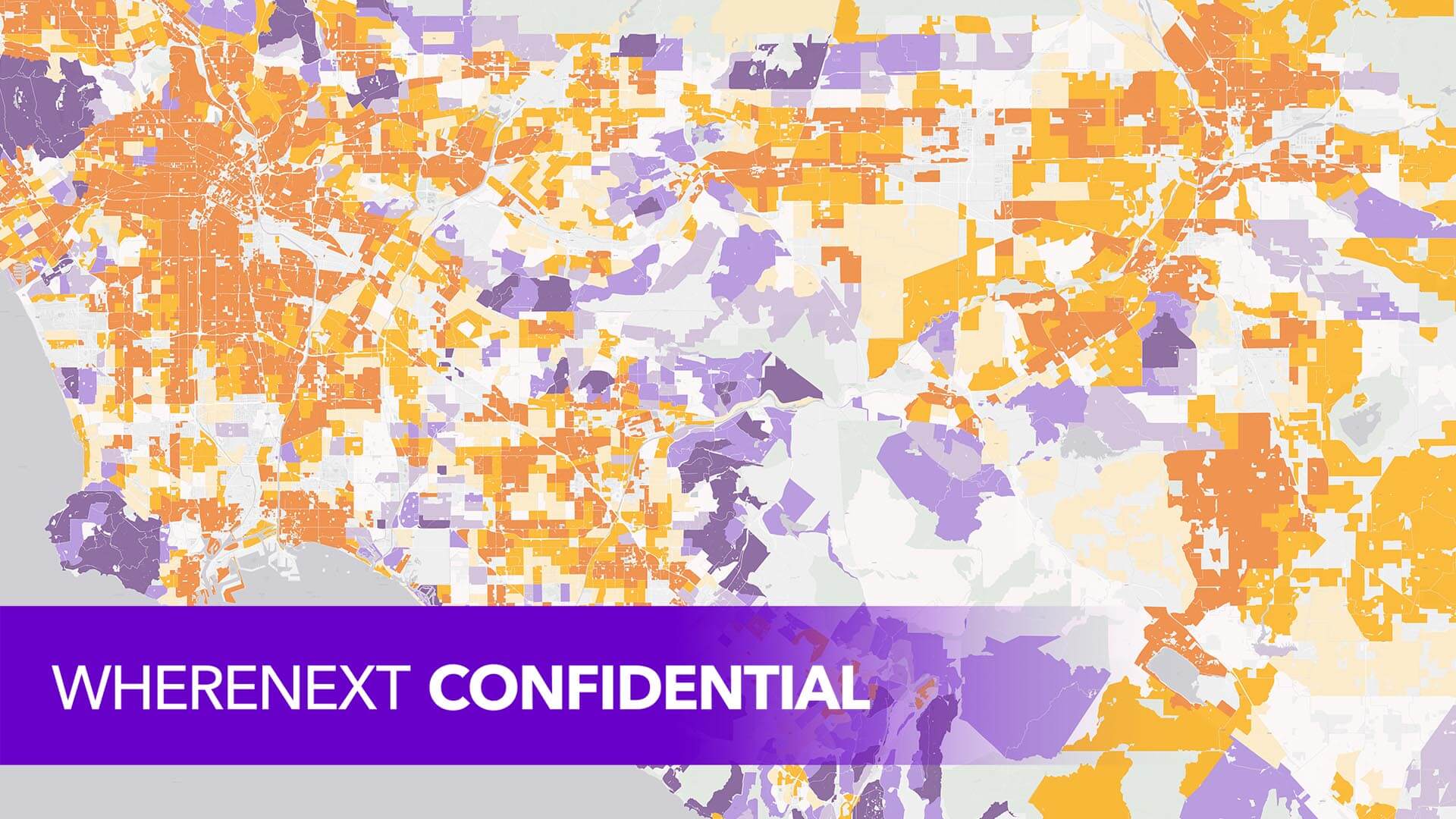
At Taylor Morrison, one of the largest homebuilders in the US, mapping and analytics reveal those shifting customer preferences and evolving homebuying trends.
As the company invests billions in an effort to close 20,000 new homes by 2028, geographic information system (GIS) technology is equipping the firm’s land buyers, home designers, marketers, and C-suite leaders with a real-time picture of markets across the country.
In Taylor Morrison’s market intelligence and strategy department, GIS analysts develop demographic and psychographic profiles of communities. They gauge migration patterns and track the pace of resales and other key indicators of real estate activity. Their maps have become a key tool in market development and planning, showing up everywhere from permitting requests to the decks executives use in earnings calls and board meetings.
“With this data, we can make decisions in real time now instead of waiting and losing margins or not getting as many buyers,” says Stephanie Soulé, a senior market intelligence and strategy analyst for Taylor Morrison and one of the firm’s GIS power users. “We can start making the decisions faster.”
The Analytics Engine Behind the Voice of the Customer
Soulé, who has worked in homebuilding for much of her career, discovered a different culture when she joined Taylor Morrison—one driven by an intense focus on understanding customer needs.
The market intelligence and strategy unit plays an important role in supporting the company’s motto: Love the customer. The department harmonizes location data, survey results, focus group findings, and other metrics into the “voice of the customer.”
That intelligence is integral to navigating a market flush with change. Millennials are now the largest segment of Taylor Morrison buyers, and in 2024, Asian American buyers became the top contributors to company revenue for the first time.
Inside the company, maps have become a critical tool for communicating the nuances of market dynamics, showing how and where conditions are changing.
“If a picture is worth a thousand words, when you have a busy C-suite, it’s probably worth a million words,” says Lacey Miller, director of market intelligence and strategy at Taylor Morrison.

It's one of those things where you recognize that there's more meaningful data out there and maybe you don't have to work so hard to find it sometimes. [In GIS], it's all there integrated in front of you.
A Multibillion-Dollar Bet on Growth, Grounded in Customer Connection
Taylor Morrison plans to invest $12 billion over the next three years to open more than 600 new communities. The company operates in 12 states and 20 markets, including hot real estate scenes like Phoenix, Atlanta, and Dallas.
GIS plays a prominent role in the company’s market planning and analysis, guiding Taylor Morrison toward the strongest investment opportunities and tailoring its offerings to specific customer segments.
“We’re not just putting up four walls and saying, ‘Come buy,’” says Soulé. Instead, they ask: “Are we giving them what they want?”
In one instance, Soulé geocoded buyer addresses to ensure that the company was placing marketing signage where key customers would see it.
GIS analysis of the geocoded data revealed that Taylor Morrison was allocating marketing dollars to a freeway corridor that wasn’t especially popular with its primary buyers.
When Soulé met with colleagues in sales and marketing, she showed them a map illustrating how they could access more buyers and increase conversion rates by marketing on another interstate.
The analysis proved so helpful that the practice of analyzing marketing with GIS was replicated nationwide.

We have quarterly calls where the executive team meets with the board, meets with Wall Street, and with GIS we’re able to give them that visual representation.
Leveraging Market Intelligence and Maps, from Land Acquisition to Sales
Miller, Soulé, and other market intelligence colleagues work closely with Taylor Morrison’s acquisition team as they look to purchase large parcels of land for new communities.
Mapping and analytics help land buyers understand an area’s population, how that population may be evolving, the going rate for land and homes, and the activity of competitors.
Without geographic context, data can be misleading. A city might be selling homes at an alluringly fast clip—but the area’s demographics may be better suited to a local competitor. Meanwhile, a neighborhood reliably known for young singles may be maturing into a center for growing families seeking move-up homes.
“To be able to map home prices and do a heat map [to] see how all of that has evolved in different locations is really powerful,” Miller says. “Especially if you do that once a year and take stock of where the business is going and how a market is evolving.”
To assess whether a parcel might be appropriate for Taylor Morrison’s resort-style Esplanade community, for instance, Soulé starts by analyzing other 55+ developments in the area. A GIS map showing the price ranges in those communities, square footage, and the pace of home sales provides a snapshot of the market. She then can layer on resale listings to gauge price thresholds, or toggle on population data to see if there are enough potential buyers to support a new community.
Once a piece of land is purchased, Miller’s team often partners with Taylor Morrison’s designers, since demographic and psychographic analysis can inform even minute decisions about floor plans. For example, in a market where more than 15 percent of customers have kids, Soulé would advise against two-bedroom houses with tandem garages in favor of three-bedroom floor plans with side-by-side garages.
After a community has opened, the market intelligence and strategy team might work with the VP of sales. A precise understanding of customer preferences, created by mapping and analytics, can influence price concessions, interest rate locks, or interior upgrades meant to entice local homebuyers.
The Data Science—and the Joy—of Homebuilding
As homebuilders like Taylor Morrison seek to shore up the US housing supply, they face a climate in which building costs are high and mortgage rates aren’t low enough to tempt some would-be buyers.
GIS technology supplies the market intelligence to ensure that company investments produce meaningful returns—and that customers get what they want. For Miller and her team, that’s where data science meets the beating heart of the job.
“There is nothing more personal than being able to help figure out what a consumer wants to do,” Miller says. “I know it sounds like a rom-com, but I love my job for that reason: To be able to go and figure out the right house for somebody—that gives me great joy.”
The Esri Brief
Trending insights from WhereNext and other leading publicationsTrending articles
December 5, 2024 |

January 11, 2024 |
September 22, 2026 |
May 26, 2026 |

June 5, 2025 |

April 7, 2026 |