If a group of eagles is a convocation and a gathering of bears is a sleuth, what do you call an assembly of AI agents working together?
Whatever the term, it’s Mansour Raad’s specialty. As Esri’s global chief technologist, Raad helps companies worldwide use AI and big data to answer complex business questions. Much of that data is messy—tabular, unstructured, nearly impossible to analyze manually. But when AI unlocks it, companies get answers to high-value decisions fast.
The latest evolution: AI agents. Each agent addresses a specific business process and coordinates with others—suggesting which land to acquire or how to reroute delivery trucks on the fly. These agentic flows handle repeatable processes, freeing up GIS professionals for higher-level analysis and giving executives insight that accelerates business processes.
In this Fast Four interview, Raad explains what this looks like in practice, and why “trust but verify” matters more than ever.
Mansour, you’ve traveled the world working with all kinds of companies. At a high level, what are they focused on these days—what are they trying to achieve?
We’re trying to answer really complex questions today that involve a huge amount of data—we’re talking billions of records. A lot of them now want to blend in AI, these AI assistants, with this massive amount of data.
Of course, we look at everything with a geospatial component—but what we want to bring in is also their documents that have nothing geospatial in it. That blend of spatial, nonspatial data, real-time, batch, at massive scale—and making everything easy through these AI assistants today—is the challenge that we’re confronting today.
What does a company do to answer those big questions?
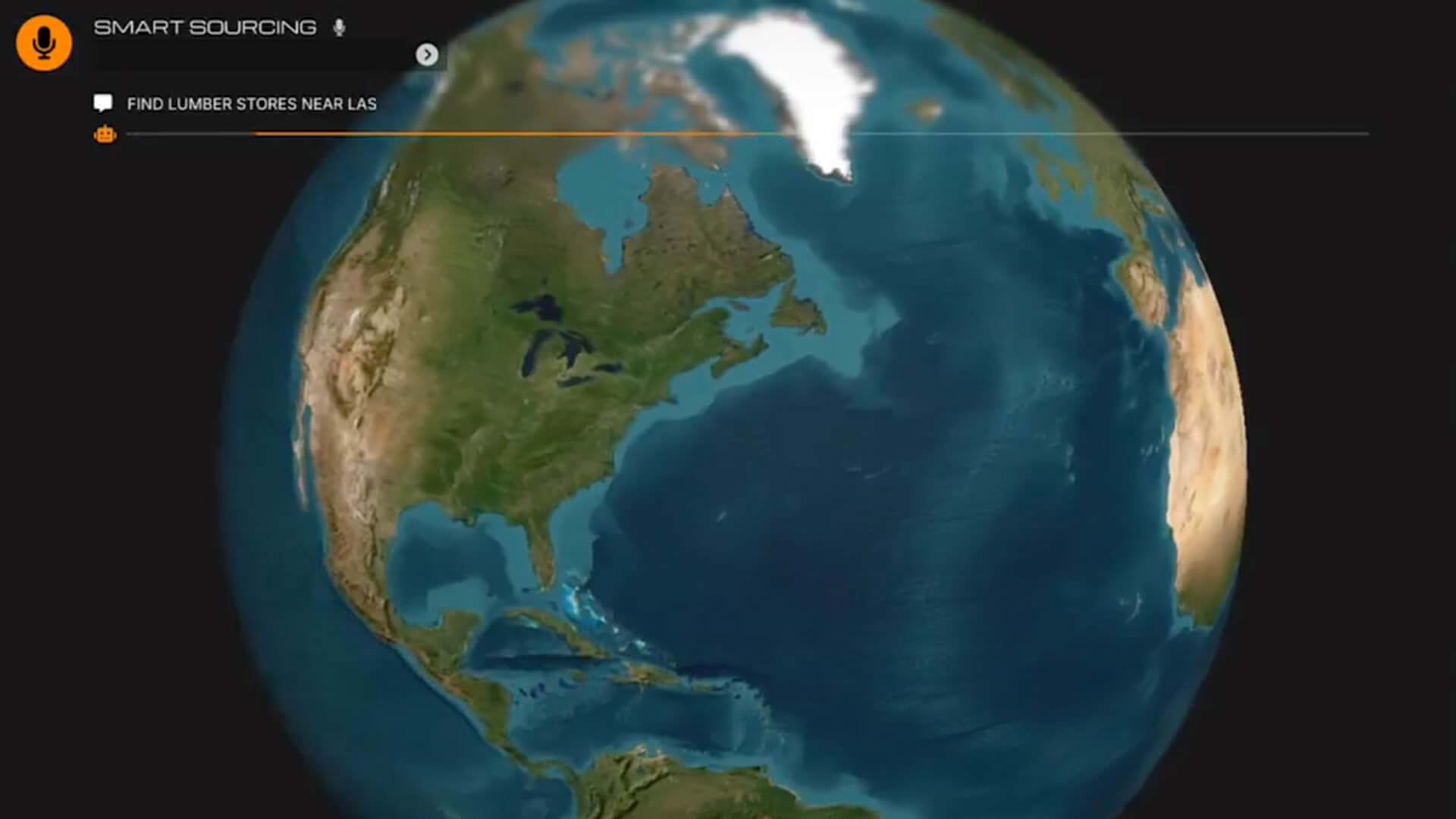
I’ll give you an example . . . We’re working with a huge global energy company that wants to do site selection. They have billions of records of parcels all over the world. They want to be able to do site selection in the form of something like, “I’m interested in buying this property, but I’m looking for property with certain constraints, a certain distance from the river, it has to be in a certain soil type, and I want to be able to search for these things planet-wide.
And I need to be able to do it in the local language. If I speak Malay or I speak Dutch or I speak Portuguese, I should be able to do that super easy without knowing GIS.” So, we enabled that to happen, and this quick decision-making—even at this massive scale—can really save lots and lots of dollar values.
That’s an interesting application of AI with language understanding, etc. But you’re pushing that even further. Can you tell us about that?
The way we’re doing that is we’re starting to bring in these agentic flows where these AI agents now can be associated with a large language model and a set of tools and memory to do its job.
Let me give you an idea. I have a logistics company that wants to transfer goods between a truck that’s going between Boston and Atlanta and another truck going from Charlotte to Denver. The logistic person that is managing this whole thing just wants to ask, “I want to transfer these goods between those guys, where do I do that?”
Now, typically, what they’ll do is they’ll turn around, ask their GIS person, “How do I solve this problem?” But think about it. It’s a nine-step, multi-reasoning task. It has to geocode all four places, create a route, then pull the geometry, perform the intersection if they intersect, get the intersection, take all that, report it back.
Our agents today, through this agentic flow, can solve this problem, and now suddenly this logistics person [who] knows nothing about GIS can turn around, answer this question, and get the result that they’re looking for and continue with their job.
By the way, we’re not removing the GIS person out of the equation, we’re just making them make the data better, create these agentic flows. So we’re elevating their capabilities.
That’s a great example of time to insight, speed to insight there. Where do we go from here?
What I’ve been discussing is things on the back end, these agents on the back end. What we’re looking for now is agents in the front end. That collaboration between the front and back is going to really give you what I call expressive applications rather than the static applications in here.
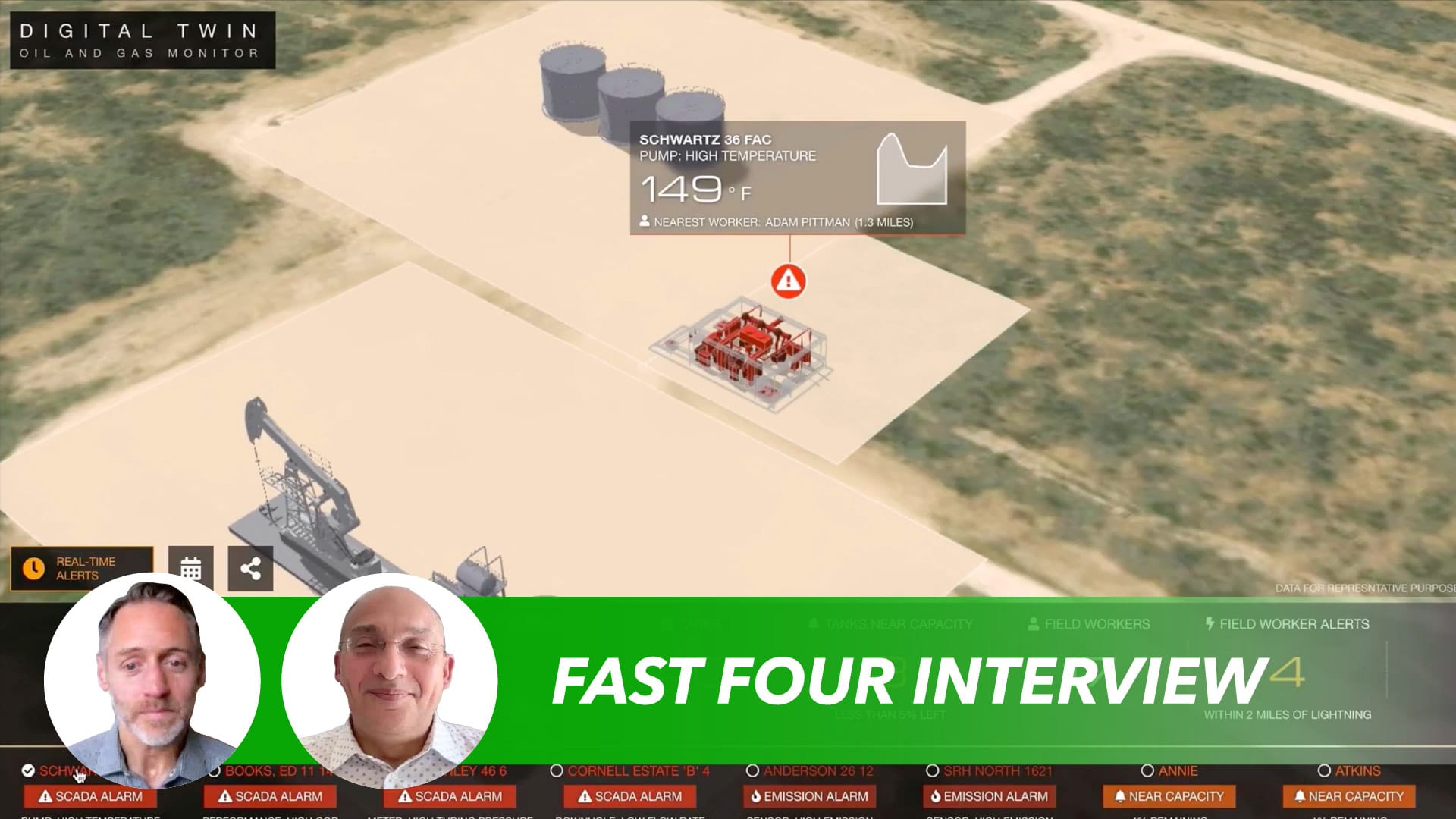
What we’re looking at [is] not just tabular data, but what we like to see is multisensor coming in here. OK. Imagine you’re monitoring a motor, right? You get from the tabular data the speed and the temperature. Well, what if you can put a camera and now you can watch if, for example, smoke happens, you can detect that via a GeoAI model and [it] can tell you that. . . Or imagine you put in a smell sensor, and you can start smelling leaks of oil or gas. Or you can put in a hearing sensor, if the motor starts rattling. So, this multisensor story, an agent looking at that—the back end and the front end combination—is really where we believe is the future of things to happen. And, by the way, we’re doing that right now.
A lot of possibilities ahead, so thank you for your insight, Mansour.
You’re welcome. And I want to leave you with a couple of things. You need to curate the data. Trust but verify. And to the famous words of Uncle Ben from Spider-Man, my favorite superhero, with great power comes great responsibility. So, use these things for good. The future is here. We’re doing it, so you can do it too.
Excellent, great note to end on. If you are interested in AI and big data and how those forces are coming together to help businesses, check out WhereNext for more interviews and articles and resources.
The Esri Brief
Trending insights from WhereNext and other leading publicationsTrending articles
December 5, 2024 |

January 11, 2024 |
May 26, 2026 |
September 22, 2026 |
October 6, 2026 |

April 7, 2026 |