A new wave of federal housing legislation is changing what is expected of local governments—and GIS is at the center of how those expectations get met.
What the Law Actually Does
At its core, this legislation expands federal support for housing production, preservation, and rehabilitation. It updates existing housing programs, strengthens incentives to reduce local barriers, and creates more room for communities to pursue affordable housing strategies tied to specific places and specific needs.
The law accomplishes this by:
- Updating major HUD tools such as HOME and CDBG
- Creating new pathways to support housing production
- Directing attention toward communities actively removing barriers to development
- Including housing and community banking provisions to improve local lending access and expand the financial capacity behind housing development
This is not a single-purpose grant program. It is a framework—one that gives local governments, housing agencies, and lenders more room to support housing in practical ways.
That includes:
- Preservation of manufactured housing communities through the Preservation and Reinvestment Initiative for Community Enhancement (PRICE) program
- Support for housing-related infrastructure
- Incentives tied to local reform efforts
To understand the scale of the federal housing system this law builds on, consider FY 2026 HUD funding levels:
- HOME: $1.25 billion
- CDBG: $3.3 billion
- Tenant-Based Rental Assistance: $38.4 billion
- Homeless Assistance Grants: $4.4 billion
The law also reinforces PRO Housing as a federal funding stream for communities that remove barriers to housing production. The actual dollar amount is set year by year through the HUD appropriations process.
The broader message is clear: housing policy is now expected to be more data-driven, more locally coordinated, and more focused on implementation. Local governments must understand not only what the law offers, but how it fits into their land use, capital planning, and development review processes.
What It Means for Planners and Local Leaders
For planners, city managers, mayors, and county leaders, this law raises the level of expectation around housing strategy. It is no longer enough to say housing is important. Leaders must demonstrate how zoning, permitting, infrastructure, and funding decisions work together to increase supply and improve affordability.
Planning staff will increasingly be asked to help answer practical questions such as:
- Where can additional housing be added without overwhelming infrastructure?
- Which parts of the community have the greatest need?
- What reforms would make housing easier to build?
- How can incentives be directed toward the highest-value opportunities?
The encouraging news is that the legislation delivers much-needed updates to the CDBG and HOME programs, including:
- More flexible funding options in the HOME program
- Funding for small-scale infill projects
- Support for rehabilitating older residential units and housing-related infrastructure
- Higher caps to pair federal dollars with private capital for preservation and affordable units
For elected and appointed leaders, the challenge is not just policy design—it is execution. They will need clear, authoritative information to support decisions, communicate tradeoffs, and show residents that housing action is being managed responsibly.
Why GIS Matters
GIS plays a critical role in this environment because the data behind housing decisions is inherently spatial. Housing needs, land availability, zoning constraints, infrastructure access, demographic change, and project outcomes all vary from place to place.
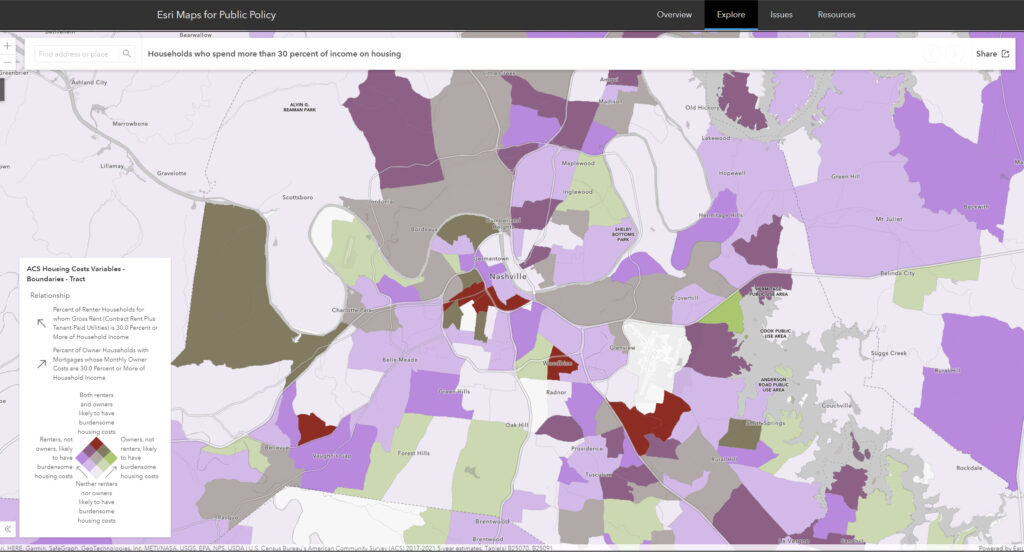
That makes GIS valuable before decisions are made, while projects are being designed, and after funds are spent. It helps local governments:
- Identify where housing pressure is highest
- Determine where policy change may have the most effect
- Verify whether investments are reaching the intended areas
- Communicate complex information to leaders, staff, and the public
There are three primary roles for GIS in support of the programs and mandates in this legislation:
- Providing baseline housing data — including capacity assessments, vacant housing inventories, and demolition tracking
- Generating scenario planning — for new or revised zoning, new and rehabilitated housing, and infrastructure support
- Producing spatial analysis — to demonstrate that investments are reaching the neighborhoods with the greatest need
For local government teams, the value of GIS is not just in mapping. It is in creating a shared view of the problem and the response. That is especially important now, when housing policy is becoming more closely tied to performance, accountability, and measurable results.
Ready to see how GIS can support your community’s housing strategy? Explore our Planning solutions or sign up for our newsletter to stay current on the latest tools and guidance.