Rooted in Service, Powered by Community
This week (May 17–23, 2026) is National Public Works Week. Since 1960, the American Public Works Association (APWA) has sponsored this week as a way to raise awareness about the importance and criticality of public works in our daily lives.
Public works plays a key role in preserving and advancing our quality of life by providing stewardship for public infrastructure and delivering the services essential to a livable community.
This year’s theme, Rooted in Service, Powered by Community, acknowledges that the roots of service run deep in public works and that the public works community is a strong one that continues to innovate to help our communities evolve to meet changing needs and challenges. While public works professionals and their work often go unnoticed, it is important to remember their contributions to our communities.
GIS as Foundational Technology for Public Works
Public works is a location-based business. As such, Geographic Information Systems (GIS) is foundational technology to support the mission.
GIS is the mission-critical enterprise IT system designed to turn location data into insight that fuels better efficiencies and decision making. Esri is the global GIS market leader, and we make the world’s most powerful GIS software, ArcGIS.
There is a long history of ArcGIS supporting public works agencies that goes back more than four decades and has led to the development of a strong public works GIS community. Just like the rest of the public works professionals, those providing GIS support for the public works mission are often unnoticed. This week, let us celebrate some of the contributions of public works GIS professionals to the community.
ArcGIS Supports the Entire Public Works Mission
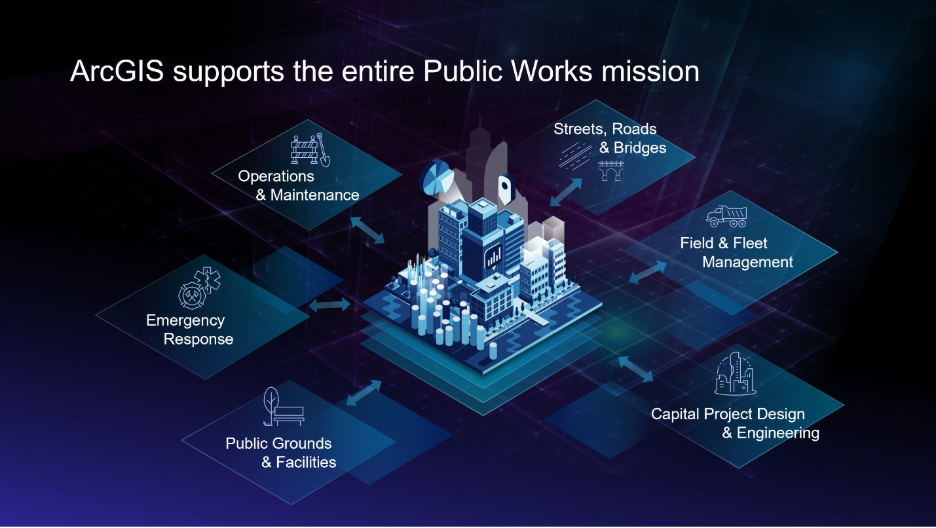
ArcGIS supports the entire public works mission, including:
- Operations & Maintenance
- Streets, Roads, and Bridges
- Field and Fleet Management
- Capital Project Design & Engineering
- Public Grounds and Facilities
- Emergency Response
Examples of GIS Innovation Across Public Works
Operations & Maintenance
Operations and maintenance are at the heart of public works. Every day, a massive effort goes into operating and maintaining the infrastructure public works is entrusted with. The biggest need is asset management, including inventory, location, condition, cost, and inspections, with the goal of being proactive rather than reactive.
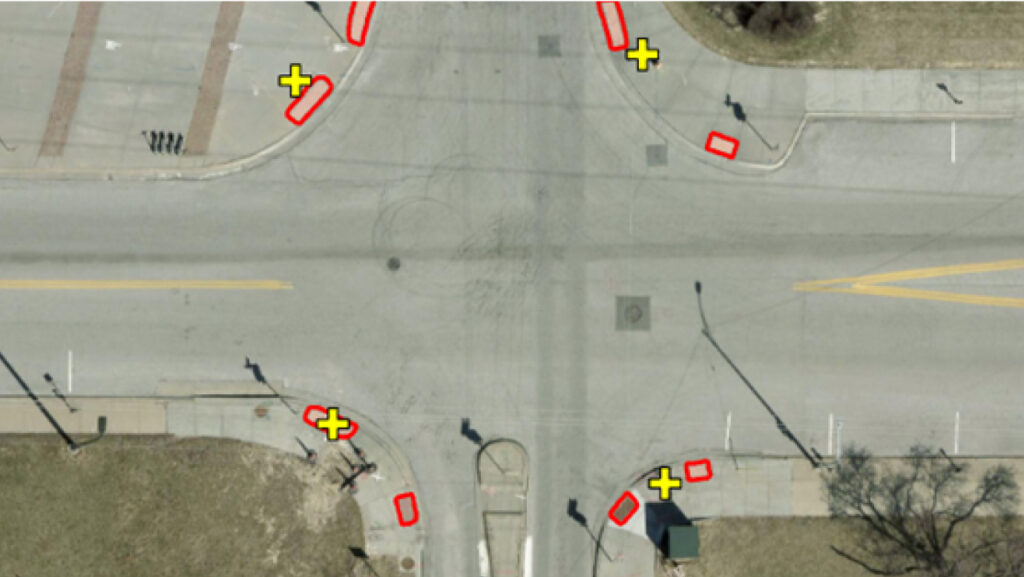
Douglas County, Nebraska demonstrates operations and maintenance innovation in action with AI and GIS by streamlining their ADA curb ramp inventory.
Streets, Roads, and Bridges
Streets, roads, and bridges are part of our critically important transportation network. Challenges to this network include pavement and right-of-way management, safety, and traffic congestion.
Raleigh, North Carolina demonstrates transportation innovation in action using AI, GIS, real-time data feeds, and a digital twin to mitigate traffic congestion and improve safety.
Field and Fleet Management
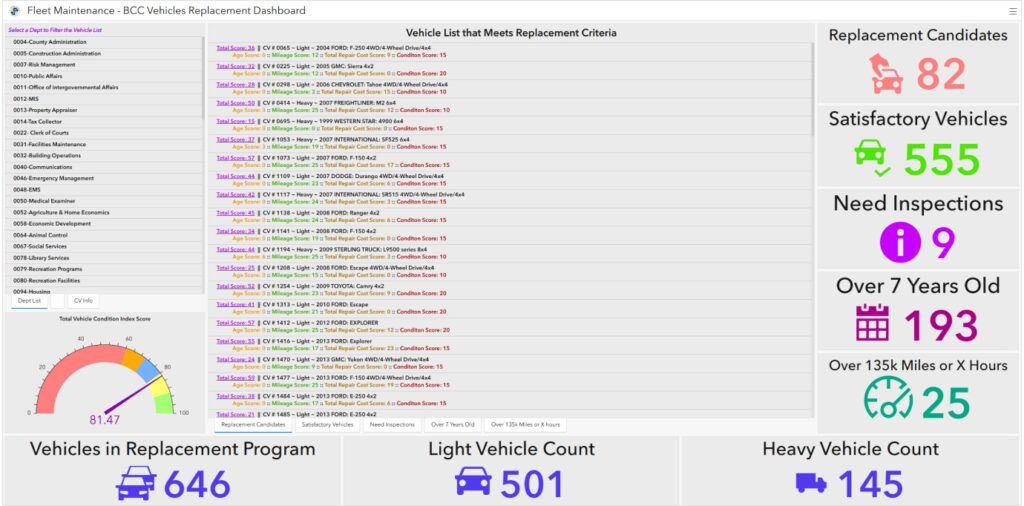
Field and fleet management are an essential part of public works. Much of the work happens in the field with fleets of vehicles. Migrating from manual, paper, PDF, and spreadsheet-based workflows to digital workflows is vital to increase efficiency and maximize the value of fleets.
St. Johns County, Florida demonstrates fleet management innovation by digitally transforming their fleet management program with GIS.
Capital Project Design & Engineering
Capital project design and engineering are at the center of public works, providing the most efficient use of public funds to support the public works mission. The fundamental process of project planning, design, construction, and maintenance allows agencies to accomplish their mission to maintain and improve communities.
Fairfield, California demonstrates capital improvement program innovation by breaking down silos and improving efficiency and transparency with GIS.
Public Grounds and Facilities
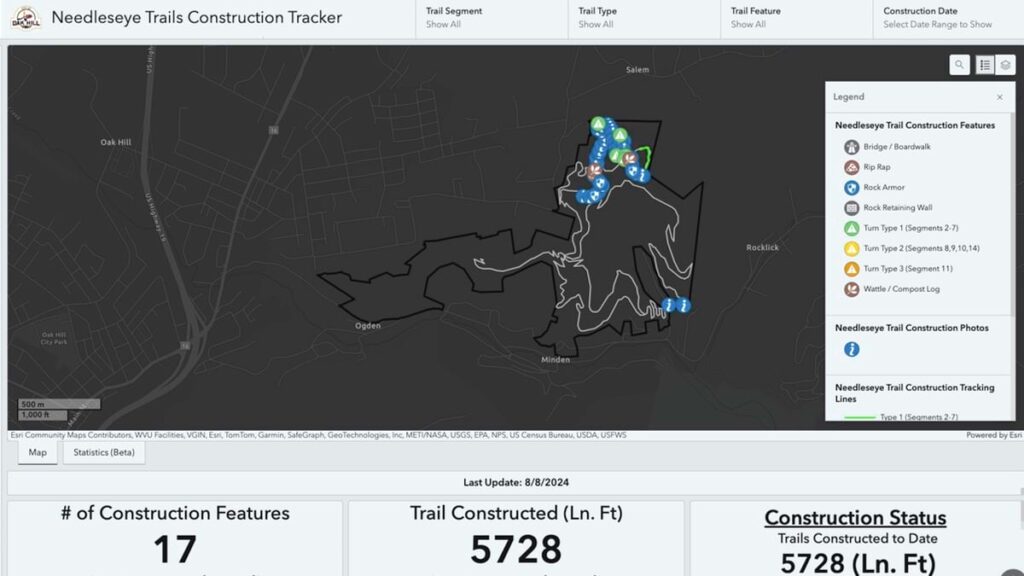
Public grounds and facilities are important parts of communities, whether they are public buildings or outdoor facilities like parks and recreation areas. For facilities, issues include space planning and safety. For parks and recreation facilities, focus areas include planning and design, smart operations, education and outreach, community health and well-being, equity, and climate resilience.
Oak Hill, West Virginia demonstrates park innovation by using GIS to support their entire park development process.
Emergency Response
Emergency response is one of the less obvious roles of public works professionals, though they are often the first to arrive and last to leave an emergency event. Opportunities to utilize GIS in support of emergency response include response, recovery, and mitigation.
Fort Lauderdale, Florida demonstrates emergency response innovation by using GIS to help respond to a record-breaking flooding event.
Enterprise Public Works GIS
Enterprise public works GIS is the goal to maximize investment in GIS. ArcGIS is designed to support the entire spectrum of public works and brings numerous benefits.
Houston, Texas demonstrates enterprise public works GIS innovation.
Reflecting on Public Works and GIS
National Public Works Week provides an important reason to reflect on the amazing work of the public works community. This work includes the contributions of GIS professionals who support the public works mission every day.
To learn more about how ArcGIS can support the public works mission, sign up for the public works eBrief.