



March 17, 2022 |
David Gadsden | Conservation
December 9, 2025
Guitars have an unlikely ally: elephants.
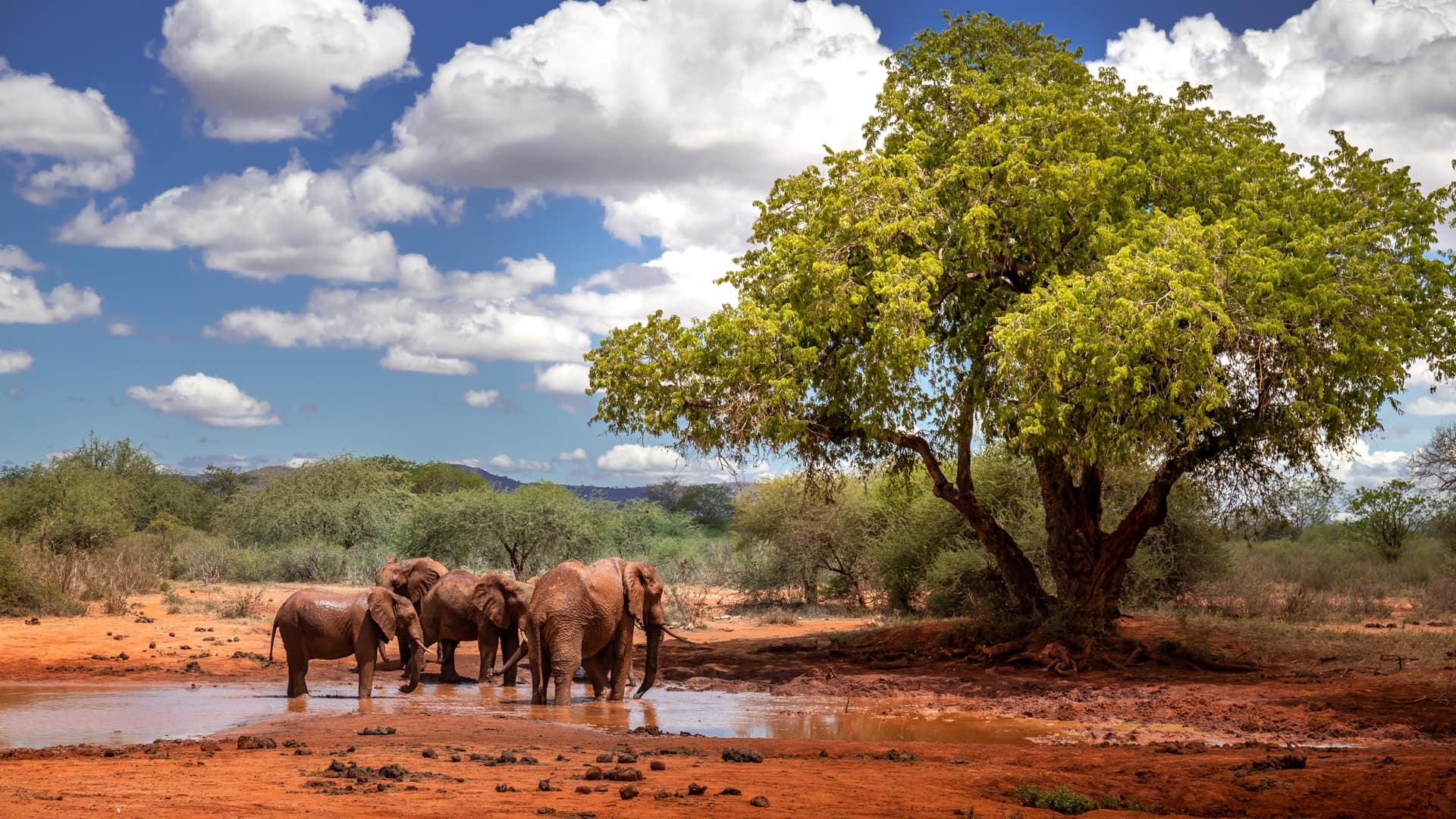
In a twist of ecological fate, scientists have discovered that critically endangered African forest elephants are essential to the survival of ebony trees, a traditional tonewood used to make guitars.
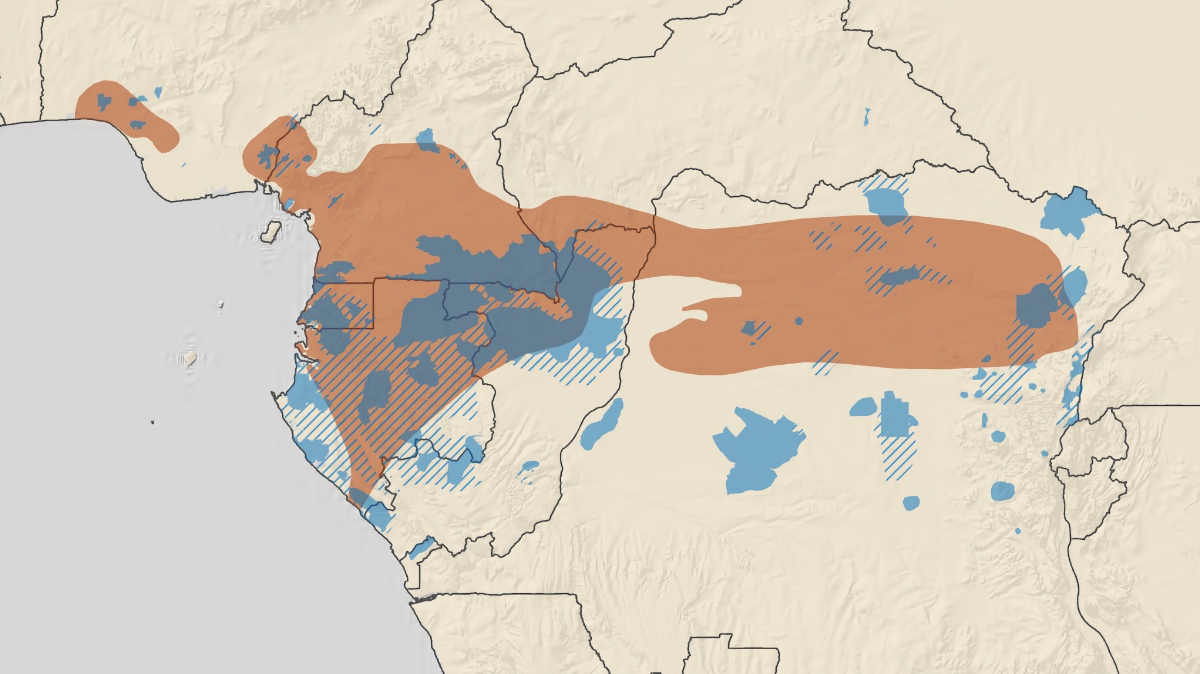
A recent study published in Science Advances and supported by The Ebony Project—a collaboration between Taylor Guitars and scientists at the Congo Basin Institute (CBI)—proves that elephants act as critical seed dispersers for ebony trees in the Central African rainforest. Researchers mapped young ebony trees and compared that with an authoritative source of endangered forest elephant populations using geographic information system (GIS) technology to help confirm the correlation.
But how did an American guitar-maker end up partnering with scientists in Africa to make this groundbreaking discovery?
It began with Bob Taylor, cofounder and president of Taylor Guitars, and his desire to source wood more responsibly. Shortly after he became co-owner of an ebony sawmill in Yaoundé, Cameroon, in 2011, Taylor began asking fundamental questions: How many ebony trees are there? How do they reproduce? How long do they live? The answers were elusive, piquing Taylor’s curiosity.
Bob Taylor has spent more than 50 years building guitars. As a seasoned luthier—or maker of stringed instruments—he knows that craftsmanship begins with the right materials. Acoustic guitars are born from a careful blend of selected wood parts, each contributing to the instrument’s tone, resonance, and resilience.
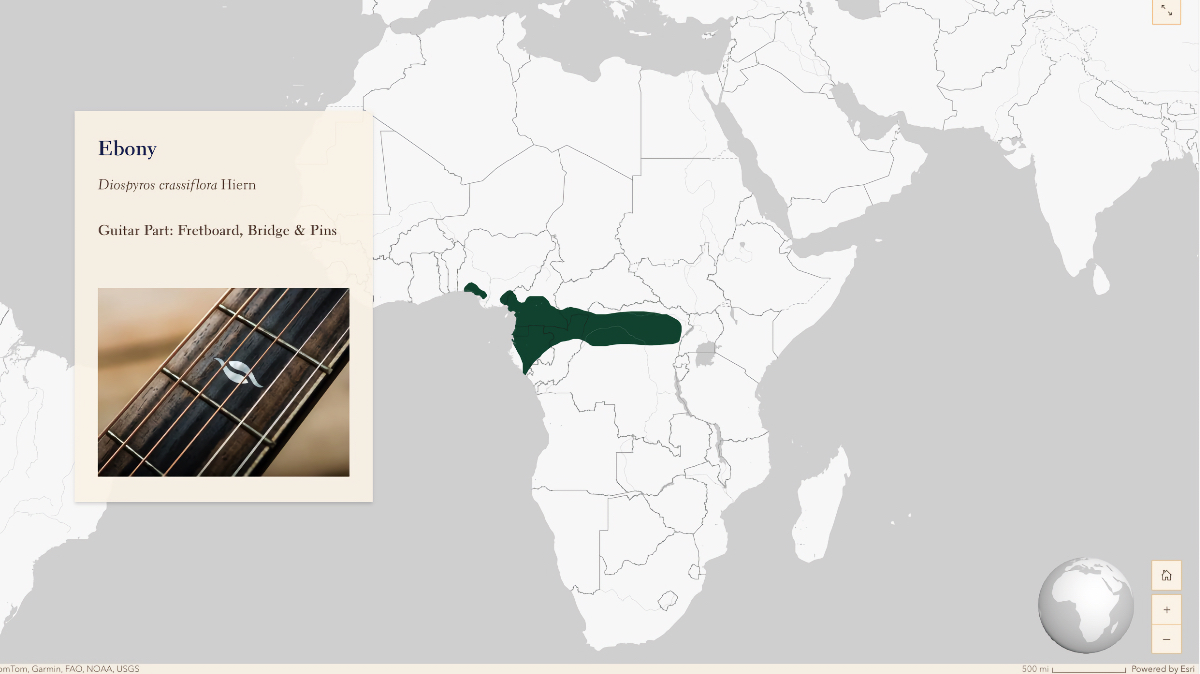
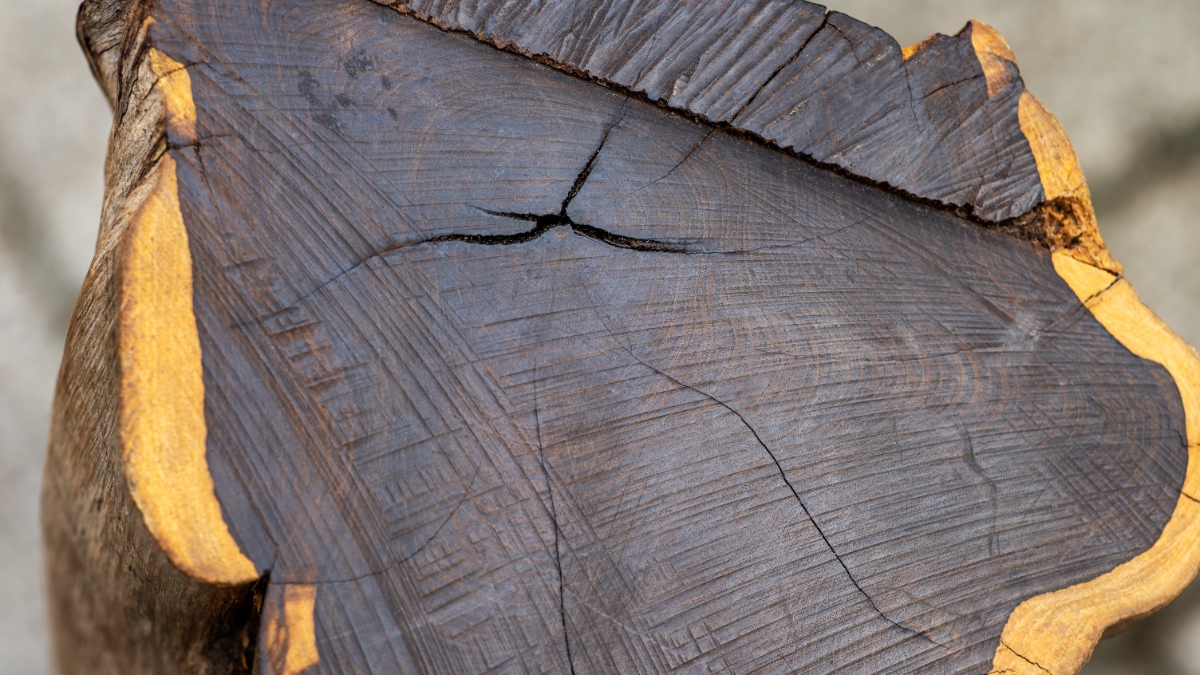
A typical acoustic guitar uses five or more wood species chosen for their distinct acoustic and mechanical qualities. Taylor guitars, for example, feature ebony fretboards, a species selected for its density, durability, and smooth surface. For these same reasons, ebony has been used on stringed instruments such as violins, violas, and cellos for hundreds of years.
Taylor commissioned a literature survey to see what he could learn about ebony ecology. He had also started a small ebony nursery at the sawmill in Yaoundé when he met Thomas Smith, a professor of ecology and evolution at the University of California, Los Angeles (UCLA), and founder of CBI.
Taylor and Smith were introduced by the US ambassador to Cameroon and quickly bonded over a shared vision: “If we want future generations to continue making guitars, we need to invest in programs that replenish our forest resources and support the livelihoods of the local communities we work with today,” Taylor said.
In 2016, they launched The Ebony Project to study ebony ecology and to start a community-based planting project with an initial goal to plant 15,000 ebony trees. Soon after, Vincent Deblauwe joined as lead forest ecologist to coordinate the project and develop a scientific program to predict the future of ebony populations. This research led to the discovery of the critical role of elephants in maintaining the ebony population in the forest.
To date, The Ebony Project has overseen the planting of more than 80,000 trees in total—47,500 of them ebony and the others a mixture of locally desired fruit trees—and scaled to involve 13 communities. With Taylor Guitars’ support, scientists, local communities, and Indigenous Baka people all work together to research, plant, and protect ebony trees. Taylor Guitars and CBI used ArcGIS StoryMaps to create an in-depth report summarizing the project’s history, growth, and future. Visual storytelling and maps helped them communicate the project’s impact and increase support.
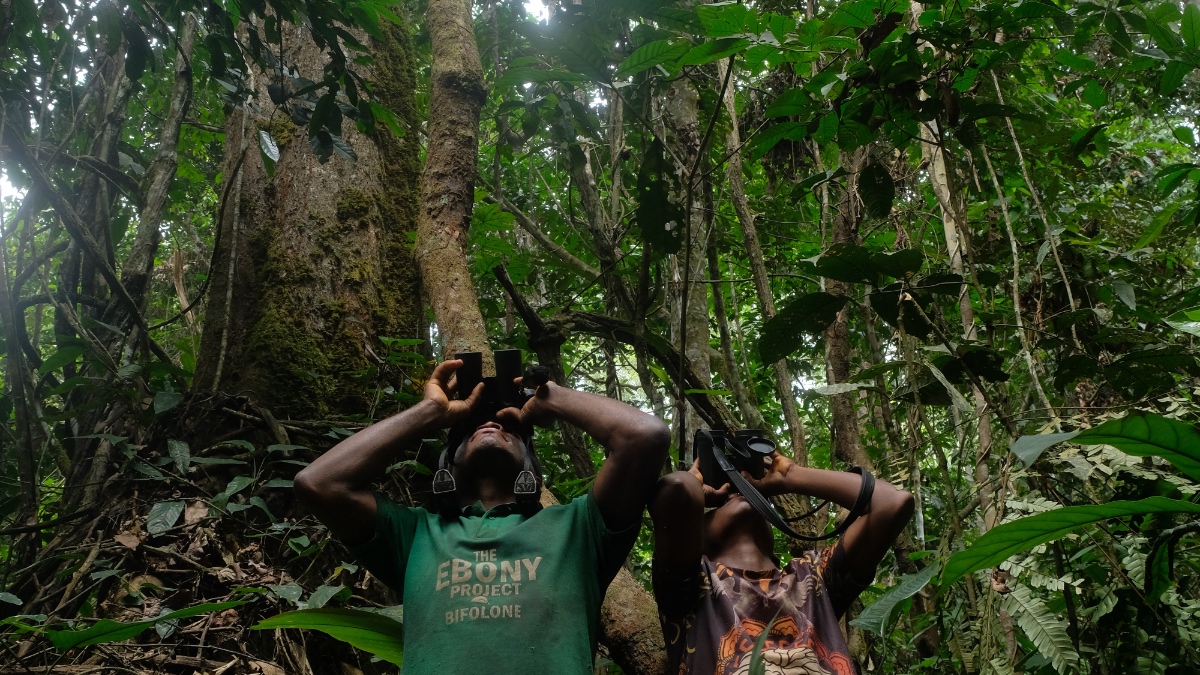
“The Baka people have an unparalleled understanding of the forest’s ecology and its complex interdependencies,” says Ruksan Bose, a scientist who leads the School for Indigenous and Local Knowledge (SILK) program at CBI. “Through a trusted partnership, the Baka share their Indigenous knowledge with the CBI team to better understand where ebony naturally thrives and how it reproduces. Scientists train them in the use of scientific equipment, and together they weave traditional ecological knowledge and Western scientific forest ecology into coproduced research outputs. The insights of the Baka, combined with GIS modeling, help researchers understand the ebony life cycle, improving both fieldwork efficiency and replanting success.”
From the beginning, The Ebony Project leaders have understood that simply planting ebony trees is not enough. To address local needs, the project also plants fruit trees for consumption. Project teams collect meticulous data, including tree measurements, density, gender, and coordinates. The forest inventories have revealed new insights into ebony ecology and growth patterns. For example, ebony trees have a biannual cycle, alternating between periods of low and high fruit production, causing seed availability to vary. Ebony trees depend on insect pollinators as well as animal seed dispersers to promote genetic diversity and hardiness.
Research on seed dispersal and germination patterns revealed by GIS maps and analysis proved the direct link between ebony trees and forest elephants.
Where elephants disappear, new ebony growth plummets. The authors of the study found a nearly 70 percent decline in ebony saplings in areas without forest elephants. This mutualistic relationship—long recognized by the Baka people—is now scientifically validated.
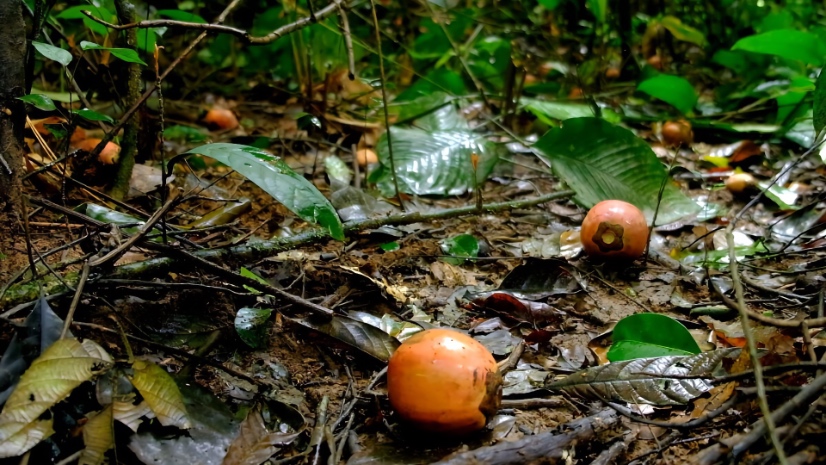
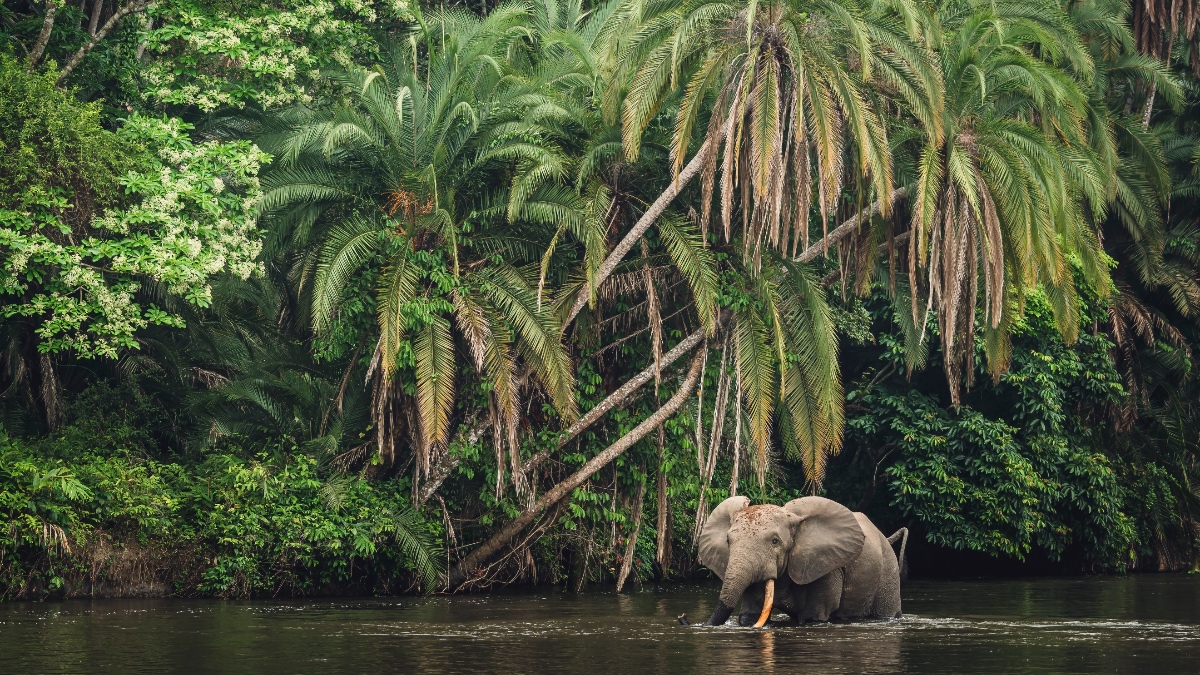
Ebony trees produce softball-sized, fleshy fruits that many animals consume. But only the forest elephants, with their immense size and appetite, eat the fruit whole and ingest the seeds intact. They disperse the seeds across the forest floor via their dung. This process not only spreads seeds far from the parent trees, reducing inbreeding and competition, but also protects them from rodents and other predators. Seeds deposited in elephant dung were found to be up to 8.5 times more likely to escape seed eaters than those remaining in fruits or dispersed by rodents.
Poaching has devastated populations of African forest elephants, driving this keystone species to the brink of extinction. Forest elephants have evolved with the African rainforest since it first appeared. As ecosystem engineers, they play a crucial role in maintaining rainforest health—recycling nutrients, reshaping vegetation, and dispersing seeds over long distances.
Using data collected by field teams employing GIS, researchers compared ebony survival and growth in protected and unprotected forests. They showed that in areas where elephants have been hunted to extinction by poachers, young ebony trees are scarce or absent.
Ebony trees are among the slowest-growing species in the Congo Basin, often taking more than 50 years to begin reproducing. Most mature ebony trees alive today were likely dispersed by elephants decades ago, before elephant populations collapsed. Deforestation and overexploitation for the valuable jet-black wood have left Central African ebony tree populations vulnerable. Without new growth, and without elephants to disperse seeds, researchers fear ebony populations may not be able to recover in the coming decades.
The Baka people have maintained a strong connection to elephants, which play a central role in key life rituals. When the Baka harvest wild yams, they intentionally leave the roots intact or bury tubers to propagate yams—a favorite food of both people and elephants. They also follow elephant trails for easier foraging. Their traditional ecological knowledge is central to The Ebony Project and the work of CBI. Baka collaborators help guide the researchers in the forest. They also help to collect data and act as stewards of forest wisdom, offering insights that shape research and conservation strategies.
CBI’s deep relationships with the Baka people, as well as with communities and farmers in Cameroon, form the backbone of The Ebony Project. “The goal is to have the project be beneficial to all involved,” said Virginia Zaunbrecher, managing director of CBI. “To ensure viability and to sustain this work beyond the initial stages.”
Before trees are planted, project teams visit villages in suitable ebony habitat. They introduce the initiative, answer questions, and gauge interest. Communities that decide to participate sign memorandums to clarify project roles. This ensures mutual benefit and shared investment.
“My colleague, Jean Michel Takuo, has a saying: ‘It’s not easy to get people who live in the forest to plant trees,’” Zaunbrecher said. In the Congo Basin, the leading cause of forest loss is farmers. “These are subsistence farmers growing food to feed their families and to sell to growing cities so they can use that revenue for school fees and medical care.”
To encourage participation, The Ebony Project offers compensation and includes fruit tree planting for short-term benefits.
Communities designate land for nurseries and nominate managers. Participation is voluntary, yet enthusiasm often spreads to neighboring villages. This grassroots model has proven scalable, with 13 villages involved and more expressing interest.
There is a phased approach to compensation. In the first five years, payment is provided for gathering seeds, tending nurseries, and planting and protecting young trees.
“Then, after five years, the logic is that the larger, faster-growing fruit trees will start producing,” Zaunbrecher said. “The farmers can start relying on the value of those trees to make sure everybody keeps that area forested.” After five years, ebony trees are also far less vulnerable to threats.
The Ebony Project teams work with farmers to document their plantings with agroforestry notebooks. In Central Africa, private property ownership is rare, as land is state-owned. Agroforestry notebooks validated by a local ministry authority offer individuals evidence that they planted the trees and own the fruit production, and may also pave the way for formal property rights.
“Ebony is iconic in Africa,” Zaunbrecher said. “A lot of people see it as a legacy.”
Few sounds stir us like the strum of a guitar. By joining wood from tiny slivers of forests—often separated by continents—guitar-makers build instruments designed to tell the human story.
“I can’t think of another product that is so universally beloved,” said Scott Paul, director of sustainability at Taylor Guitars. “It’s unifying, if you play the instrument or not—it’s a cultural totem.”
Paul’s role is rare in the musical instrument industry. With nearly 15 years at Greenpeace and a career steeped in forest policy, he brings a wealth of knowledge to the company’s sustainability efforts. He joined Taylor Guitars nearly a decade ago to help the company navigate a rapidly changing landscape of environmental regulations, resource scarcity, and consumer expectations.
“We build a product that is uniquely dependent upon different tree species found around the planet,” Paul explained. Taylor Guitars incorporates woods such as ebony from Cameroon, rosewood from India, mahogany from Fiji and Central America, spruce and maple from North America, and koa from Hawaii, to name but a few. This deep reliance on global forests is what initially inspired Bob Taylor to rethink his company’s relationship with natural resources.
Hiring Paul and funding The Ebony Project in Cameroon (and also the Koa Project in Hawaii) echo a commitment to future generations of both guitar-makers and forest inhabitants. Taylor Guitars sees The Ebony Project as an important conservation initiative, but also a demonstration of what’s possible when business, science, and community come together.
Taylor Guitars doesn’t own the trees it plants in Cameroon. There’s no guarantee they’ll ever be harvested for instruments. But that’s never been the point. The goal is to leave something behind—something that sustains ecosystems and communities, and perhaps, a century from now, helps someone tell their story through music.
Learn more about how GIS supports informed and sustainable land management decisions.