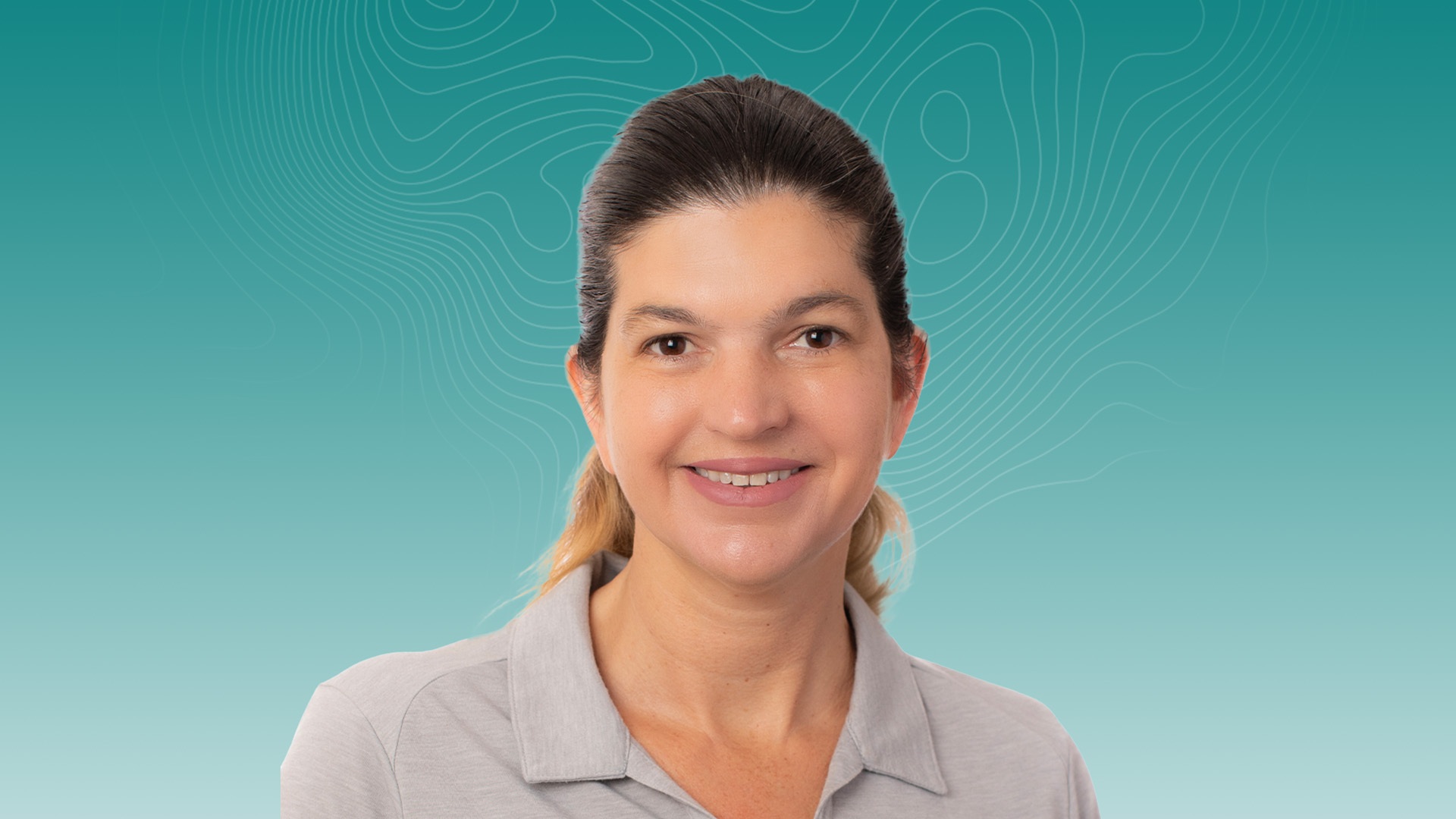
At the outset of her career in geographic information systems (GIS) technology, Shannon Philippus was technically savvy and motivated. Over time, mentors would help shape her approach to data and her influence with company leaders.
Philippus’s career has taken her from the public sector to grocery chain Publix, the largest employee-owned company in the US. She sat down with WhereNext to discuss what she’s learned from managers, how she’s helping colleagues blend data science with spatial analysis, and which skill she thinks GIS professionals should upgrade.
For more guidance on GIS career growth—including insight from other well-known Fortune 500 companies—check out the WhereNext webcast, “The Power of Mentorship for Analysts in Business.”
Tell us about your role and where you fit in the organization.
I manage the GIS systems team at Publix. We’re part of the marketing department, which is unique for a GIS group. Years ago, leadership saw a need for GIS to help with personalized marketing. Today, we sit in the marketing analytics department that includes several teams of multidisciplinary analytics experts.
We have our customer relationship management (CRM) analytics team—they are responsible for the who analysis. We have our marketing business analytics team—they’re looking at what people are buying in different markets. Then we have the GIS and location analytics team that focuses on adding the where aspect.
We’re all together—CRM specialists, GIS people, data scientists. We all talk, and we work on a lot of projects together. GIS supports the entire Publix organization, everything from real estate, which is our closest collaborator outside of marketing, to facilities, retail operations and special teams, such as those supporting emergency response efforts during hurricanes.
Is there a piece of advice you heard from a mentor or manager that you remember to this day?
The biggest piece of advice that I’ve gotten is “Trust but verify.” Take all the data that you’re getting in, be very knowledgeable about where the data comes from and where the gaps are, then verify the information you’re getting from that.
A retired Publix leader repeated this phrase often; it’s been an overall theme in my career. I trust the field teams to pick up data, but I also want to verify that what they’re putting in is correct.
Do you think we’re heading into an era where it’s advantageous to have a particular set of technical skills or to be more of a generalist with strong soft skills?
I would recommend having general knowledge but still have something that you specialize in. My background is databases, so obviously I lean towards the system side of GIS. But also knowing what the location analytics group does, how they apply those data science tools to answer questions—it’s important to know those different aspects.
Some of my analysts specialize in app building, some of them specialize in cartography, some of them specialize in data science. But they can all help everybody else out at any given time.
If you were running a mentorship program and you could upgrade one skill among GIS professionals, what would it be?
That’s tricky. I would go with spatial statistics. I think learning how to forecast is probably the one thing that makes the most sense in the business world. I say this because everyone’s always asking, “Where are we going next? What are our stores going to do in a year if we put this store here?”
As GIS professionals, we are thinking there’s ‘where’ everywhere, so obviously it plays an important role. GIS university programs traditionally emerged from planning or environmental disciplines, but today business application of GIS is growing. While many of our data scientists don’t have experience in GIS, they get excited about the potential of applying a where filter to business problems.
Is there an example where you’ve seen data science and spatial analysis come together?
We’ve been working with our data scientists to help them understand the capabilities GIS can enable. A real-world example is looking at how rain affects sales of certain products. They were focused on dates and times, and then I showed them how precipitation data from USGS could help their forecast.
They’re learning how to use spatial data inside their world. Now they’ll come to us and ask, “Do you think this particular business problem we’re working on could be better solved if we had a spatial component rather than just dividing it up by county?”

As GIS professionals, we are thinking there's ‘where’ everywhere, so obviously it plays an important role. But I think [in] the universities they tend to lean towards planning or environmental GIS, but not always business GIS.
Let’s talk about soft skills for a minute. How did you learn to communicate to leadership?
Through my mentors. When you’re working for city and county governments, you’re basically giving a director the story they’re going to take to the board. That was my introduction: How do I take this technical knowledge from a utility system and make the board understand it? So: heat maps and story maps and dashboards.
Fast-forward to now. I think of my first Publix manager when I go in front of company leaders. He used to say, “They don’t need to know all the details. They need to trust that you know the details.”
When I first started presenting to company leaders—showing them a story map and zooming into different areas helps them see if the data makes sense. They already trusted the data since my management team laid the groundwork. I just needed to have confidence in it.
The culture of Publix really helps. Everybody is there to help everyone. Everybody wants to learn and make the best decisions for the company with all the information that they’re given.
So I think those are the two things: You’ve got to trust the data and you’ve got to have confidence in what you’re saying.
If you separate what you’ve learned into two tracks—technical skills and soft skills—which has improved more with the help of mentors and colleagues?
Soft skills, 100 percent. I grew up as a nerd. I have always been very good on the technical side and pick things up easily. But my soft skills were not there when I started.
My managers were always good at helping me rewrite my emails—basically AI Tools before AI Tools existed. I used to be very, very direct, and it doesn’t always come off well when I tried to explain things.
And yet, when we talked about upskilling GIS pros, you said you would focus on spatial analytics rather than soft skills.
I’m more comfortable with the technical aspect and believe you need to be competent in the core capabilities first and foremost. At the same time, focusing on soft skills is key for success in business and often lacking more than anything else.
I don’t naturally gravitate towards soft skills, so I had to be intentional to develop myself and my team in this area. I can break down the technical skills much easier than I can workshop soft skills.
You mentioned being direct in your communication style. Do you remember a moment when that changed?
A consulting firm I used to work for delivered a proposal to upgrade a utility company’s data management with GIS. The utility manager had index cards in a shoebox with information about their pipelines and other assets.
One of us said, “What happens when your shoebox is full?” The guy lit up. “Every year my guys need new boots, so I take the shoeboxes that the boots come in, and I have new shoeboxes.” My follow-up question was, “What happens when you retire and nobody knows how to get into your shoeboxes?”
Well, in his mind, maybe he wasn’t going to retire, or maybe he thought he had the perfect system. That changed the whole tone of the meeting.
My manager and I had a discussion afterwards and he said, “You’re right, the shoebox is not the best system. But you want to convince him that we need to upgrade his system, not replace his system. It comes off like you just want to wipe away everything he’s done for the past 30 years!”
It sounds like you were simultaneously learning to speak up more effectively about what you know and honing your communication style.
100 percent. I’m still vocal to this day; I’m just a little softer about it. When others ask me to join a meeting it’s typically because they’re looking for my input. They’re asking for my time, because they’re looking for my opinion. It’s my job to come prepared and ready to speak up.
I encourage my analysts and developers to come to meetings prepared to share their perspectives as well. The approach is: See something, say something, do something.
What are some characteristics of an effective mentor?
Someone who listens and isn’t just listening to speak. I think that’s the number one thing that you need in a mentor. Otherwise, they’re just going to make you a mini-them, and that’s not what mentorship is. I think mentorship is helping that person with their skill sets, however outside their box it might be.
Compassion is another one. If you don’t have compassion and empathy, the mentee is not going to take what you’re putting down.
For a GIS analyst early in their career, what advice would you offer on soft skills, technical skills, and learning?
I would say the most important advice is to be very inquisitive. I’m 30 years into my career, but I’m still learning every day. The software is changing; the landscape is changing. There’s always something new, whether it be within GIS or within the retail industry. When people give you a task, own the task, ask questions, make sure you’re giving them what they want.
You don’t have to know the answers. You just have to know how to find the answers.
The Esri Brief
Trending insights from WhereNext and other leading publicationsTrending articles
December 5, 2024 |

January 11, 2024 |
September 22, 2026 |
May 26, 2026 |

April 7, 2026 |

June 5, 2025 |