At January’s National Retail Federation (NRF) Big Show in New York City, one statistic left a lasting impression: Around 83 percent of all retail purchases still occur in physical stores.
Even in an age of one-click checkout and agentic commerce, businesses including retailers, financial companies, and real estate developers live by a timeless rule: To identify locations where your business will thrive, you must first know where your customers are.
That may explain the buzz around an NRF panel discussion that featured a story of retail innovation. Ashley Furniture, one of the world’s largest furniture manufacturers and retailers, explained how it harnesses mapping and analytics to expand its network of nearly 1,000 stores across North America and stay connected with customers.
Map Reveals What a Market Really Looks Like
In this video excerpt from the panel, Ashley business intelligence manager John Bullock and GIS developer Allie Scott detail how geographic information system (GIS) technology guides decisions on where to place stores—and even on how to optimize a location’s visibility and inventory.
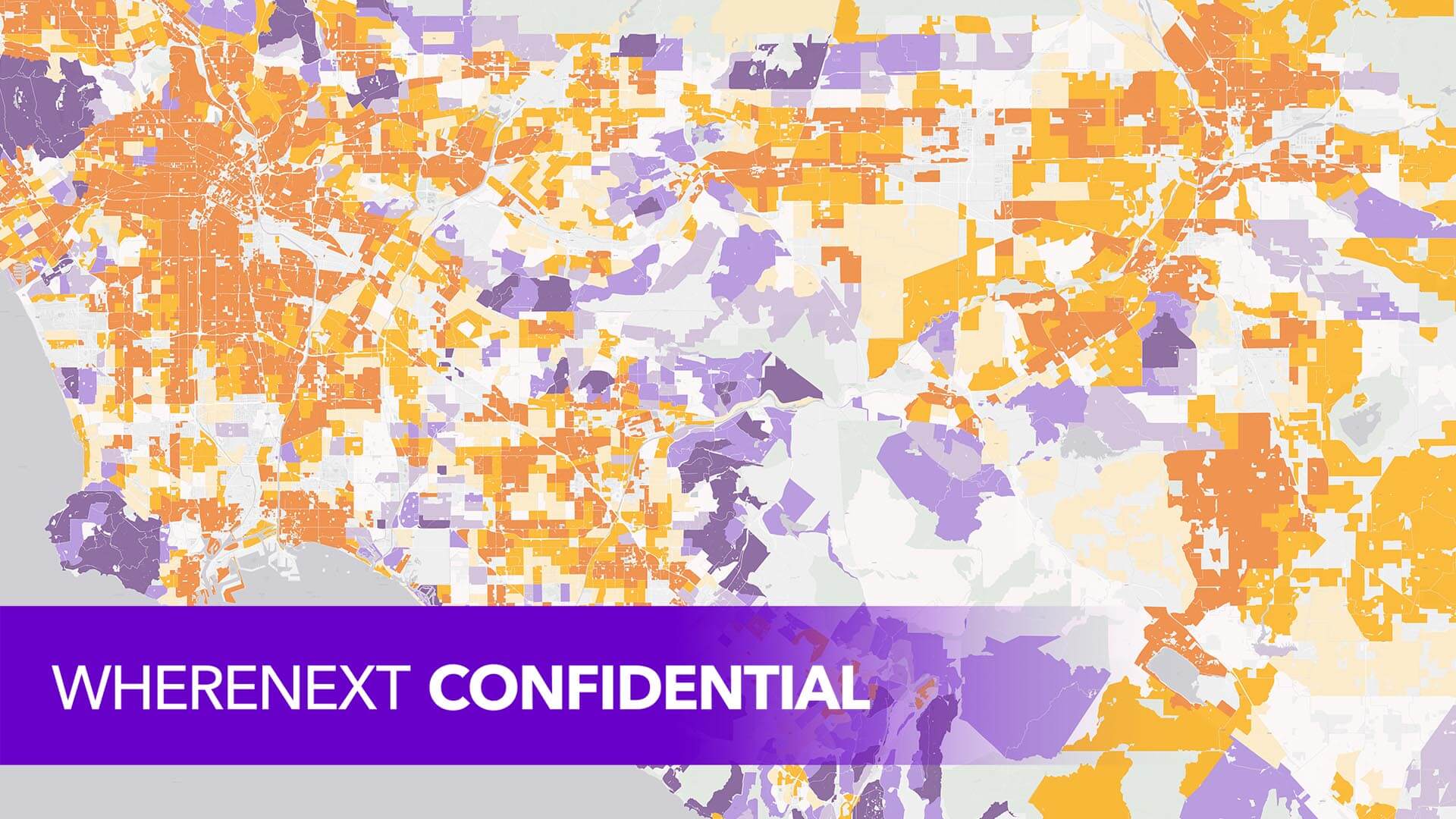
Many retailers still draw simple circles on a map to estimate a store’s trade area. Using GIS, Bullock and Scott analyze customer drive times by accounting for road types, traffic, and other geographic factors. The resultant trade areas look jagged and organic—and much more accurate.
With these maps, Ashley’s real estate teams see whether two stores might cannibalize each other’s customers and identify where desirable neighborhoods intersect, pinpointing a location that can serve multiple key demographics.
This fine-tuned understanding of markets, grounded in location analytics, can even extend to a store’s product assortment. To better meet customer needs, Bullock and Scott plan to analyze data on how products perform in different geographies—then share the intelligence with store managers so they can adjust merchandise accordingly.
The Science of Store Visibility
Market planning is more than a quest for the right location; it’s an opportunity to optimize that location for customer convenience.
Economic studies have found that stores with better visibility attract more customers. In fact, a smart store location can create a halo effect in which online and in-store sales reinforce each other.
Ashley’s team uses GIS and data science to explore the link between store visibility and sales performance.
To maximize the brand’s physical presence, Scott and Bullock score how visible a store is to drivers and pedestrians using location-based metrics. They analyze factors including the speed of passing traffic, the volume of drivers, local demographics, viewsheds, and idiosyncrasies like left-hand turns and U-turns.
Next, they use GIS to simulate options for facade heights and property sizes, modeling in 3D how a store’s performance changes depending on whether it is two or three stories tall, or occupies a street corner versus a shopping mall.
“Our buildings are marketing in themselves,” Scott explains.
Backed by Sophisticated Analysis, Small Decisions Add Up to Big Gains
Every business—from a small bank to a global commercial real estate firm—makes market planning decisions based on an understanding of location, even if it’s something as simple as a site visit to check out neighboring businesses.
Industry leaders like Ashley fine-tune their understanding. They use location analysis to answer critical questions about who visits stores, what they buy, and how best to reach them.
The Esri Brief
Trending insights from WhereNext and other leading publicationsTrending articles
December 5, 2024 |

January 11, 2024 |
September 22, 2026 |
May 26, 2026 |

April 7, 2026 |

June 5, 2025 |