Introduction
Gas utilities today face mounting pressure to modernize their operations as customer expectations, regulatory requirements, and technological advancements continue to evolve. Legacy systems that once supported basic workflows are no longer sufficient for managing complex networks, ensuring safety, and enabling real-time decision-making. To remain competitive and efficient, utilities must adopt platforms that provide a unified system of record, advanced modeling capabilities, and seamless integration with enterprise and field systems. Delta Utilities, a newly formed gas utility serving the Louisiana region, recognized this need early and embarked on a strategic journey to migrate its legacy data into Esri’s ArcGIS Utility Network, a next-generation geographic information system (GIS) platform designed to support connected workflows and future-ready operations.
Challenge
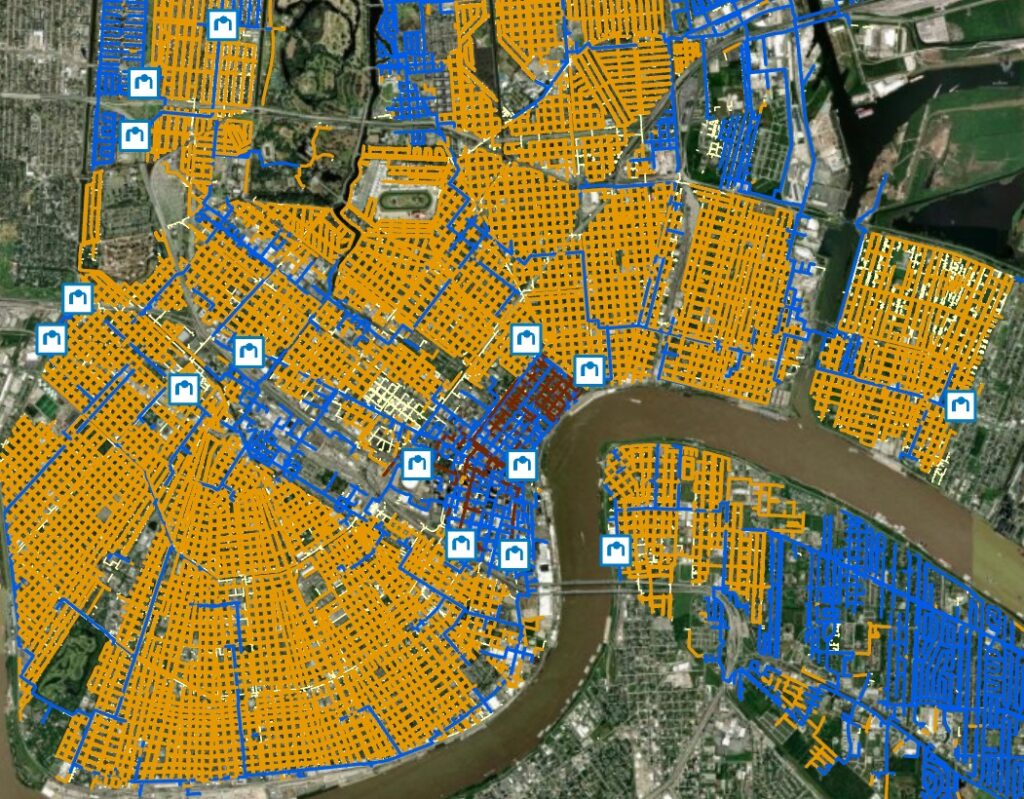
Delta Utilities faced a critical challenge: modernizing its asset management system to support a rapidly growing customer base and evolving operational needs. The company inherited years of legacy data stored in GE Smallworld, a system that had served its purpose but lacked the advanced capabilities required for today’s connected workflows. Delta needed to migrate this data into Esri’s ArcGIS Utility Network, a platform designed to deliver a unified system of record, advanced network modeling, and seamless integration with field operations.
The urgency was clear. Traditional migration approaches often involve lengthy timelines, high costs, and significant disruptions to ongoing operations. For Delta, these risks were unacceptable. The utility needed a solution that could accelerate migration without sacrificing accuracy or connectivity. The existing GE Smallworld GIS contained complex asset classes and connectivity rules that required meticulous validation. As a result, achieving speed and precision simultaneously was essential to meet Delta’s aggressive timeline and ensure operational continuity.
Partner
To tackle this challenge, Delta partnered with Epoch Solutions Group, an Esri Gold Partner specializing in utility solutions. Epoch brings deep expertise in Esri’s ArcGIS Utility Network, asset migration, and field mobility through its flagship product, EpochField. With a proven track record of helping electric, gas, and water utilities modernize their operations, Epoch was uniquely positioned to deliver a solution that combined automation, accuracy, and speed.
Epoch understood that Delta’s success hinged on more than just moving data; it required transforming legacy information into a connected, rules-based network that could serve as the foundation for future operations. This meant enforcing Esri’s data model, validating connectivity, and ensuring compliance with industry standards, all while minimizing manual effort and disruption. By working closely with Delta’s team, Epoch provided guidance throughout the process, ensuring that every step aligned with operational goals and industry best practices.
Solution
Epoch implemented a migration strategy powered by EpochSync Pro, a specialized tool that automates the extraction, transformation, and loading (ETL) of legacy assets into Esri’s ArcGIS Utility Network. This approach eliminated the inefficiencies of manual processes and standard tools, which often struggle with complex data structures and connectivity requirements.
EpochSync Pro converted GE Smallworld data into Esri’s Utility Network format, handling intricate asset classes and connectivity rules with precision. Built-in validation checks ensured data integrity, compliance with Esri’s model, and adherence to connectivity standards, reducing the risk of errors. By automating ETL processes, Epoch dramatically shortened the migration timeline, completing the project in a fraction of the time traditional methods would require.
The implementation also leveraged ArcGIS Pro for advanced network modeling and visualization, enabling Delta’s teams to interact with the new utility network in a familiar environment. Once the migration was complete, the utility network was integrated with Delta’s operational systems, including outage management systems (OMS) and enterprise resource planning (ERP), enabling seamless information flow across the organization.
Results
The migration delivered transformative results for Delta Utilities. The company now operates on Esri’s ArcGIS Utility Network, providing a single authoritative source for all gas asset data. Automated validation ensured that every asset was correctly modeled and connected, reducing errors and enhancing reliability. Field crews gained real-time access to connected network data through mobile applications, eliminating paper workflows and reducing data entry errors. By streamlining migration and integrating with enterprise systems, Delta achieved significant cost savings and laid the foundation for advanced capabilities, such as predictive analytics and outage management.
This project demonstrates how gas utilities can modernize operations quickly and confidently by leveraging Esri’s next-generation platform and specialized migration tools. For Delta, the benefits extend beyond technology; they represent a strategic investment in operational excellence and customer service.
Stay Connected with the Gas Industry Team
The gas industry is undergoing rapid transformation, driven by digital innovation and the need for resilient infrastructure. Staying connected with experts and peers is essential to keep pace with these changes. Join Esri’s gas industry community to access webinars, case studies, and best practices that showcase how utilities are leveraging GIS to improve safety, reliability, and efficiency. Engage with industry forums and attend Esri events to learn from thought leaders and share your experiences. By staying informed and connected, you can position your organization for success in an increasingly dynamic energy landscape.