September 16, 2025 |
Multiple Authors | Natural Resources
May 12, 2026
Bunge turns deforestation monitoring into an operational, repeatable workflow—connecting satellite alerts, historical imagery, traceability, and compliance records in one place so that teams can verify what’s happening on the ground and act with suppliers when needed. Long before the EU Deforestation Regulation (EUDR) arrived, Bunge had already built the scoring model the palm oil industry would adopt as its standard.
Twice a month, a report arrives in the inbox of Bunge Malaysia’s tropical oils sustainability manager, Pitt Onn Wong.
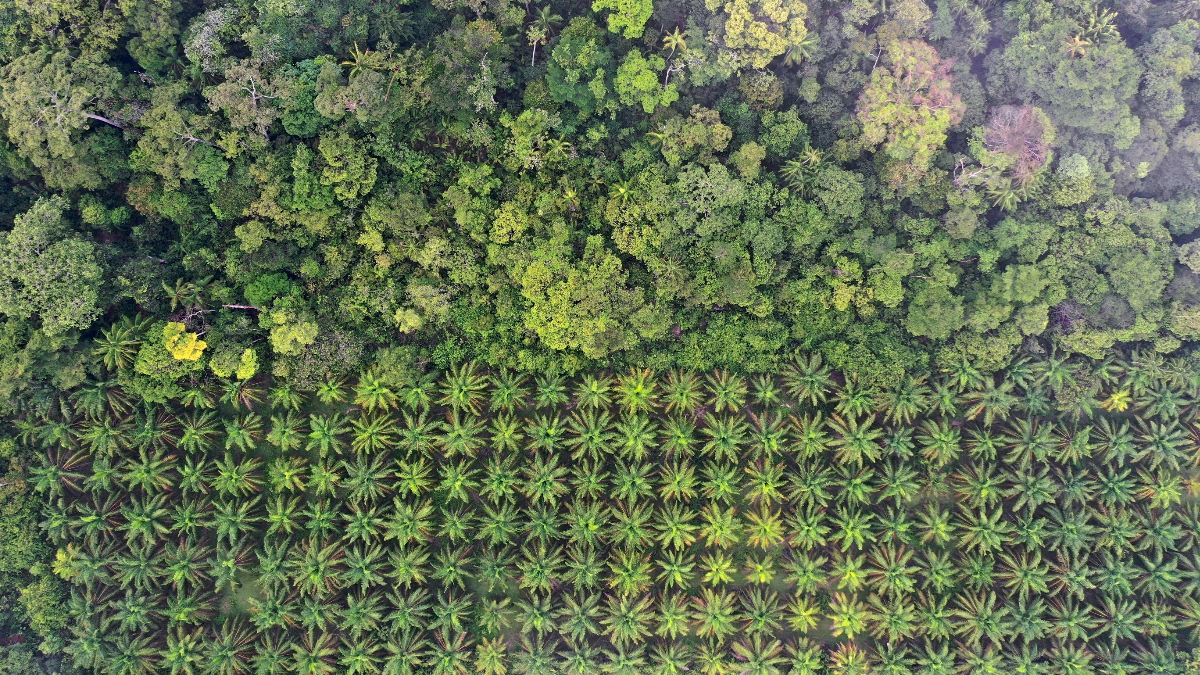
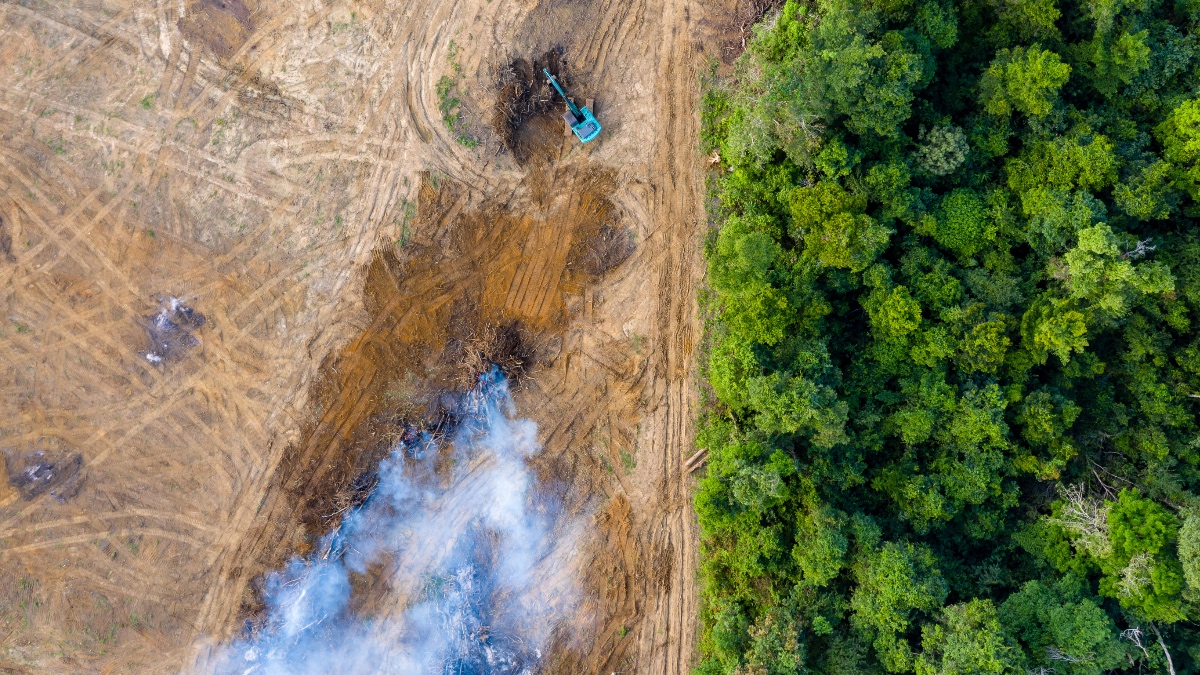
The report comes from a satellite-monitoring partner that watches Southeast Asia’s palm landscape for signs of forest clearing and sends alerts when land-clearing operations overlap a supply chain. Some alerts are real. Some are false positives. Wong is responsible for validating whether an alert needs action.
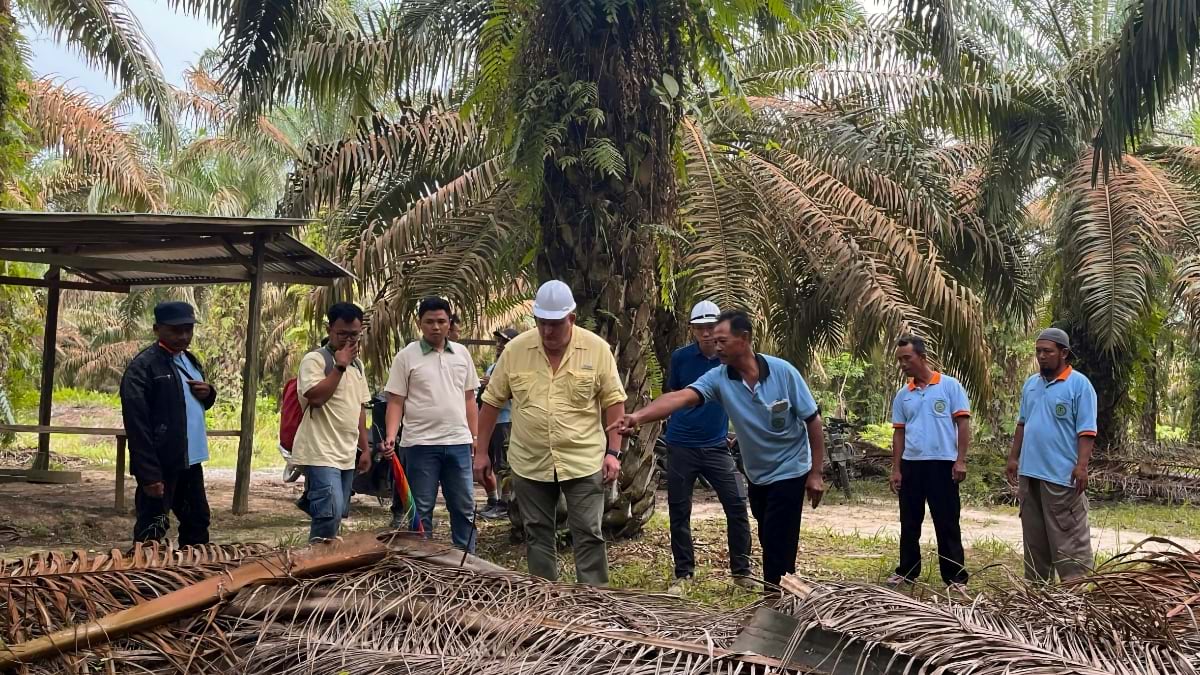
He opens the report, pulls up Bunge’s geographic information system (GIS) mapping platform, and overlays the alerts with satellite imagery. What did this location look like 5 years ago, or 10? If land clearing is recent and the area is associated with a supply chain linked to Bunge, he contacts the supplier affiliated with the grower in question. That supplier has the direct commercial relationship—and the leverage—to ask the right questions.
When Bunge’s sourcing team wants to engage a new supplier, the request lands with Tijs Lips, who manages tropical oils sustainability from Bunge’s Netherlands office. Through a dedicated questionnaire, the supplier provides a set of information, including traceability data. Lips then verifies it using a map-based workflow he built with ArcGIS technology—checking for noncompliant land-use change, organizing documentation, and giving teams a single source of truth they can use across sustainability priorities. Covering millions of hectares across the global tropics where oil palm grows, the system gives teams in Southeast Asia, Latin America, Africa, and Europe a shared view of data, dashboards, and verification tools—so a supplier can be assessed; monitored; and, when needed, brought into compliance.
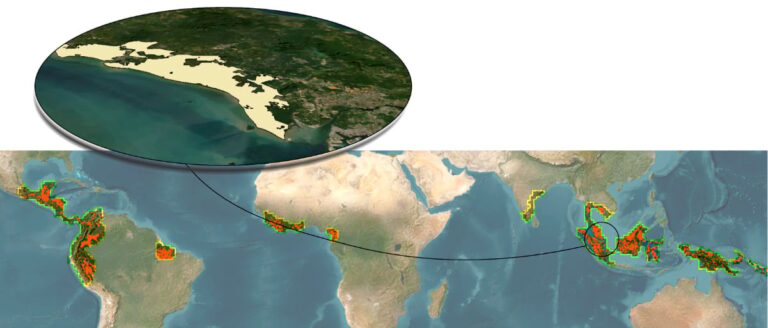
With this data and system at hand, Lips pulls up high-resolution satellite imagery to investigate detected land-use change. Is this a new land clearing? Was there ever forest here? Or is it part of a replanting cycle, which happens on established plantations roughly every 30 years and, from a satellite, can look like clearing?
“If we look at the historic imagery and see a few cycles of clearing, it’s replanting,” Lips said. “In some regions, local governments also mapped historic land use, which helps us identify established plantations and exclude false alerts from our monitoring system. But sometimes you still doubt, and that’s when we have to go back to the supplier.”
Only after the land-use change analysis is completed and verified with no deforestation does a new supplier move through the compliance framework, with each step logged and reviewed before any palm oil from that source enters the supply chain.
Not every satellite alert signals deforestation tied to palm expansion. Forest plantations cultivated for pulp and paper production undergo periodic harvesting cycles that can look, from orbit, like deforestation. Nomadic communities in parts of Indonesia clear land, plant cash crops, and move on—a traditional practice with no connection to large-scale land conversion. Flooding in Malaysian lowlands can suppress vegetation and trigger alerts.
“In Thailand, we received alerts in hilly areas,” Wong said. “When we overlaid the alerts with satellite imagery and traceability in the GIS system—and then followed up through supplier engagement—we learned some alerts were linked to land preparation for temples and Buddha statues. In Malaysia, flooding can trigger false alerts from land-use change detections. Not every alert is what it appears to be. Investigating before acting is the only way to know.”
When an alert is genuine and satellite imagery shows new land clearing linked to a supply chain, Bunge notifies the supplier that holds the commercial relationship. The supplier investigates. If deforestation is confirmed, the company responsible for land clearing is suspended under Bunge’s No Deforestation, No Peat, No Exploitation (NDPE) noncompliance process.
Suspension is temporary. One Malaysian producer, suspended after clearing forest in Papua New Guinea, worked through a multiyear recovery plan in a designated site—publishing its commitments; organizing stakeholder engagement; and inviting key buyers, including Bunge, to visit the site and observe restoration work firsthand.
“Going there gives us the opportunity to see what’s happening on the ground,” Wong said. “At the end, the company asked: What’s next? What would you like us to do to improve?”
Well-managed, mature plantations are capable of producing up to 30 metric tons of fresh fruit bunches per hectare. Smallholders typically yield far less, around 12 metric tons, due to the absence of quality fertilizer, better planting materials, and knowledge of good agricultural practices.
A low-yielding smallholder may see one solution: land expansion. That scenario, multiplied across thousands of smallholders, is one of the primary drivers of deforestation in palm-growing regions. “For some people, the forest is their supermarket,” Lips said. “For others, yields aren’t enough, and they think about clearing more land. Better agriculture practices can help them increase yields and think differently about their own business.”
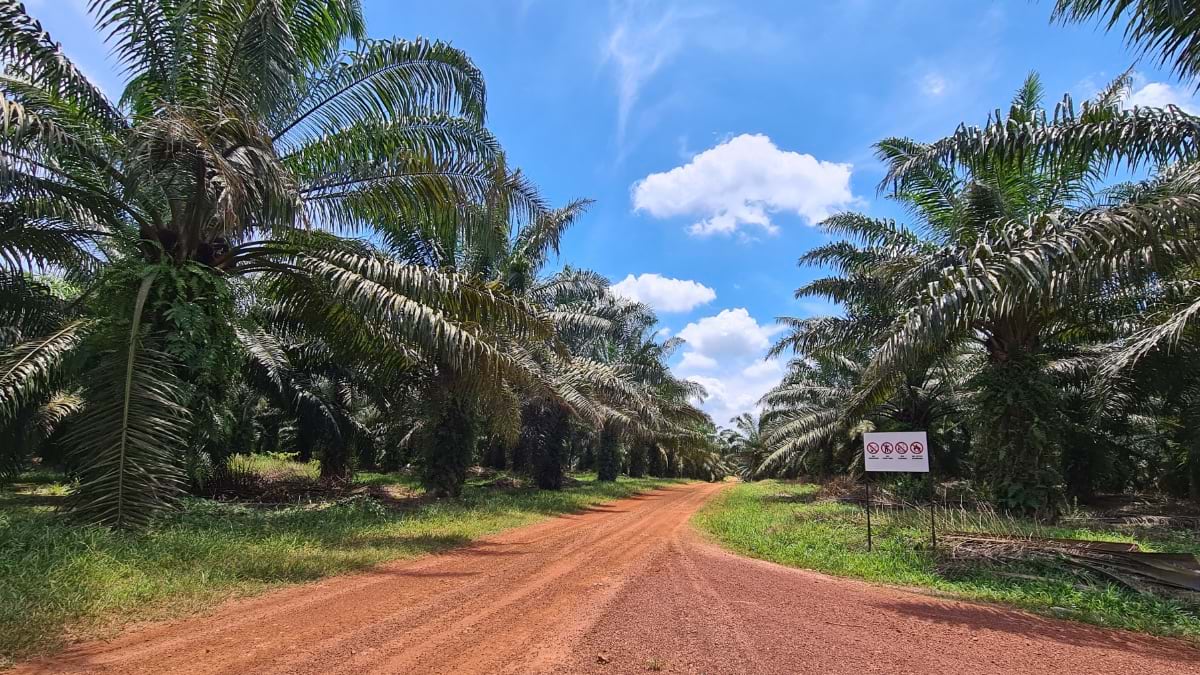
Keeping smallholders inside the supply chain requires more than monitoring. The same traceability and mapping work that supports compliance also shows where support is most needed—and helps keep smallholders included rather than pushed out. In Sambas, West Kalimantan, Bunge collaborates with Musim Mas Group, a palm oil producer, on a smallholder program that has trained more than 1,000 independent smallholders in good agriculture practices, NDPE principles, and business management. The program trains local village extension officers, who then carry that knowledge into their communities—helping smallholders improve land management and increase yields on existing land, reducing pressure to expand into forest.
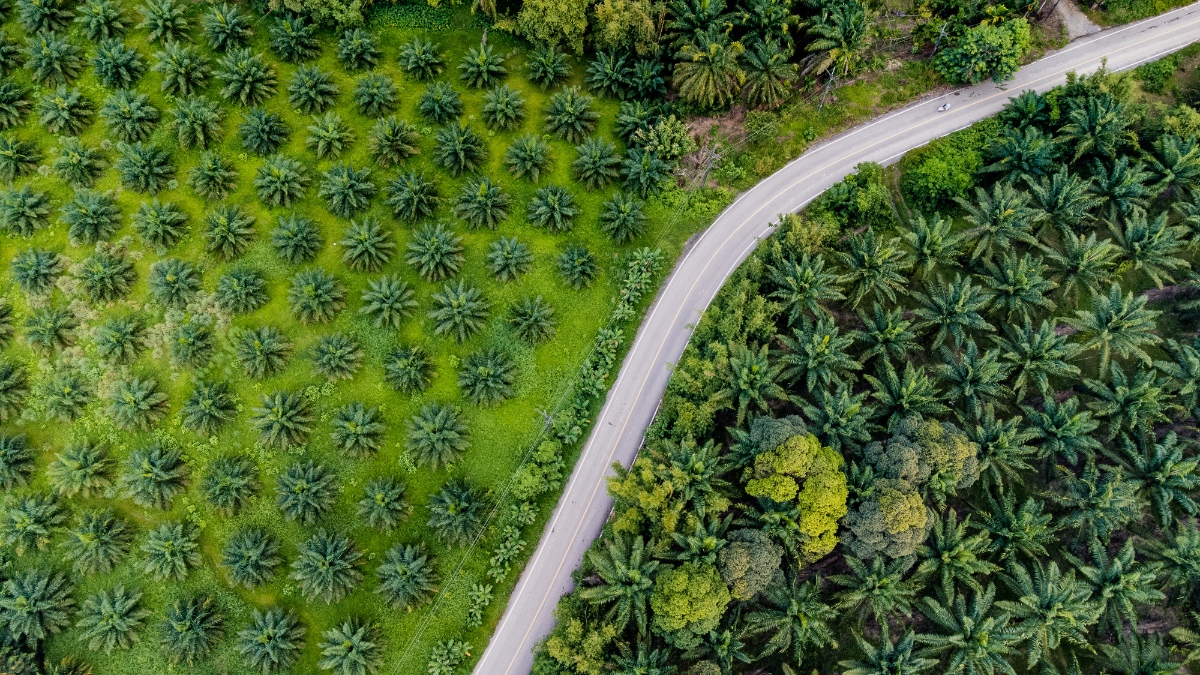
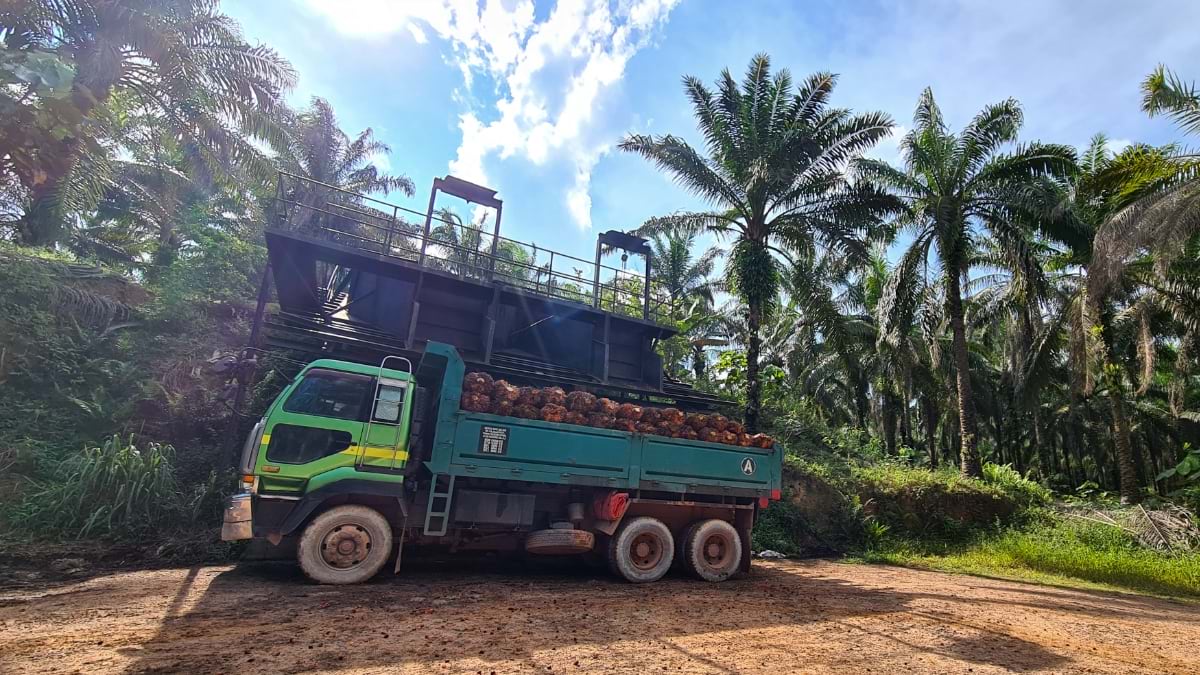
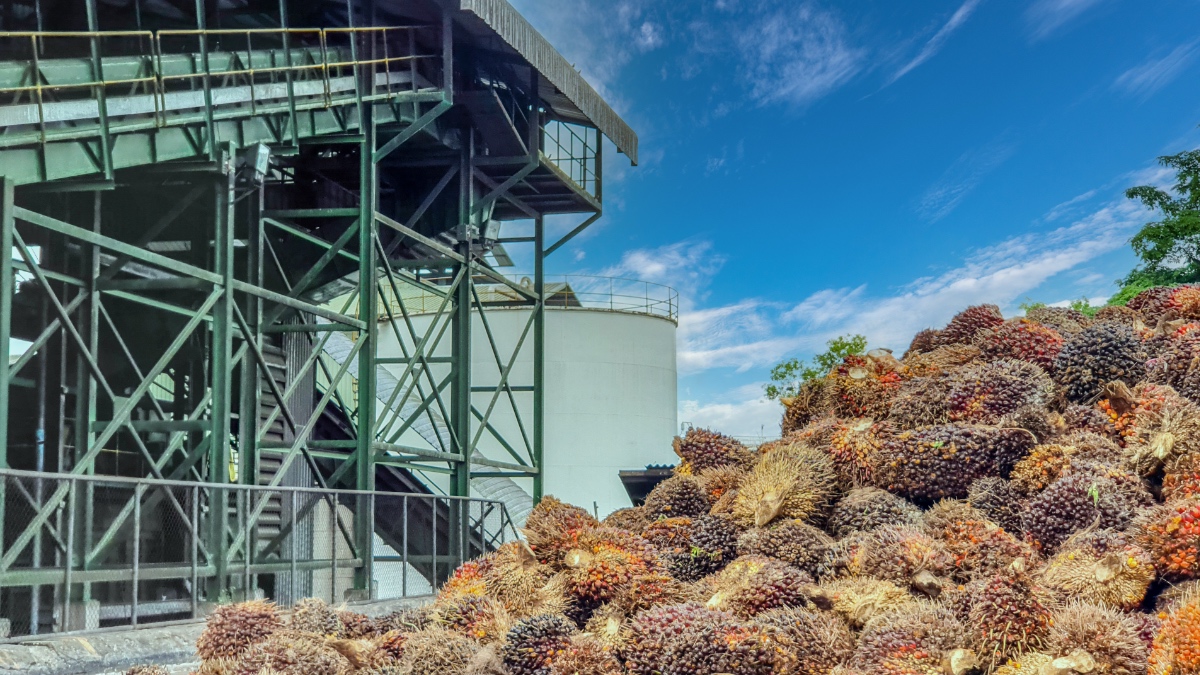
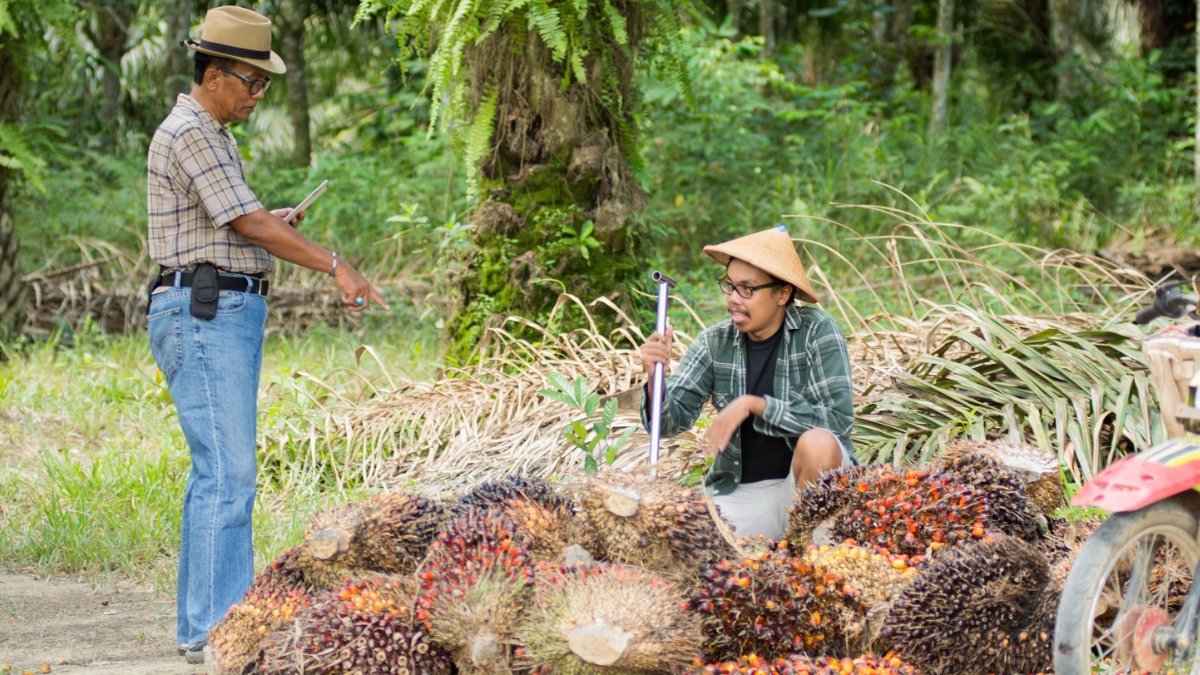
Oil palm has been cultivated in Malaysia for over 100 years. Fresh fruit bunches are sold to mills, which extract crude palm oil. Bunge purchases crude palm oil from mills, then refines it into specialty ingredients for such products as chocolate, cosmetics, and candles. The global agribusiness aligned its sourcing with NDPE commitments in 2016, responding to growing demand from consumers for accountability. That same year, Lips built a scoring model to verify whether a supply chain qualified as deforestation free. No industry standard existed yet.
“We developed the model as Verified Deforestation Free and shared it with the industry,” Lips said. “Later, the Palm Oil Collaboration Group [POCG] implemented a similar model. That framework is called the NDPE Implementation Reporting Framework [IRF]. The industry uses it, including us.”
Creating a model was only the first step. To use it requires underlying data—down to the plantations and smallholder farms that feed each mill—and a practical way to collect, check, and share that information. That work is where traceability becomes a joint effort, built mill by mill.
NDPE compliance demands traceability to each plantation or production area, ensuring that every step in the supply chain is verifiably free from deforestation since 2016. Bunge’s sustainability team obtains traceability data from palm oil mills: the names and coordinates of the plantations and smallholder farms supplying the data, plus the boundaries of oil palm concessions and the catchment area. Lips plots it in ArcGIS Online.
A supply chain map of the palm oil mill is then generated, showing where every plantation and concession is located as well as how far the sourcing area extends from a typical 50-kilometer radius catchment of the mill. For smaller mills without the required resources to generate these maps themselves sharing the map is how Bunge makes compliance possible.
“They can use this map to show their other buyers as well. It avoids duplication of work. They understand why the data was collected and what it can do for them,” Wong said.
That same logic extends to the compliance documentation that makes a supplier eligible to stay in the supply chain. For large plantation companies with dedicated compliance teams, that’s already a significant task. For smaller private or commercial palm oil producers, the burden can be insurmountable.
“If big plantation companies with dedicated teams have a tough time compiling those documents, you cannot imagine how difficult it is for a smallholder,” Wong said. “The fear is these folks will be sidelined.”
“The paperwork is a pain,” he continued, “If they can’t fulfill the requirements, they just go to other buyers with less demanding requirements. They don’t have to deal with the cost and headache.”
Bunge’s answer is to stay engaged on both fronts—building the documentation capacity producers need while maintaining supply chains that don’t exclude smallholders that aren’t there yet.
“Other companies just send a list of requirements,” Lips said. “The supplier has no idea how to deliver it, what to do with it, what it means. We sit down with them face-to-face, explain what the data means, explain what we can offer in return, and then they’re willing to share.”
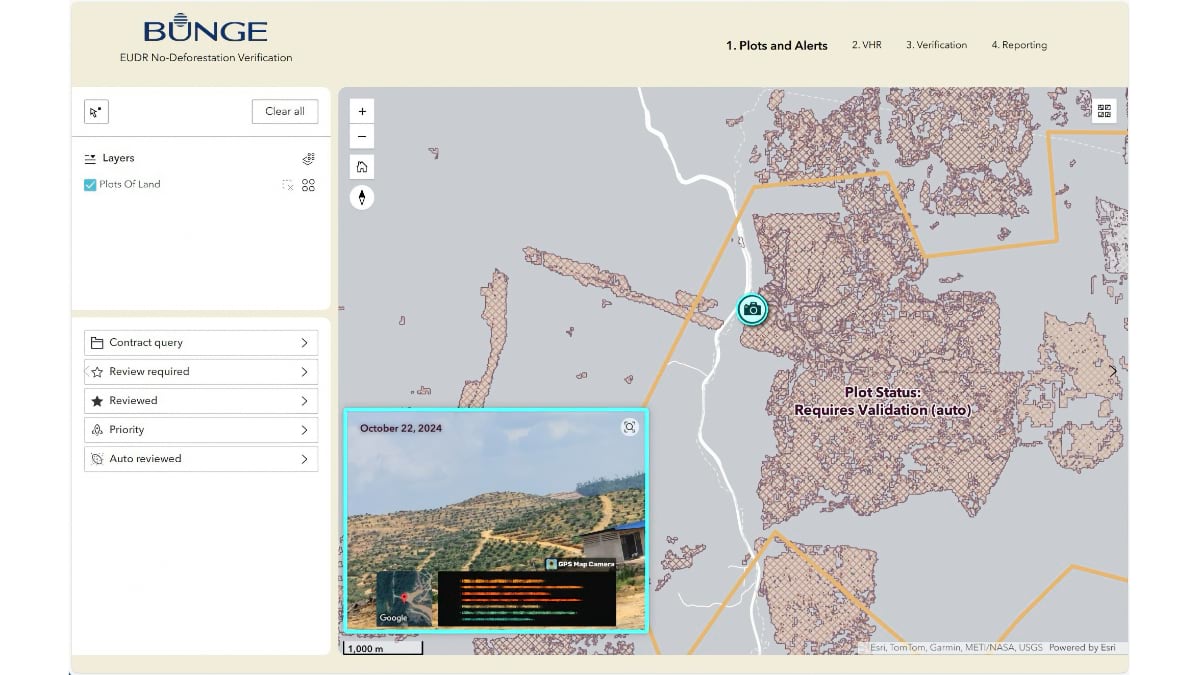
When the European Union passed its deforestation regulation requiring palm oil entering Europe to show deforestation-free production with precise geolocation since the end of 2020, Lips reviewed what the regulation demanded.
“We already had systems for everything required for traceability and verification of deforestation-free production,” he said. “We could leverage what we already had within our ArcGIS system and prepared an EUDR [EU Deforestation Regulation] tailored dashboard.”
The system can now cross-reference plot boundaries against three different deforestation datasets. Plots that are flagged in orange have a potential overlap. Green means clean. An analyst reviews each orange flag and either clears it or escalates it. Sometimes the flag is a data error—like a patch of established rubber plantation that’s being misread as forest. Lips pulls up the historical imagery, confirms palm planting going back decades, and updates the status. The orange disappears.
By late 2025, Bunge could trace 97 percent of its global palm oil supply chain to the plantation. The remaining three percent—suppliers without the data infrastructure or leverage—is what the team is working on. The approach is the same one that built the system: Sit down with the supplier, explain what the data means, show them a map of their own supply chain, and give them a reason to share.
“Numbers on a dashboard don’t show how you got there,” Lips said. “They don’t show what it takes to close that last gap. You need people on the ground who get notified, who understand what is behind the numbers, and who know which suppliers to engage with and how.”
According to the World Resources Institute’s Global Forest Watch platform, Malaysia’s primary forest loss declined 13 percent in 2024. Indonesia’s dropped 11 percent. Both countries moved out of the global top 10 for tropical forest loss, in a year when global forest loss increased elsewhere.
Learn more about how companies apply GIS to map, visualize, and monitor supply chains for operational awareness and transparency.